



A new study conducted in the United States has identified a medication that could bring treatment-resistant hypertension under control.
Elevated blood pressure affects more than one billion adults worldwide. Its prevalence increases with age with more than 60% of adults over the age of 65 diagnosed with the condition, which can lead to stroke or heart attack. A person’s lifetime risk of developing the serious medical complaint is 90%.
The condition needs medication to keep it at bay. But in some cases, the prescribed treatment doesn’t work.
Known as apparent resistant hypertension (aRH), this form of high blood pressure needs more medication and medical management.
New research from investigators in the Smidt Heart Institute at Cedars-Sinai in Los Angeles, California, published in the peer-reviewed journal Hypertension, has found that aRH prevalence was lower in a real-world sample than previously reported, but still relatively frequent, affecting nearly one in 10 hypertensive patients.
Through their analysis, investigators also learned that patients with well-managed aRH were more likely to be treated with a commonplace medication called mineralocorticoid receptor antagonists, or MRA, such as spironolactone and eplerenone.
These MRA treatments were used in 34% of patients with controlled aRH, but only 11% of patients with the uncontrolled condition.

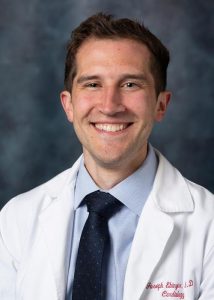
Dr Joseph Ebinger. Image: Cedars-Sinai
Joseph Ebinger, assistant professor of cardiology in the Smidt Heart Institute and corresponding author of the study, said: “Apparent resistant hypertension is more common than many would anticipate. We also learned that within this high-risk population, there are large differences in how providers treat high blood pressure, exemplifying a need to standardise care.”
The study findings were based on a unique design, which used clinically generated data from the electronic health records of three large, geographically diverse healthcare organisations.
Of the 2,420,468 patients analysed in the study, 55% were hypertensive. Of these hypertension patients, 8.5%, or 113,992 individuals, met the criteria for aRH.
According to Dr Ebinger, treating aRH can be just as tricky as diagnosing it.
The term “apparent” in apparent resistant hypertension stems from the fact that before diagnosis, medical professionals must first rule out other potential reasons for a patient’s blood pressure being high.
These reasons might include medication non-adherence, inappropriate medication selection, or artificially elevated blood pressure in the doctor’s surgery or other clinical environment, commonly known as ‘white coat hypertension’ or ‘white coat syndrome’ when you get a normal reading at home.
Dr Ebinger said: “Large amounts of data tell us that patients with aRH, compared to those with non-resistant forms of hypertension, are at greatest risk for adverse cardiovascular events. Identifying these patients and possible causes for their elevated blood pressure is increasingly important.”
The stand out lesson, Dr Ebinger said, is awareness – for both medical professionals and patients.
Providers should be mindful that if it’s taking four or more antihypertensive medications to control a patient’s blood pressure, they should consider evaluation for alternative causes of hypertension, or refer patients to a specialist, he emphasised.
Similarly, patients should lean on their medical providers to help them navigate the complex disease, including having a conversation around strategies for remembering to take their medication and addressing possible treatment side effects.
Treating patients with complex cardiac issues like aRH is at the heart of Cedars-Sinai’s expertise.
The Smidt Heart Institute was recently awarded the American Heart Association’s Comprehensive Hypertension Centre Certification, recognising the establishment’s commitment to following proven, research-based treatment guidelines to care for people with complex or difficult-to-treat hypertension.