


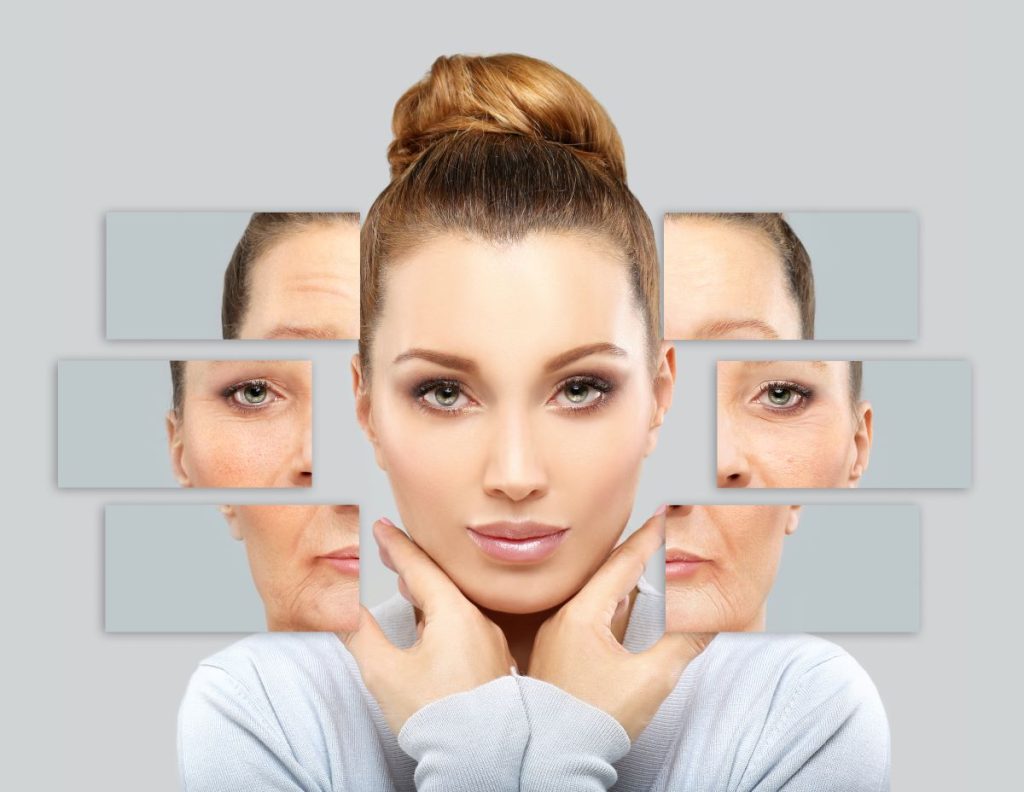
Conventional wisdom has it that stress turns your hair grey. And there are those who maintain that too much mental and emotional pressure is ageing too.
The jury is still out on whether stress can indeed lead to loss of hair colour. But there is mounting evidence that the diverse pressures and tensions life throws up can lead to biological ageing in humans.
However, new research suggests this damage can be reversed in as little as a few days once the chronic tension is removed.
The study from a multidisciplinary team of scientists published in the journal Cell Metabolism, has shown that stress can both speed up and reverse the biological ageing of humans.
The authors write: “In the most fundamental sense, our data reveals the dynamic nature of biological age; stress can trigger a rapid increase in biological age, which can be reversed.”
The US-led team drawn from the Duke University School of Medicine in Durham, North Carolina, and the Brigham and Women’s Hospital in Boston, Massachusetts, which is a teaching centre of Harvard Medical School, measured changes in biological age in both humans and mice in response to a number of stressful situations.
Repeatedly they found that biological ageing increased during stressful situations such as major surgery, pregnancy, and severe Covid-19, but that once the anxiety-ridden event was over, ageing was partly or completely restored to baseline in a matter of months, if not days.
The authors write: “A clear pattern that emerged over the course of our studies is that exposure to stress increased biological age. When the stress was relieved, biological age could be fully or partially restored.”
The premise of the research carried out on both humans and mice is that chronological and biological age aren’t necessarily the same. Increasing evidence in animal models and humans indicates that biological age can be influenced by disease, drug treatment, lifestyle changes, and environmental exposures, among other factors.
For example, just because your birth certificate says you’re 58 doesn’t mean your biological age tallies. If you have led a healthy life and aren’t suffering from any illnesses, then your biological age could be that of someone five or even 10 years younger.
However, the reverse would be true of someone who hasn’t led a healthy life.
The question the researchers wanted to answer is whether a recovery period following a stressful event could reverse biological ageing.
Co-senior study author James White of Duke University School of Medicine, said: “Previous reports have hinted at the possibility of short-term fluctuations in biological age, but the question of whether such changes are reversible has, until now, remained unexplored. Critically, the triggers of such changes were also unknown.”
Fellow co-senior study author Vadim Gladyshev of Brigham and Women’s Hospital added: “Despite the widespread acknowledgment that biological age is at least somewhat malleable, the extent to which biological age undergoes reversible changes throughout life and the events that trigger such changes remain unknown.” 

To find out the team harnessed the power of DNA methylation clocks, which use biomarkers of growing old which can predict chronological age with remarkable accuracy and infer health status as an indicator of biological age.
They measured changes in biological age in humans and mice in response to various stressful stimuli. In one set of experiments, the researchers surgically attached pairs of mice that were 12-weeks-old and 20 months old in a procedure known as heterochronic parabiosis.
The results revealed that biological age may increase over relatively short time periods in response to tension, but this rise is transient and trends back toward baseline following recovery from stress.
At epigenetic, transcriptomic, and metabolomic levels, the biological age of young mice was increased by heterochronic parabiosis and restored following surgical detachment.
First author Jesse Poganik of Brigham and Women’s Hospital, said: “An increase in biological age upon exposure to aged blood is consistent with previous reports of detrimental age-related changes upon heterochronic blood-exchange procedures. However, reversibility of such changes, as we observed, has not yet been reported.
“From this initial insight, we hypothesized that other naturally occurring situations might also trigger reversible changes in biological age.”
One interesting find was that people recovering from severe covid-19 using an immunosuppressive drug called tocilizumab had a faster recovery time. This, along with the other findings, led the report authors to hint at the idea of therapeutic interventions such as an anti-ageing drug.
Since ageing can be reversed, the authors write: “This implies both the existence of intrinsic mechanisms to reverse increased biological age and the opportunity to reverse transient increases in biological age therapeutically.”
They further added that their findings suggest that severe stress increases mortality “at least in part, by increasing biological age. This notion immediately suggests that mortality may be decreased by reducing biological age and that the ability to recover from stress may be an important determinant of successful aging and longevity.”
The team admits there are limitations to the study, however. They relied mainly on DNA methylation clocks to infer biological age in the human studies because these tools are the most powerful aging biomarkers currently available.
And additionally it’s not clear how short-term fluctuations in biological ageing and recovery may affect long-term ageing.
But Dr White said: “Our study uncovers a new layer of aging dynamics that should be considered in future studies.”
There have been other recent studies looking at slowing biological ageing. One conducted by scientists at Duke-NUS Medical School, National Heart Centre Singapore (NHCS) in collaboration with colleagues in China and the US, looked at a novel method of rapidly and precisely measuring the length of a single telomere – the caps at the ends of chromosomes that protect our genetic materials from the brunt of cellular wear and tear – to determine the key markers of biological ageing.
Another study conducted in the US indicated it may be possible to reverse the body’s biological clock in as little as two months with diet and lifestyle changes. Five women following a tailored ‘longevity’ diet and lifestyle programme saw their biological age reduced by up to 11 years in the small study looking at whether time can be turned back.