Wellness
Interview: Could social audio apps improve life quality?


Agetech World meets Dayo Akinrinade, founder of Wisdom, to understand how a social audio app can impact the lives of the elderly.
Wisdom is a social audio app which allows users to connect for “meaningful conversations, sharing knowledge and expertise”.
“Approximately one in five users of the app is aged 50 or over,” says Dayo Akinrinade. “The most popular topics that users over 50 talk about are life coaching, spirituality, family and mental health.”
The app also has a ‘meet’ feature where users are able to add a short voice note introduction to their Wisdom user profile. On the meet tab, Wisdom’s algorithms will recommend each user with a daily batch of 15-20 voice intros from people that may be of interest for them to meet.
Users can scroll through and playback the voice intros, then follow members that sound appealing. Additionally, Wisdom’s new direct messaging feature means that after following, users can now have one-to-one private chats.
Numerous studies have shown the importance that social connections can have for the elderlies. Research has linked social isolation and loneliness to higher risks for a variety of physical and mental conditions such as: obesity, heart diseases, a weak immune system, depression, anxiety, cognitive decline and Alzheimer’s disease.
Therefore, socialising represents a main activity for elderly people to maintain a healthy mind and body.
With mobility issues and no private transport available, numerous elderlies struggle to leave their houses to socialise in the outside world.
Social media may break this barrier, creating a connection between elderly people without transportation and mobility possibilities.
Studies have shown that there is a significant correlation between social media use and health of older adults.
Scott Lee Twilligear, a Wisdom user, said : “I am a newly retired person I’ve only been retired about six months and was getting somewhat depressed because I’m used to physical activity and being able to talk to people and friends and workers.
“I was notified months and months ago about this station coming to life and they asked me to become a mentor.
“Right then and there it brought a smile to my face (which I haven’t felt for a while). I’m like ‘Wow that felt wonderful let’s try to continue this journey’.
“So as I of May 29th I have done 24 shows thus far. It really beats talking to myself.”
Creating an online connection between older adults may help to reduce loneliness, which could result in healthier and happier individuals.


Agetech World explores the latest research developments in the world of ageing and longevity.
New organ-on-a-chip platform allows the testing of cancer vaccines in ageing populations
A new organ-on-a-chip platform has been developed that recapitulates age-dependent immune responses, offering a more accurate testing bed for evaluating cancer vaccine performance in older adults.
Immunosenescence, the natural decline of the immune system with age, significantly reduces the effectiveness of cancer vaccines.
Yet, despite its clinical importance, age-related immune decline is seldom incorporated into vaccine development pipelines.
Current 2D culture systems are unable to capture these complex age-specific immune responses, thereby limiting their predictive value towards clinical translation.
To address this need, the team at the Terasaki Institute developed a lymph node paracortex-inspired organ-on-a-chip platform that models key steps in cancer vaccine immune responses, which are characterised by antigen presentation, antigen-specific T cell activation, and downstream tumor-specific cytotoxicity.
By comparing immune responses from young and older lymphocytes, the lymph node on-a-chip platform captures functional differences that naturally emerge with age.
Using this platform, the team demonstrated that young antigen-presenting cells displayed significantly stronger peptide presentation compared to old cells.
This increased activity led to higher activation of antigen-specific T cells and enhanced cytotoxicity against cancer cells.
Notably, these age-dependent differences were detectable only with the lymph node on-a-chip system, underscoring its ability to reveal biologically relevant immune variations that traditional 2D cultures cannot.
By more accurately reflecting the biology of ageing, this novel platform offers a valuable tool for understanding how immunosenescence influences cancer vaccine efficacy.
This technology may help guide the development of next-generation immunotherapies designed to meet the needs of older patients, ensuring that emerging cancer treatments support those who depend on them most.
Young and old mice blood differently shapes Alzheimer’s-related brain changes
A new study investigated how blood from young and old mice influences Alzheimer’s-related changes in a transgenic mouse model.
The findings indicate that age-dependent circulating factors can either worsen or mitigate brain changes associated with dementia, highlighting blood and its components as potential therapeutic targets.
Alzheimer’s disease is a progressive neurodegenerative disorder characterised by misfolded amyloid proteins, inflammation, and gradual cognitive decline, with ageing as its main risk factor.
In this work, whole blood from young adult or very old wild-type mice was repeatedly infused into Tg2576 mice, a well-established model of amyloid accumulation and memory impairment.
Over several months, recipient mice received 30 weekly blood infusions, followed by behavioural testing and detailed neuropathological analyses.
Mice that received blood from old donors performed worse in both short- and long-term spatial memory tasks than mice infused with young blood, suggesting that aged blood contains factors that impair cognition.
When the team examined brain tissue, they found more cortical amyloid deposits detected by a specific antibody in mice treated with old blood, while overall amyloid levels measured biochemically did not change, suggesting differences in plaque type or compactness rather than total amount.
The expression of amyloid precursor protein in the brain was also higher after old-blood infusion, which may partly explain the shift in amyloid pathology.
Despite these changes in plaques and memory, classical markers of astrocyte activation, a sign of brain inflammation, did not differ between groups, pointing to more subtle molecular shifts.
A broad proteomic analysis of brain samples revealed dysregulation of proteins involved in synapse formation, calcium signaling, and the endocannabinoid system, pathways important for neuronal communication and plasticity.
Among them, the calcium channel–related protein CACNA2D2 and the signaling protein BRAF were increased in mice that received old blood, confirming that aged blood circulation can reshape key signaling networks linked to neuronal function and degeneration.
Overall, this study supports the idea that blood is not just a passive carrier but a powerful modulator of brain health during ageing and disease.
While young blood has been associated in previous work with improved synaptic function and reduced amyloid and tau changes, this study emphasises the harmful impact of old blood, particularly on cortical amyloid patterns and memory.
The identification of CACNA2D2 and BRAF as potential mediators of these effects suggests new avenues for targeting blood-borne factors or downstream brain pathways to slow or modify Alzheimer’s-related decline.
Internet use may protect caregivers against loneliness
Staying connected through the internet can help older adults who care for their family or friends feel less lonely and cope better with the stress of caregiving, according to a new study.
In the United States, 59 million people care for ageing adults or those with complex medical conditions.
For informal caregivers, who might be caring for a spouse or other family member, this unpaid work can be both physically and emotionally challenging.
Caregiving can also be isolating, curbing one’s ability to go out and maintain social connections. Fostering connection using technology. F
or instance, joining a virtual support group, reading a caregiving forum, or FaceTiming with a friend, offers alternatives to in-person interactions.
While there’s a growing consensus that technology is driving isolation among young people, the research team wanted to explore whether internet use could be beneficial for older caregivers, who tend to already have limitations on their time and mobility.
The researchers analysed data from the 2019 to 2020 California Health Interview Survey, the largest statewide health survey in the United States.
They focused on 3,957 participants ages 65 and older who provided unpaid care for a family member or friend.
About 12 per cent of older caregivers reported physical or mental health problems because of their caregiving duties.
The researchers found that those who had these health issues tended to feel lonelier.
But importantly, caregivers who used the internet more often felt less lonely overall.
In fact, going online frequently seemed to act like a buffer: it reduced the extra loneliness that caregivers with health problems would otherwise experience.
Given their findings, the researchers encourage older caregivers to embrace the internet as a tool in their daily lives, one that could help them to stay in touch with others, find support, learn new online skills, and access reliable health information.
Exercise might help improve mobility during ageing
The brain-chemical surge that comes with running may bolster co-ordination and speed in the old and young alike, a new study of middle-aged mice shows.
Such physical activity may help restore ease of movement and agility, which often decline as humans and animals get older, the study authors said.
Led by NYU Langone Health researchers, the investigation explored how aerobic exercise can boost the release of dopamine, a brain chemical involved in movement, reward, and memory.
The team built upon its earlier work, which revealed that young (10-week-old) male rodents had a lasting increase in dopamine release after voluntarily running on an exercise wheel for 30 days.
The new findings showed that 12-month-old male mice, the equivalent of humans in their 50s, experienced the same or greater rises in the chemical.
In addition, the middle-aged runners could more swiftly and agilely climb down a pole or dash around an open arena than animals of the same age that did not have access to a functioning wheel.
The study authors note that the rodents’ grip strength did not change after their month of exercise, suggesting that the improvements resulted solely from enhanced coordination rather than muscle power.
How the underlying mechanisms work in an ageing brain and body had until now been unclear, say the researchers, who note that the brain cells (neurons) that produce dopamine gradually decline in older adults.
The new study is believed to be the first to uncover a link between dopamine release from exercise and improved motor performance in ageing mice of both sexes, according to the authors.
Based on these findings, Rice says the research team next plans to repeat the study in mice genetically engineered to serve as models for the neurodegenerative disorder.
Rice cautions that future studies of humans will be required to fully understand how dopamine release prompted by exercise may impact Parkinson’s disease.

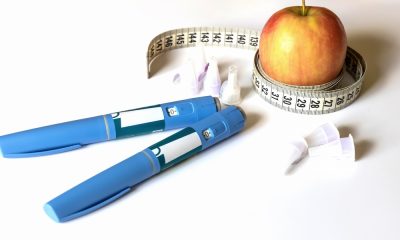
A diabetes and weight loss drug has been shown to cut brain shrinkage in Alzheimer’s by almost 50 per cent.
The drug, liraglutide, is a GLP-1 receptor agonist, a class that copies a gut hormone which helps regulate blood sugar and appetite.
The family includes semaglutide, known as Wegovy or Ozempic.
In a study involving 204 patients with mild Alzheimer’s disease, led by professor Paul Edison, those given liraglutide had less brain shrinkage and slower cognitive decline than those on placebo.
Reduced shrinkage was seen in the frontal, temporal and parietal lobes, as well as total grey matter. These brain areas support memory, learning, language and decision-making.
The research suggests liraglutide may protect the brains of people with mild Alzheimer’s disease and cut cognitive decline by as much as 18 per cent after one year of treatment.
Researchers believe the drug’s protective effect may stem from actions on inflammation, the build-up of harmful proteins, insulin resistance and amyloid accumulation.
Professor Paul Edison, professor of neuroscience at Imperial’s Department of Brain Sciences, said: “We think liraglutide is protecting the brain possibly by reducing inflammation, lowering insulin resistance and the toxic effects of Alzheimer’s biomarkers or improving how the brain’s nerve cells communicate.”
The randomised, double-blind, placebo-controlled trial included patients seen at 24 clinics across the UK.
Half received a daily injection of up to 1.8 mg of liraglutide, while the other half received a placebo injection.
Because liraglutide and other GLP-1 drugs are already licensed for managing obesity and diabetes, their path to treatment for Alzheimer’s could be relatively swift.
Professor Edison added: “If scientists are able to further demonstrate that this is working in patients with Alzheimer’s disease phase 3 trials, and the FDA approves it for Alzheimer’s, this drug could then be immediately available.
Two independent phase 3 trials are already under way, with findings due at the end of 2025.

Poor sleep linked to shorter life expectancy

Round up: Organ-on-a-chip platform tests cancer vaccines in older adults, and more

Agetech World’s innovation & investment round-up

Gut bacteria offers new hope for diabetes

Weight loss drug slows Alzheimer’s decline, study finds

Scientists closer to halting ageing at its biological roots

US$100m UK tech entrepreneurs shift focus from real estate to longevity

Weight loss jabs my only temporarily reduce ‘food noise,’ study finds

Supplement could restore memories lost by Alzheimer’s, study finds

Treatment can slow or reverse age-related memory decline – study
 News4 weeks ago
Scientists closer to halting ageing at its biological roots
- News4 weeks ago
US$100m UK tech entrepreneurs shift focus from real estate to longevity
- News3 weeks ago
Weight loss jabs my only temporarily reduce ‘food noise,’ study finds
- News4 weeks ago
Supplement could restore memories lost by Alzheimer’s, study finds
- News6 days ago
Treatment can slow or reverse age-related memory decline – study
- News2 weeks ago
Eating cheese linked to lower dementia risk
- News4 weeks ago
Gladys raises £1.5m for AI home care
- News4 weeks ago
Forus gains AI backing with 21 per cent stake