Research
We are no longer living longer, new study shows


The rise in human life expectancy has slowed down across Europe since 2011, according to research from the University of East Anglia and partners.
A new study reveals that the food we eat, physical inactivity and obesity are largely to blame, as well as the Covid pandemic. Of all the countries studied, England experienced the biggest slowdown in life expectancy.
It means that rather than looking forward to living longer than our parents or grandparents, we may find that we are dying sooner.
The team says that in order to extend our old age, we need to prioritise healthier lifestyles in our younger years – with governments urged to invest in bold public health initiatives.
Lead researcher Prof Nick Steel, from UEA’s Norwich Medical School, said: “Advances in public health and medicine in the 20th Century meant that life expectancy in Europe improved year after year. But this is no longer the case.
“From 1990 to 2011, reductions in deaths from cardiovascular diseases and cancers continued to lead to substantial improvements in life expectancy.
“But decades of steady improvements finally slowed around 2011, with marked international differences.
“We found that deaths from cardiovascular diseases were the primary driver of the reduction in life expectancy improvements between 2011–19. Unsurprisingly, the Covid pandemic was responsible for decreases in life expectancy seen between 2019–21.
“After 2011, major risks such as obesity, high blood pressure and high cholesterol either increased or stopped improving in almost all countries.
“Better cholesterol and blood pressure treatments have not been enough to offset the harms from obesity and poor diets.”
The research team studied data from the Institute of Health Metrics and Evaluation (IHME)’s Global Burden of Disease 2021 – the largest and most comprehensive research to quantify health loss across places and over time, drawing on the work of nearly 12,000 collaborators across more than 160 countries and territories.
They compared changes in life expectancy, causes of death, and population exposure to risk factors across Europe between 1990–2011, 2011–19, and 2019–21.
Countries studied included Austria, Belgium, Denmark, Finland, France, Germany, Greece, Iceland, Ireland, Italy, Luxembourg, the Netherlands, Norway, Portugal, Spain, Sweden, England, Northern Ireland, Scotland, and Wales.
The team say that despite the downturn, we still haven’t reached a biological ceiling for longevity.
Steel explained: “Life expectancy for older people in many countries is still improving, showing that we have not yet reached a natural longevity ceiling.
“Life expectancy mainly reflects mortality at younger ages, where we have lots of scope for reducing harmful risks and preventing early deaths.
“Comparing countries, national policies that improved population health were linked to better resilience to future shocks.”
“Countries like Norway, Iceland, Sweden, Denmark, and Belgium held onto better life expectancy after 2011, and saw reduced harms from major risks for heart disease, helped by government policies.
“In contrast, England and the other UK nations fared worst after 2011 and also during the Covid pandemic, and experienced some of the highest risks for heart disease and cancer, including poor diets.
“This suggests that stronger government policies are needed to reduce major health risks including obesity, poor diet, and low physical activity – to improve population health over the long term.”
Professor John Newton, from the European Centre for Environment and Human Health at the University of Exeter, said: “These results are a cause for concern especially here in the UK, but also some hope. We should be concerned because many European countries including the UK are showing such poor progress but hopeful because addressing the underlying causes of major illnesses appears to be effective if only improvements in the key risks can be sustained.”
Sarah Price, NHS England, National Director of Public Health, said: “This important study reinforces that prevention is the cornerstone of a healthier society, and is exactly why it will be such a key part of the 10 Year Health Plan which we are working with Government on.
“The slowdown in life expectancy improvements, particularly due to cardiovascular disease and cancer, highlights the urgent need for stronger action on the root causes — poor diet, physical inactivity, and obesity.
“The NHS is playing its part and has already helped hundreds of thousands of people to lose weight through our 12-week digital Weight Management Programme, while more than a million people a year receive a blood pressure check in NHS pharmacies which are key to identifying cardiovascular issues and significantly improving people’s overall health.
“However, more can action is need across society because we cannot treat our way out of the obesity crisis, and we need to stem it at source.”
This study was led by UEA in collaboration with the Global Burden of Disease Project at the Institute for Health Metrics and Evaluation, University of Washington, the University of Exeter and the Department of Health and Social Care, among others. The views expressed in this publication are those of the authors and not necessarily those of the UK Department of Health and Social Care.
This publication is based on research funded in part by the Gates Foundation. The findings and conclusions contained within are those of the authors and do not necessarily reflect positions or policies of the Gates Foundation.
‘Changing life expectancy in European countries 1990–2021: a sub analysis of causes and risk factors from the Global Burden of Disease Study 2021’ is published in The Lancet Public Health.











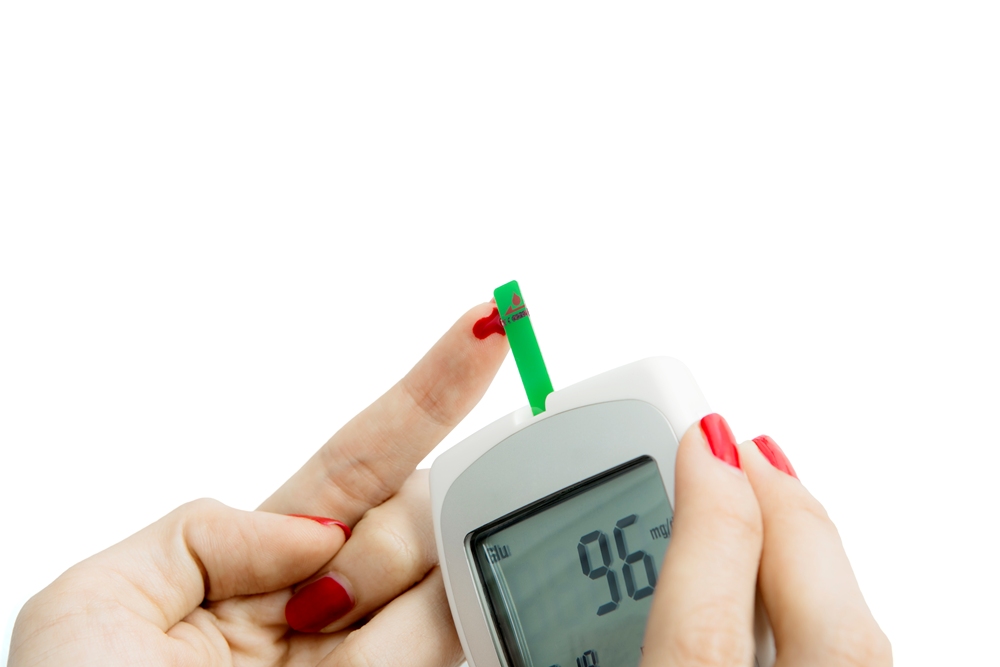
Sharp rises in blood sugar after meals may raise Alzheimer’s risk, according to genetic analysis of more than 350,000 adults.
The findings point to after-meal glucose, rather than overall blood sugar, as a possible factor in long-term brain health.
Researchers examined genetic and health data from over 350,000 UK Biobank participants aged 40 to 69, focusing on fasting glucose, insulin, and blood sugar measured two hours after eating.
The team used Mendelian randomisation, a genetic method that helps test whether biological traits may play a direct role in disease risk.
People with higher after-meal glucose had a 69 per cent higher risk of Alzheimer’s disease.
This pattern, known as postprandial hyperglycaemia (elevated blood sugar after eating), stood out as a key factor.
The increased risk was not explained by overall brain shrinkage (atrophy) or white matter damage, suggesting after-meal glucose may affect the brain through other pathways not yet fully understood.
Dr Andrew Mason, lead author, said: “This finding could help shape future prevention strategies, highlighting the importance of managing blood sugar not just overall, but specifically after meals.”
Dr Vicky Garfield, senior author, added: “We first need to replicate these results in other populations and ancestries to confirm the link and better understand the underlying biology.
“If validated, the study could pave the way for new approaches to reduce dementia risk in people with diabetes.”

A recent international study that pooled brain scans and memory tests from thousands of adults has shed new light on how structural brain changes are tied to memory decline as people age.
The findings show that the connection between shrinking brain tissue and declining memory is nonlinear, stronger in older adults, and not solely driven by known Alzheimer’s-associated genes like APOE ε4.
This suggests that brain ageing is more complex than previously thought, and that memory vulnerability reflects broad structural changes across multiple regions, not just isolated pathology.
Alvaro Pascual-Leone, MD, PhD is senior scientist at the Hinda and Arthur Marcus Institute for Aging Research and medical director at the Deanna and Sidney Wolk Center for Memory Health.
The researcher said: “By integrating data across dozens of research cohorts, we now have the most detailed picture yet of how structural changes in the brain unfold with age and how they relate to memory.”
The study found that structural brain change associated with memory decline is widespread, rather than confined to a single region.
While the hippocampus showed the strongest association between volume loss and declining memory performance, many other cortical and subcortical regions also demonstrated significant relationships.
This suggests that cognitive decline in ageing reflects a distributed macrostructural brain vulnerability, rather than deterioration in a few specific brain regions.
The pattern across regions formed a gradient, with the hippocampus at the high end and progressively smaller but still meaningful effects across large portions of the brain.
Importantly, the relationship between regional brain atrophy and memory decline was not only variable across individuals but also highly nonlinear.
Individuals with above-average rates of structural loss experienced disproportionately greater declines in memory, suggesting that once brain shrinkage reaches higher levels, cognitive consequences accelerate rather than progress evenly.
This nonlinear pattern was consistent across multiple brain regions, reinforcing the conclusion that memory decline in cognitively healthy ageing is linked to global and network-level structural changes, with the hippocampus playing a particularly sensitive role but not acting alone.
Pascual-Leone said: “Cognitive decline and memory loss are not simply the consequence of ageing, but manifestations of individual predispositions and age-related processes enabling neurodegenerative processes and diseases.
“These results suggest that memory decline in ageing is not just about one region or one gene — it reflects a broad biological vulnerability in brain structure that accumulates over decades.
“Understanding this can help researchers identify individuals at risk early, and develop more precise and personalized interventions that support cognitive health across the lifespan and prevent cognitive disability.”

Shingles vaccine may slow biological ageing in older adults

Thousands of men in England to be offered life-extending prostate cancer drug

Blood sugar spike after meals may increase Alzheimer’s risk

Study reveals why memory declines with age

Agetech research round-up: brain health vital, £38m to combat Alzheimers, and more…

FDA clears automated brain fluid device

Agetech World’s latest innovation & investment round-up

Insilico signs US$888m oncology deal with Servier

Food preservatives linked to increased diabetes and cancer risk, study finds

UK bans junk food ads before 9pm to protect child health
 News2 weeks ago
FDA clears automated brain fluid device
- News2 weeks ago
Agetech World’s latest innovation & investment round-up
- Technology2 weeks ago
Insilico signs US$888m oncology deal with Servier
- News2 weeks ago
Food preservatives linked to increased diabetes and cancer risk, study finds
- News2 weeks ago
UK bans junk food ads before 9pm to protect child health
- News1 week ago
Captioning glasses win AARP pitch at CES
- Insights2 weeks ago
Global longevity initiative launches North American chapter
- Technology6 days ago
Interview: GlycanAge launch first hospital-based tests