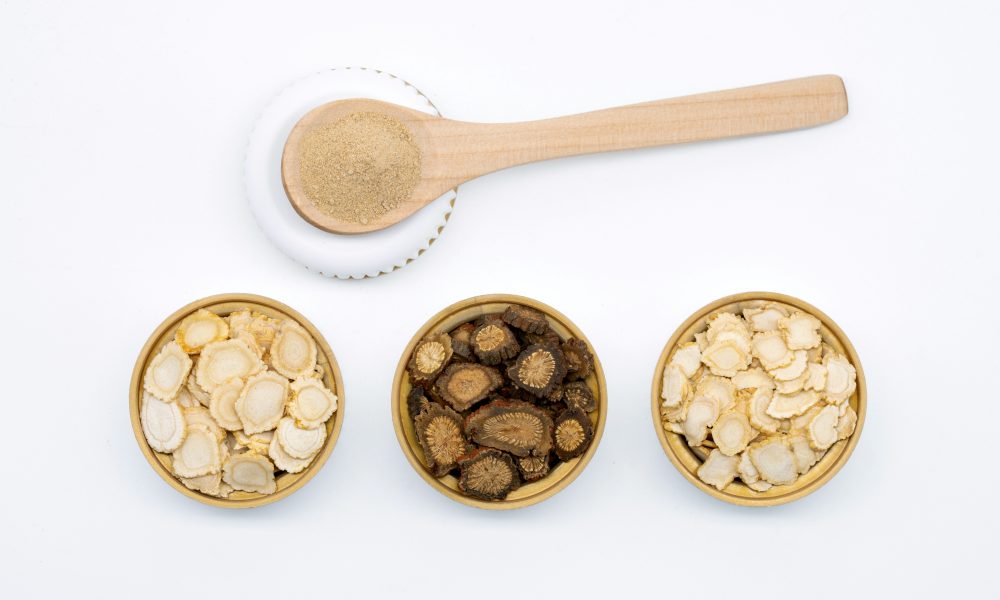
Ginseng, known as the “king of herbs,” has long been valued for its health benefits and contains various bioactive compounds, with ginsenosides being the most prominent.
In particular, ginsenosides such as Rg2 and Compound K (CK), have demonstrated promising anti-ageing properties.
They prevent collagen degradation, inhibit matrix metalloproteinase-1 (MMP-1) expression, and activate multiple antioxidant and longevity-related signalling pathways including FOXO/DAF-16, NRF2/SKN-1 and SIRT1/SIR 2.1.
In a recent review, it was revealed that much focused has been placed on CK, largely due to its higher bioavailability and solubility compared to its parent compounds.
Notably, CK exhibits a variety of beneficial effects, including the ability to enhance skin barrier function, prevent photoageing, regulate autophagy and protect against mitochondrial dysfunction. These effects occur through the inhibition of MMP-1 expression, upregulation of collagen synthesis, and activation of antioxidant pathways.
The review reported that CK improves skin hydration and reduces transepidermal water loss (TEWL) in the epidermis by promoting tight junctions between keratinocytes.
In the dermis, it protects collagen and elastin fibres by inhibiting MMP activity and stimulating pro-collagen production. CK also stimulates hyaluronic acid synthesis, a key component of the extracellular matrix, and regulates mitochondrial function by enhancing ATP production and reducing mitochondrial ROS accumulation.
Moreover, CK promotes autophagy, maintaining cellular homeostasis and delaying aging processes.
Additionally, it found that CK has potent anti-inflammatory properties, balancing the polarisation of macrophages towards an anti-inflammatory phenotype. It reduces the secretion of pro-inflammatory cytokines such as IL-1β, IL-6, and TNF-α, while increasing anti-inflammatory factors like IL-10.