


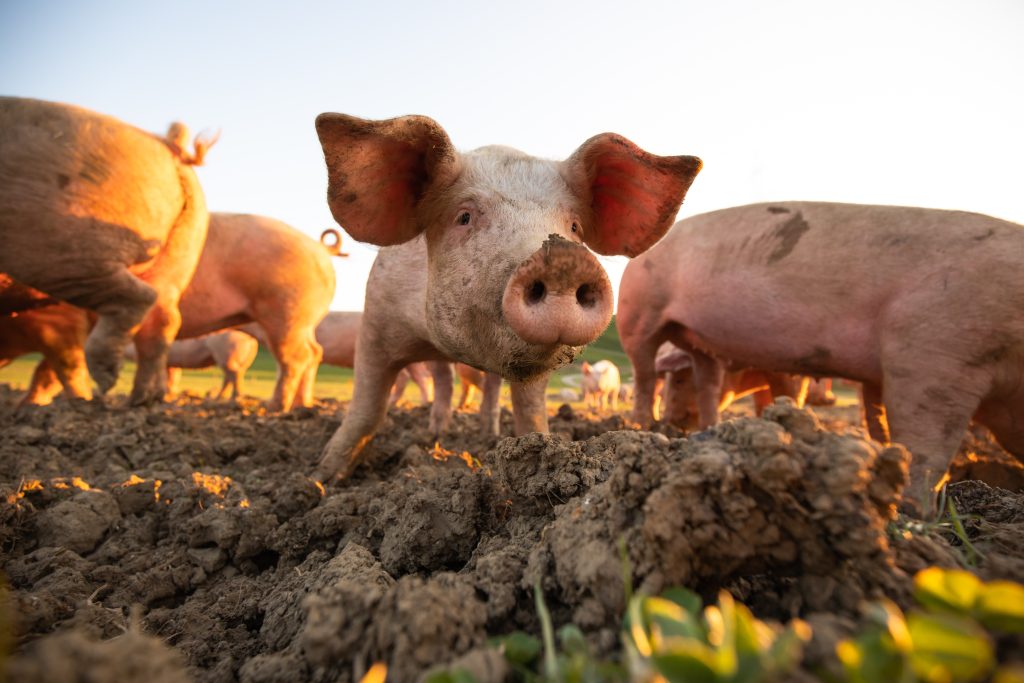
A recent study has harnessed a plasma fraction derived from young pigs to reduce the biological age of elderly rats, potentially opening up possibilities for rejuvenation in humans.
Efforts to employ youthful blood to rejuvenate ageing organisms have been explored for centuries, but only in recent times has this concept gained scientific validation.
A new study, led by geroscientists Steve Horvath and Harold Katcher, administered an exosome-containing plasma fraction from the blood of young adult pigs to elderly rats.
Exosomes, minuscule lipid vesicles secreted by cells, play a pivotal role in intracellular communication. Previous studies have illustrated various rejuvenating effects associated with young exosomes.
The elderly rats received two sets of four injections of an exosome-containing blood fraction referred to as E5. The initial series spanned eight days at the outset of the experiment, followed by the second series commencing 95 days later. The experiment unfolded over a total duration of 155 days.
The researchers gauged the treatment’s impact by using specific epigenetic clocks, designed and validated by the researchers to gauge biological age based on changes to the epigenome.
According to the researchers, the “plasma treatment of the elderly rats significantly decreased the epigenetic ages of their blood, liver and heart to levels comparable to those of young rats.”
The treatment led to an average rejuvenation of 74.6 per cent in liver tissue, 64.3 per cent in blood, 46.5 per cent in heart tissue and 24.4 per cent in the hypothalamus.
The average rejuvenation across the four tissues amounted to 67.4 per cent. “In other words, the treatment more than halved the epigenetic age,” the researchers said.
In addition to using epigenetic clocks, the researchers conducted numerous supplementary tests throughout the course of the experiment. Many parameters, including lipid profiles and blood glucose levels, exhibited significant improvement following the treatment, eventually aligning with those of young control groups.
Despite a relatively modest epigenetic age reversal observed in the hippocampus, the treatment induced a marked enhancement in cognitive function, assessed through the Barnes maze, in which rats must find an exit.
The initial improvement faded after the first injection series but was followed by a more robust and sustained effect after the second series. The researchers underscored the importance of this “one-two punch approach” for sustaining rejuvenation.
A similar pattern emerged regarding inflammation, with levels of pro-inflammatory cytokines decreasing after the initial treatment, gradually rising and then dropping again after the second treatment. These levels stabilised until the end of the study.
The treatment robustly influenced markers of oxidative stress, a significant factor in age-related degeneration, as well as indicators of liver and kidney function, ultimately aligning with those of young controls by the end of the study.
The successful rejuvenation of one mammalian species by using blood plasma from a different species holds profound implications, the researchers said in the study’s conclusion.
The authors stated: “Not only does this reaffirm the universality of the ageing process in various mammalian species, but it also demonstrates that the rejuvenating material can readily be sourced from species other than humans, which addresses the challenging issues of supply, economics and ethics, which would otherwise be highly challenging.”