News
Vitamin supplements shown to improve nutrition biomarkers in older men

A six-month study of healthy older men is the latest to support the positive benefits of taking multivitamin and multimineral supplements on key nutrition biomarkers.
The research led by Oregon State University’s Tory Hagen and Alexander Michels has also shown that the changes in nutrition status could have direct connections to cellular function, measured by the oxygen consumption of the study participants’ blood cells.
The findings published in the journal Nutrients, suggest that supplementation may be a key tool in helping people stay healthier as they age.
Dr Michels, a research associate at OSU’s Linus Pauling Institute, said: “Many older adults take a multivitamin, thinking it will help them stay healthy. However, previous studies have shown mixed results when it comes to multivitamins and disease risk.
“We wanted to know why there was so much uncertainty. Is it possible that multivitamins aren’t as effective at changing nutrition biomarkers in older adults?”
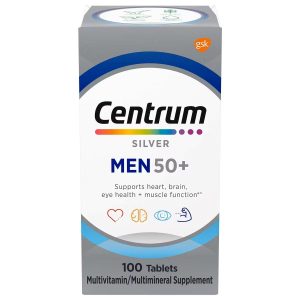
The research group, which included eight OSU scientists, recruited 35 healthy men aged 68-plus for the double-blind study. Half received a Centrum Silver supplement, the other half a placebo. Participants didn’t know what they were receiving.
None of those involved was allowed to take other supplements during the study, except for vitamin D if it was prescribed by their doctor.
Professor Hagen, principal investigator and Helen P Rumbel Professor for Healthy Ageing Research at the Linus Pauling Institute, explained: “Our tests showed that many of these older men were not obtaining the optimal levels of several vitamins when the study started. So there certainly was room for improvement.”
After the six-month trial, differences in the supplement and placebo groups became apparent. While those taking the multivitamin showed improved biomarkers of nutrition, those on the placebo did not.
“Several of the participants assigned to the placebo group had blood nutrition biomarkers fall during the study,” said Professor Hagen, who is also a professor of biochemistry and biophysics at OSU.
“It suggests that food alone was not enough to keep their vitamin and carotenoid levels up.”
Carotenoids are yellow, orange and red pigments synthesized by plants, and they play multiple roles in human health. Some carotenoids like beta-carotene can provide the body with an extra source of vitamin A.
Although the researchers did not measure disease risk, they did test white blood cells, part of the body’s immune system.
Professor Hagen said: “We were amazed to find that the men who took the placebo showed reduction in cellular oxygen consumption.”
He noted that oxygen consumption is an indicator of cell function.
“This was not observed in men who took the multivitamin, suggesting a connection between vitamin status and white blood cell function that we are eager to explore further.”
The researchers believe the study is the beginning of a new era for multivitamin research.
Dr Michels said: “Our evidence indicates that many older men could benefit from a daily multivitamin, but the response did vary from individual to individual,
“Knowing who benefits the most and why will be key for multivitamin trials that evaluate disease risk in the future.”
News
Mole rat gene extends mouse lifespan
News
AI can predict Alzheimer’s with almost 93% accuracy, researchers say

Alzheimer’s AI can predict the disease with nearly 93 per cent accuracy using more than 800 brain scans, researchers say.
The system identified anatomical changes in the brain linked to the onset of the most common form of dementia, a condition that gradually damages memory and thinking.
The findings build on years of research suggesting AI could help spot early Alzheimer’s risk, predict disease and identify patients whose condition has not yet been diagnosed.
Benjamin Nephew, an assistant research professor at the Worcester Polytechnic Institute in Massachusetts, said: “Early diagnosis of Alzheimer’s disease can be difficult because symptoms can be mistaken for normal ageing.
“We found that machine-learning technologies, however, can analyse large amounts of data from scans to identify subtle changes and accurately predict Alzheimer’s disease and related cognitive states.”
The study used MRI scans, a type of detailed brain imaging, from 344 people aged 69 to 84.
The dataset included 281 scans showing normal mental function, 332 with mild cognitive impairment, an early stage of memory and thinking decline, and 202 with Alzheimer’s.
The scans covered 95 of the brain’s nearly 200 distinct regions and used an AI algorithm to predict patients’ health.
Being able to use AI to help diagnose Alzheimer’s earlier could give patients and doctors crucial time to prepare and potentially slow the progression of the disease.
The analysis showed that one of the top predictive factors was brain volume loss, or shrinkage, in the hippocampus, which helps form memories, the amygdala, which processes fear, and the entorhinal cortex, which helps provide a sense of time.
This pattern held across age and sex, with both men and women aged 69 to 76 showing volume loss in the right part of the hippocampus, suggesting it may be an important area for early diagnosis, the researchers noted.
However, the research also found that the way brain regions shrink differs by sex.
In females, volume loss occurred in the brain’s left middle temporal cortex, which is involved in language and visual perception. In males, it was mainly seen in the right entorhinal cortex
The researchers believe this could be linked to changes in sex hormones, including the loss of oestrogen in women and testosterone in men.
These conclusions could help improve methods of diagnosis and treatment going forward, Nephew said.
More than 7.2m Americans are living with Alzheimer’s, according to the Alzheimer’s Association.
More research is being done to reveal other impacting factors.
Nephew said: “The critical challenge in this research is to build a generalisable machine-learning model that captures the difference between healthy brains and brains from people with mild cognitive impairment or Alzheimer’s disease.”
News
Vision implant firm raises US$230m
News2 weeks agoInterview: The US company appealing Europe’s rejection of daily Alzheimer’s pill
News4 weeks agoLongevity startup Biopeak raises US$2.7m
News4 weeks agoBryan Johnson launches US$1m longevity programme
News4 weeks agoAgetech investment & innovation round-up
Insights2 weeks agoCentenarians’ blood reveals longevity clues
News4 weeks agoInterview: Dr Matthew Bennett on building resilience and a pain-free healthspan
News4 weeks agoRe:Cognition and Cera expand Alzheimer’s clinical trials access
News4 weeks agoFrench biotech raises €12m for osteoarthritis trial