AstraZeneca enters cholesterol drug delivery collaboration with biotech start-up
Multinational pharmaceutical company AstraZeneca has teamed up with ‘young’ Chinese biotech Cholesgen to develop new drugs to target high cholesterol and related metabolic diseases.
The three-year collaboration will see Shanghai-based Cholesgen receive an initial payment and a pre-defined license package for each qualified drug candidate nominated by UK-headquartered AstraZeneca to progress into clinical development.
The joint research effort will leverage complementary strengths and focus on selected targets from Cholesgen’s early-stage portfolios.
The programme will start from first-in-class targets and mechanisms originally identified by Chinese researchers as the scientists from AstraZeneca and Cholesgen work to deliver novel medicines to tackle hypercholesterolemia – a term used to describe high blood cholesterol levels – which is a major risk factor for developing atherosclerotic cardiovascular disease (ASCVD).
Hypercholesterolemia is currently treated by lifestyle changes, such as diet, exercise, and quitting smoking, as well as pharmacological options including statins, bile acid sequestrants, fibrates, and cholesterol absorption inhibitors.
But ASCVD remains a leading cause of death globally, despite advances in preventative care.
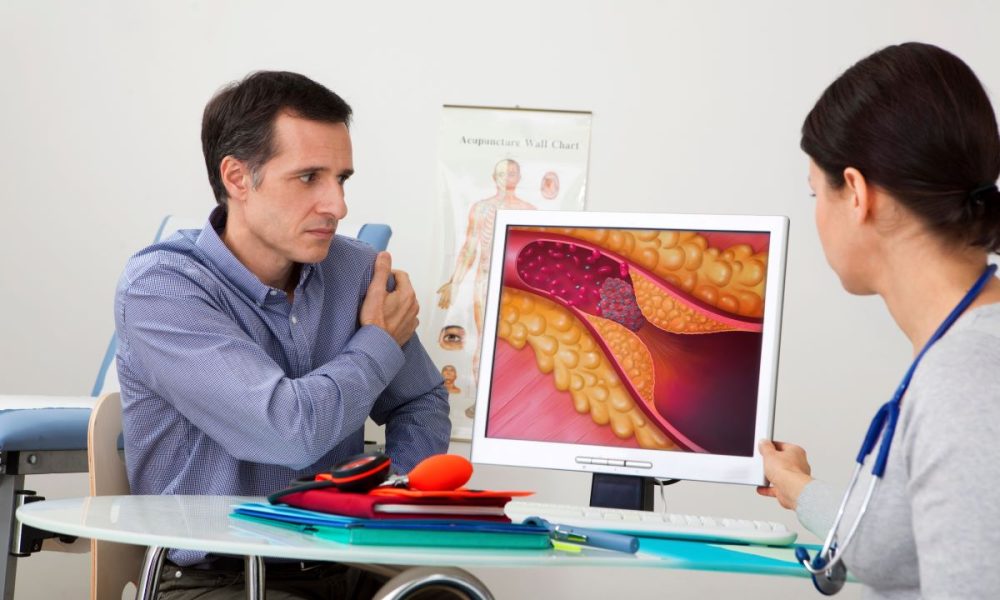
It is caused by fatty deposits building up in the arteries, with both high blood pressure and high cholesterol increasing the risk of developing the common condition, which is most likely to affect the over-65s.
ASCVD provokes the narrowing of the arteries, making it difficult for blood to flow through them, increasing a person’s risk of suffering a heart attack or stroke.
There is a need for novel treatments to tackle hypercholesterolemia, however, as millions of people can’t or won’t take the first-choice treatment for high cholesterol – statins – because of side effects.

Sir Menelas Pangalos
British neuroscientist Sir Menelas Pangalos, executive vice president of BioPharmaceuticals Research and Development at AstraZeneca, has stressed the importance of the alliance and licensing agreement with Cholesgen.
He said: “This is an important collaboration for AstraZeneca, led by deep scientific expertise and a shared ambition to address the key drivers that contribute to hypercholesterolemia and related metabolic diseases. We look forward to working together to accelerate target discovery and preclinical research in this area of high unmet need.”
Leading cholesterol metabolism researcher Dr Bao-Ling Song, who founded Cholesgen in 2021 and is also the biotech’s chair, added: “As a young biotech with deep understanding of target biology and a focused pipeline, Cholesgen is thrilled to start this strategic collaboration with AstraZeneca and hopes to accelerate the delivery of innovative medicines for patients with hypercholesterolemia or related metabolic diseases.”
Cholesgen recently raised $14.1m in a Series A financing round. Backers included AZ-CICC Medical Fund, a joint investment trust established by AztraZeneca and financial services company China International Capital Corporation.
Since launching in February 2021, Cholesgen has made great strides in its mission to develop innovative therapeutic solutions for cholesterol-related diseases, such as hyperlipidemia, obesity, atherosclerosis, and non-alcoholic steatohepatitis.
For AstraZeneca, the link-up with Cholesgen marks a return to working on successfully tackle hypercholesterolemia after last September calling time on its Ionis Pharmaceuticals-partnered cholesterol drug ION449.
AstraZeneca had licensed the asset in 2015. But despite the antisense therapy hitting its primary endpoint of reducing low-density lipoprotein cholesterol in a phase 2b trial, the results fell short of AstraZeneca’s efficacy criteria and the company opted against moving the candidate into phase 3.