News
Thousands of men in England to be offered life-extending prostate cancer drug








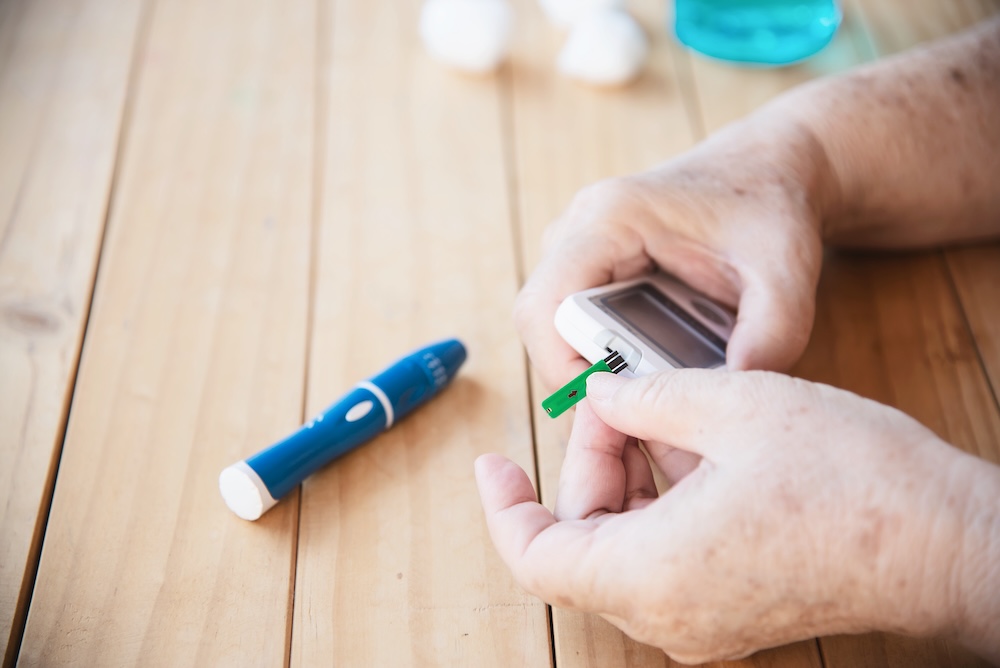
Novo Nordisk will launch an Ozempic pill for diabetes in select doses in the second quarter of this year.
The Danish drugmaker said the US Food and Drug Administration has approved Ozempic tablets in 1.5 milligram, 4 milligram and 9 milligram doses.
The new Ozempic branding is intended to help patients and healthcare professionals more easily recognise the available treatment options for type 2 diabetes, the company said.
“Because Ozempic is so well known, people often ask whether there’s an oral option for people with type 2 diabetes, without realising Rybelsus has been available since 2019,” said Ed Cinca, senior vice president of marketing and patient solutions at Novo Nordisk.
Semaglutide tablets at 3 milligram, 7 milligram and 14 milligram doses have been available under the brand name Rybelsus for diabetes since 2019.
The pill is also approved to reduce the risk of certain cardiovascular conditions (heart and blood vessel problems) in adults with type 2 diabetes who are at high risk for these events.
The FDA approved the new doses based on a bioequivalence study (which checks that two medicines act the same in the body) and clinical trial data for Rybelsus, Novo said.
The company expects a decision from the health regulator on a 25 milligram dose of Ozempic tablets by the end of 2026.



We round up the latest news in agetech research and innovation, from a human trial in ‘reverse ageing’ to the launch of a domestic longevity pod.
Approval has been secured in the United States for the first human trial targeting ‘reverse ageing’.
Boston-based company Life Biosciences will shortly commence trials of its ER-100 treatment which aims to treat eye disease through reprogramming cells.
It will initially treat around a dozen patients with glaucomas – a condition where high pressure inside the eye damages the optic nerve.
Each patient will receive injections of three powerful genes into an eye in an attempt to restore host cells to a healthier state by resetting their epigenetic controls.
It is over 20 years since Dr Shinya Yamanaka’s Nobel Prize work was first able to convert adult cells into pluripotent stem cells.
This reverse cell-editing process allows the regenerated cells – just like those found in an early embryo – to develop into the different, specialised cell types.
This trial has been approved by the Food And Drug Administration (FDA) after initial trials on animals proved a success.
Michael Ringel, chief operating officer at Life Biosciences, said: “It’s an incredibly big deal for us as an industry.
“It’ll be the first time in human history, in the millennia of human history, of looking for something that rejuvenates … So watch this space.”
Inherited longevity
New research claims that longevity-inheritability accounts for around 50 per cent of human lifespan.
For many decades, scientists had rated genetics as being a relatively low factor in human lifespan – compared to other inherited traits – at between 10 per cent and 25 per cent.
However, this new study from the Israeli-based Weizmann Institute of Science, presents an entirely different picture.
Led by Ben Shenhar, a PhD student, from the lab of Prof Uri Alon of Weizmann’s Molecular Cell Biology Department, it analysed three large twin databases from Sweden and Denmark – including a dataset of twins who were raised apart.
The researchers showed that earlier heritability estimates were masked by high levels of extrinsic mortality, such as deaths caused by accidents, infections and environmental hazards.
Their findings are consistent with the heritability of other complex human traits and with findings from animal models.
“For many years, human lifespan was thought to be shaped almost entirely by non-genetic factors, which led to considerable skepticism about the role of genetics in ageing and about the feasibility of identifying genetic determinants of longevity,” said Shenhar.
“By contrast, if heritability is high, as we have shown, this creates an incentive to search for gene variants that extend lifespan, in order to understand the biology of aging and, potentially, to address it therapeutically.”
Longevity blood test
In just a few years a simple blood test should be sufficient to gauge one’s anticipated longevity, claims Dr Tan Min-Han, chief executive and medical director of Singapore and Californian-based firm Lucence.
Dr Tan believes people will be able to go to a clinic near them to take a simple blood test that can detect early signs of ageing.
The results could guide lifestyle changes, such as sleep, diet and exercise, to improve key biomarkers and slow physical decline.
Lucence was founded in 2016 as a spin-off from Singapore’s Agency for Science, Technology and Research. While incorporated and headquartered in Singapore, the company also maintains a co-headquarters in Palo Alto, California.
Since then, it has secured more than US$80m in equity funding, including US$20m in a 2019 funding round led by IHH Healthcare.
He said: “Blood tests are more acceptable and accessible as opposed to uncomfortable procedures like mammograms and colonoscopies. I believe that technology could make a lot of this better.
“Five years ago, being able to detect cancers from blood tests was science fiction. But now, we have made that a reality.”
Longevity pod
A domestic longevity pod known as the E-Salt Cabin has been launched by Eleve Health, a California-based wellness technology company
Roughly the size of a compact car – at just over eight and a half feet long – the pod combines four core therapies: halotherapy, red light therapy, oxygen delivery, and aromatherapy.
Halotherapy disperses a fine, mineral-rich mist designed to support respiratory health. Red light therapy stimulates cellular repair and regeneration. Oxygen delivery aims to improve circulation and energy levels. And custom essential oil blends add a sensory layer
The company says it can be used as a tool to ‘support circulation, clarity, and recovery within a residential setting’.
Eleve said: “The pod reflects a broader shift among ultra-high-net-worth homeowners, with wearable technology, circadian lighting, biophilic interiors, and curated soundscapes becoming standard.”

Ozempic maker to launch diabetes pill

New Alzheimer’s treatments could slow memory loss

Agetech World research and innovation round-up

Four in ten cancer cases could be prevented globally, report finds

Longevity startup Biopeak secures US$2.7m

Interview: GlycanAge launch first hospital-based tests

Captioning glasses win AARP pitch at CES

Shingles vaccine may slow biological ageing in older adults

Corsera Health raises US$80m to prevent heart disease

Older male athletes may face increased risk of serious heart problems during exercise
 News4 weeks ago
Interview: GlycanAge launch first hospital-based tests
- News4 weeks ago
Captioning glasses win AARP pitch at CES
- News3 weeks ago
Shingles vaccine may slow biological ageing in older adults
- News4 weeks ago
Corsera Health raises US$80m to prevent heart disease
- News4 weeks ago
Older male athletes may face increased risk of serious heart problems during exercise
- News3 weeks ago
Nanoparticles target disease proteins in dementia
- News4 weeks ago
Billionaire Platt backs Engitix again with US$25m
- News3 weeks ago
L-Nutra raises US$36.5m in series D funding