News
Osteoporosis breakthrough could help millions of women


Millions of women could benefit from improved osteoporosis treatments after scientists discovery of a key driver of low bone density.
Around 200 million women worldwide are believed to be affected by osteoporosis, a potentially serious health condition that weakens bones, making them more fragile and therefore likely to break.
While men can develop the bone disease, 80% of sufferers are women, mainly as a result of falling oestrogen hormone levels during the menopause. Oestrogen is essential for healthy bones. But as levels of the hormone drop, women undergo rapid bone loss over several years.
Osteoporosis’ prevalence increases with age, with 49% of women 50-plus affected by it.
In the worst cases something as simple as coughing or having a minor bump can result in a broken bone. Fractures can cause long-term health problems and even threaten life. A significant number of sufferers who break their hip die within one year of the injury.
But now a team at Van Andel Institute in Grand Rapids in the United States say they have pinpointed a gene that could help preserve bone mass.
The research described in a study published in Science Advances reveals that loss of an epigenetic modulator, KDM5C, protects bone mass in mice. KDM5C works by altering epigenetic marks, which are akin to ‘on’ and ‘off’ switches that ensure instructions written in DNA are used at the right time and place.
Van Andel Institute (VAI) associate professor, Tao Yang, PhD, one of the report’s authors, said: “Osteoporosis is a common disease that can have debilitating outcomes. KDM5C is a promising target to treat low bone mass in women because it is highly specific. We’re hopeful that our findings will contribute to improved therapies.”
Several medications are approved to treat osteoporosis, but the study team say fears of rare, severe side effects are often a barrier for their use.
Treatments that can leverage oestrogen are also available, but are only recommended for low dose, short-term use due in part to associations with a cancer risk.
It has long been known that women experience disproportionately lower bone mass than men throughout their lives, a situation that is accelerated with menopause, increasing the risk of osteoporosis and associated fractures.

Dr Connie Krawczyk. Credit: Van Andel Institute
To figure out why this happens, Dr Yang, fellow VAI associate professor, Connie Krawczyk, and their teams looked at the differences in the ways bone is regulated in male and female mice, which share many similarities with humans and are important models for studying health and disease.
They focused on specialised cells called osteoclasts, which help maintain bone health by breaking down and recycling old bone.
The researchers found reducing KDM5C disrupted cellular energy production in osteoclasts, which slowed down the recycling process and preserved bone mass. Importantly, KDM5C is linked to X chromosomes, which means it is more active in females than in males.
Dr Krawczyk said: “Lowering KDM5C levels is like flipping a switch to stop an overactive recycling process. The result is more bone mass, which ultimately means stronger bones.
“We’re very excited about this work and look forward to carrying out future studies to refine our findings. At the end of the day, we hope these insights make a difference for people with osteoporosis.”




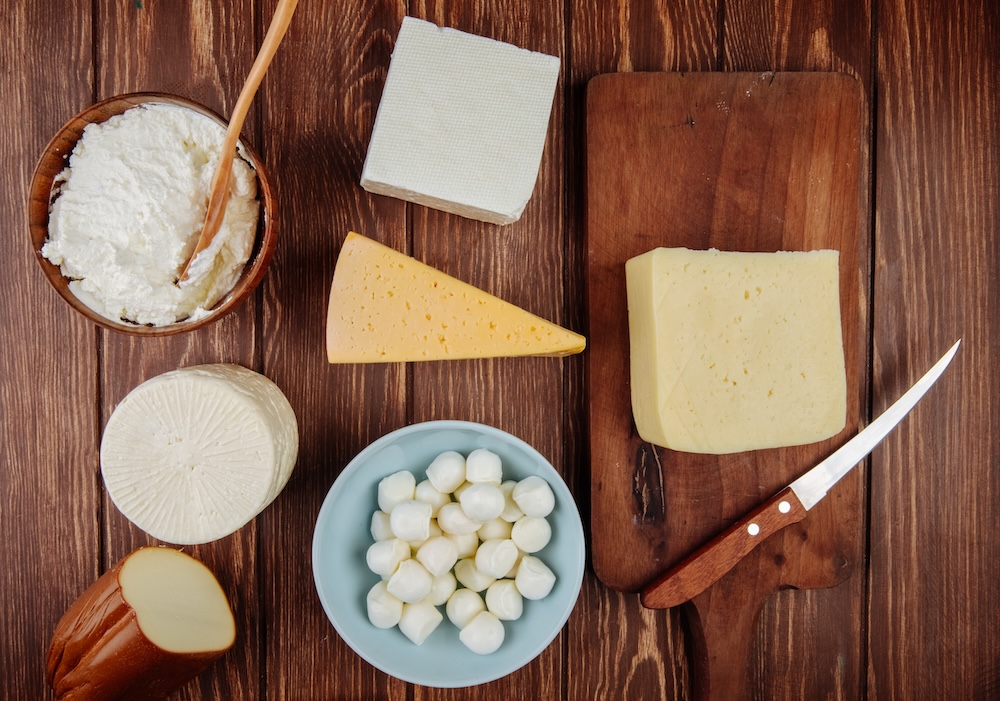
A 25-year Swedish study links higher cheese intake to lower Alzheimer’s risk in people without known genetic risk, with cream also tied to lower dementia risk.
However, researchers emphasise that the results should be interpreted with caution.
The study tracked 27,670 people over 25 years.
During that time, 3,208 participants were diagnosed with dementia.
Among individuals without a known genetic risk for Alzheimer’s disease, those who consumed more than 50 grams of full-fat cheese per day showed a 13 to 17 per cent lower risk of developing Alzheimer’s.
This association did not appear in participants who carried genetic risk factors for the disease.
People who consumed more than 20 grams of full-fat cream per day also showed a lower risk of dementia overall, ranging from 16 to 24 per cent.
No meaningful links were found for low-fat or high-fat milk, fermented or non-fermented milk, or low-fat cream.
The results stand out because public health guidance has long encouraged people to choose low-fat dairy to protect heart health.
This connection matters because cardiovascular disease (conditions affecting the heart and blood vessels) and dementia share many underlying risk factors, including high blood pressure, diabetes and obesity.
When evidence from previous studies is combined, analyses suggest that cheese consumption may also be linked to a lower risk of heart disease, and that full-fat dairy does not necessarily increase cardiovascular risk.
Several other studies have explored whether similar patterns apply to brain health, but the results are mixed.
Evidence overall suggests that studies conducted in Asian populations are more likely to report benefits of dairy consumption for cognitive health (the ability to think, remember and reason), while many European studies do not.
One possible explanation is that average dairy intake tends to be much lower in Asian countries, meaning modest consumption may have different effects than higher intakes.
For example, one Japanese study reported a reduced dementia risk among people who ate cheese, but overall consumption levels were very low and the research was sponsored by a cheese producer.
In contrast, another Japanese study funded by government grants found no protective effect of cheese.
Some long-term European studies have also reported benefits.
In a Finnish study of 2,497 middle-aged men followed for 22 years, cheese was the only food associated with a lower dementia risk, reduced by 28 per cent.
Other dietary factors also appear to matter.
Higher consumption of milk and processed red meat was associated with worse performance on cognitive tests, while fish intake was linked to better results.
A large study in the UK that followed nearly 250,000 people found lower dementia risk among those who ate fish two to four times a week, fruit daily and cheese once a week.
However, these studies have important limitations.
What people eat is usually self-reported, and changes in memory can affect both eating habits and how accurately people remember what they have eaten. To deal with this, the Swedish researchers took two extra steps.
First, they excluded anyone who already had dementia when the study began.
Then they repeated the same calculations after removing people who went on to develop dementia within the first ten years of the study.
This did not mean starting the study again or recruiting new participants. It simply meant re-checking the results using a smaller group of people who remained dementia-free for longer.
The reason for doing this is that the early stages of dementia can subtly change behaviour long before diagnosis.
People may eat differently, lose appetite or struggle to recall their usual diet. By focusing on participants who stayed cognitively healthy for many years, the researchers reduced the chance that these early changes were influencing the results.
Another important question is whether substitution played a role.
Some of the apparent benefits may reflect replacing red or processed meat with cheese or cream, rather than an effect of dairy itself.
Supporting this idea, the Swedish study found no association between full-fat dairy and dementia risk among participants whose diets remained stable over five years.
Most importantly, foods should not be considered in isolation.
Dietary patterns matter more than individual ingredients. Diets such as the Mediterranean diet, which is consistently associated with lower risks of both dementia and heart disease, include cheese alongside vegetables, fish, whole grains and fruit.
In the Swedish study, people who consumed more full-fat cheese and cream were also more educated, less likely to be overweight and had lower rates of conditions linked to dementia, including heart disease, stroke, high blood pressure and diabetes.
All of these factors independently reduce dementia risk.
This suggests that higher cheese intake tended to occur within healthier overall lifestyles, rather than alongside excess calorie consumption or poor metabolic health.
Overall, the evidence does not support the idea that full-fat dairy causes dementia, nor that fermented milk products reliably protect against it.
Full-fat cheese contains several nutrients relevant to brain health, including fat-soluble vitamins A, D and K2, as well as vitamin B12, folate, iodine, zinc and selenium.
These nutrients play roles in neurological function and may help support cognitive health.
That said, the data do not justify eating large amounts of cheese or cream as protective foods against dementia or heart disease.
The most consistent message remains that balanced diets, moderation and overall lifestyle matter far more than any single item on the cheese board.


Memory problems in Alzheimer’s may be linked to disrupted brain replay during rest, new research suggests.
The study, conducted in mice, points to a disrupted brain process that normally helps strengthen and preserve memories.
Researchers say the findings could inform future drugs that target this malfunctioning process and guide tools for earlier detection.
Scientists at University College London (UCL) found that replay events occurred as often in mice with amyloid plaques (protein deposits linked to Alzheimer’s) as in healthy mice, but the underlying patterns were no longer organised.
Instead of reinforcing memories, the coordinated activity of place cells became scrambled.
Dr Sarah Shipley, co-lead author from UCL Cell and Developmental Biology, said: “Alzheimer’s disease is caused by the build-up of harmful proteins and plaques in the brain, leading to symptoms such as memory loss and impaired navigation, but it’s not well understood exactly how these plaques disrupt normal brain processes.
“We wanted to understand how the function of brain cells changes as the disease develops, to identify what’s driving these symptoms.
“When we rest, our brains normally replay recent experiences, this is thought to be key to how memories are formed and maintained.
“We found this replay process is disrupted in mice engineered to develop the amyloid plaques characteristic of Alzheimer’s, and this disruption is associated with how badly animals perform on memory tasks.”
This replay activity takes place in the hippocampus, a region essential for learning and memory. During rest, specific neurons known as place cells activate in rapid sequences that mirror recent experiences.
Place cells, discovered by Nobel Prize-winning UCL neuroscientist Professor John O’Keefe, are neurons that correspond to particular locations.
As a person or animal moves through a space, different place cells fire in sequence. Later, during rest, those same cells typically reactivate in the same order, helping the brain store the experience as a memory.
To study this process, researchers tested how mice performed in a simple maze while recording brain activity at the same time.
Using specialised electrodes, they monitored roughly 100 individual place cells simultaneously as the animals explored and then rested.
This approach allowed the team to compare normal replay patterns with those seen in mice that had developed amyloid pathology associated with Alzheimer’s disease.
The researchers also observed that place cells in affected mice grew less stable over time. Individual neurons stopped reliably representing the same locations, especially after rest periods, which are normally when replay should strengthen memory signals.
These changes had clear behavioural effects.
Mice with disrupted replay performed worse in the maze, frequently revisiting paths they had already explored and appearing unable to remember where they had been.
Professor Caswell Barry, co-lead author from UCL Cell and Developmental Biology, said: “We’ve uncovered a breakdown in how the brain consolidates memories, visible at the level of individual neurons.
“What’s striking is that replay events still occur, but they’ve lost their normal structure. It’s not that the brain stops trying to consolidate memories, the process itself has gone wrong.”
Professor Barry added that the findings may help researchers identify Alzheimer’s earlier or develop treatments that focus on restoring normal replay activity.

Study reveals link between cheese and dementia

New obesity and diabetes drug set for Boots clinical trial

New study links Alzheimer’s memory loss to disrupted brain “replay” during rest

Blood test could spot pancreatic cancer earlier

Interview: Dr Annu Navani on biotechnology and ‘the power to recode life itself’

Interview: GlycanAge launch first hospital-based tests

Captioning glasses win AARP pitch at CES

Food preservatives linked to increased diabetes and cancer risk, study finds

Shingles vaccine may slow biological ageing in older adults

Older male athletes may face increased risk of serious heart problems during exercise
 Technology3 weeks ago
Interview: GlycanAge launch first hospital-based tests
- News4 weeks ago
Captioning glasses win AARP pitch at CES
- News4 weeks ago
Food preservatives linked to increased diabetes and cancer risk, study finds
- News2 weeks ago
Shingles vaccine may slow biological ageing in older adults
- News3 weeks ago
Older male athletes may face increased risk of serious heart problems during exercise
- News4 weeks ago
Corsera Health raises US$80m to prevent heart disease
- News3 weeks ago
Thousands of men in England to be offered life-extending prostate cancer drug
- News4 weeks ago
Billionaire Platt backs Engitix again with US$25m