


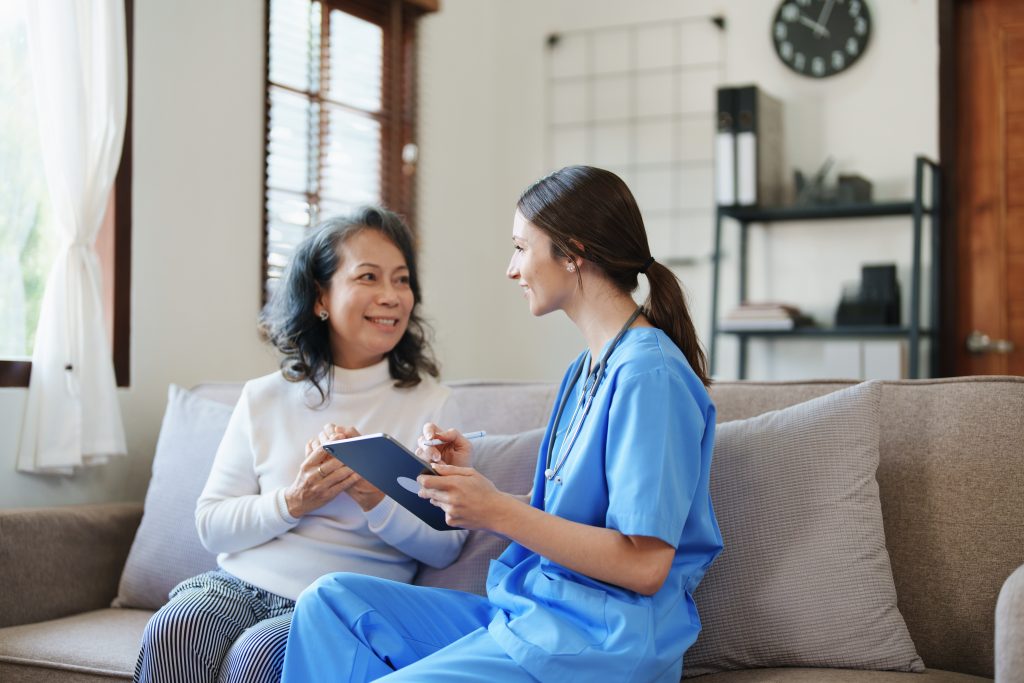
Nurse home visits to disadvantaged mothers can significantly reduce their rates of hypertension and their daughters’ likelihood of obesity, UCL research has revealed.
The research, published in the journal JAMA Network Open, reanalysed data taken as part of a Nurse-Family Partnership trial started more than 30 years ago – The Memphis New Mothers Study (1990-1994).
The researchers found that prenatal and infancy nurse home visits decreased the likelihood of daughters being obese by 55 per cent and being severely obese by 81 per cent in adolescence.
Similarly, mothers of girls showed a decrease of 39 per cent and 88 per cent for rates of Stage 1 and Stage 2 hypertension, respectively.
Professor Gabriella Conti (UCL Economics) led the study:
The researcher said: “Nurse visits are a powerful tool that can make a huge difference in people’s lives.
“This data shows the positive influence that public programmes like this can have on the long-term health of not just the children born into adverse circumstances, but also for the mothers themselves.”
Poverty and related adverse childhood experiences negatively impact a child’s long-term health by increasing the risk of chronic health conditions, including type 2 diabetes, heart disease and kidney failure which can lead to premature death.
The research was in part set up to look for ways that early intervention could help alleviate or prevent these lasting conditions.
Co-author Dr Joyce Smith is Assistant Professor at the University of Rochester School of Nursing, United States.
She said: “These ongoing benefits show the tremendous potential of a strong relationship between nurses and mothers.
“Investing in that relationship early on leads to a lifetime of positive outcomes.”
The study of nurse home visits began in New York in the 1970s to gauge the impact of nurse home visits for mothers facing serious social adversities in order to improve pregnancy outcomes, child health and development and maternal health and life course.
The community health programme, which provides nurse home visits for first-time mothers, spread across the US and was adopted internationally.
Previous research using Nurse-Family Partnership data, has demonstrated positive effects of the programme on first-time parents, including fostering healthier pregnancies and deliveries, improving child health and development and increasing the economic self-sufficiency of families.