Connect with us

News

New understanding of an old problem to immune response

Published

on

It’s long been known that the older you get the more difficult it is to fight off infection.

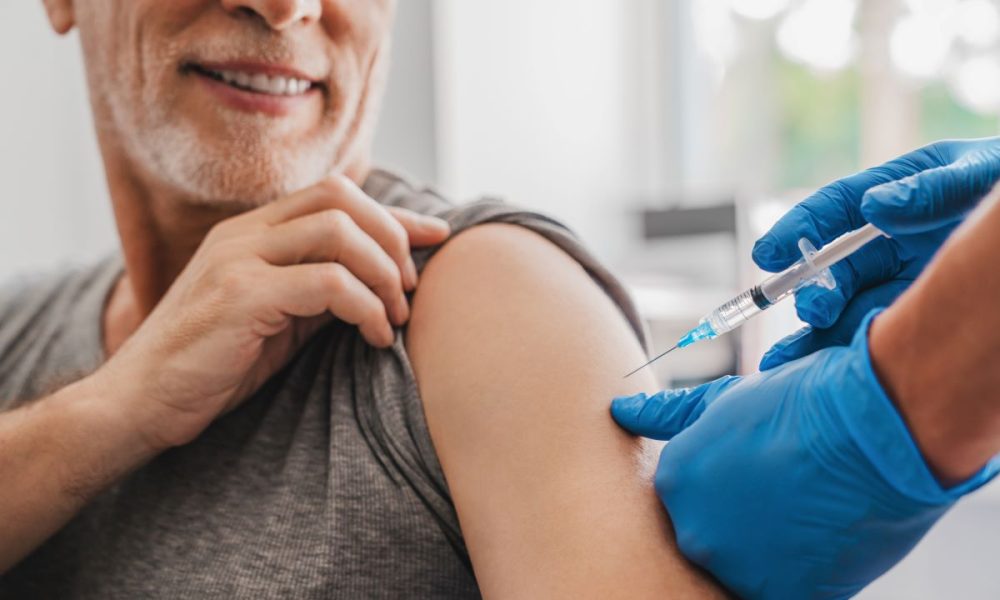
This decline in resistance to infectious diseases with age is particularly obvious when it comes to vaccines. Annual flu jabs are a case in point. They are notorious for not having the desired effect on the elderly.

Understanding the ways people’s immune response changes as we age holds the key to designing better vaccines and boosting protection for those most at risk.

New research published in Nature Immunology by Dr Michelle Linterman and her group at the Cambridge-based Linterman lab in the UK, could make this possible.

It explains that the organisation of specialised structures called germinal centres – which make lasting antibody immunity to pathogens and are therefore vital to the generation of longer-lived protection following vaccination – are altered in ageing.

But by demonstrating that these age-related changes can be reversed in mice, the research sets the foundation for interventions that bolster an effective vaccine response.

After a vaccination our immune system reacts by creating germinal centres that produce the immune B cells that provide long-term protection through the production of antibodies.

Due to an age-dependent impairment in antibody production, older people have lower levels of protection from vaccination which also wanes more quickly compared to younger people.

Protection by vaccination is essential to protect older people who become more susceptible to infections with age. Therefore, understanding how the age-related decline of the immune system can be reversed or mitigated is an important part of securing better health in later years.

The correct function of the germinal centre response requires the coordination of cellular interactions across time and space.

Germinal centres are made up of two distinct regions – the light and the dark zone, with some cells located in specific areas, and others which move between the sections. B cells are shaped by their interactions in first the dark zone and then in the light area.

Through a combination of mouse research, computer modelling and analysis of human vaccination data, the Linterman lab research team were able to show that changes to key interactors of B cells in the light zone of the germinal centre, T follicular helper cells, and also to light-zone specific cells called follicular dendritic cells (FDCs), were at the heart of the diminished vaccination response.

Dr Michelle Linterman

Dr Linterman, a group leader in the Babraham Institute’s Immunology programme, explained: “In this study we looked at what was happening to different cell types in the germinal centre, particularly the structure and organisation of the germinal centre across its two functionally distinct zones, to try and understand what causes the reduced germinal centre response with age.

“What we found is that the T follicular helper cells aren’t where they should be and as a result, antibody-producing cells lose essential selection cues. Surprisingly we also uncovered an unknown role for T follicular helper cells in supporting the expansion of follicular dendritic cells in the light zone after vaccination.”

The team used 3D computer modelling to simulate the loss of Tfh cells from the light zone and a reduced FDC network, which recapitulated their findings and strengthened their hypothesis that these two factors were enough to be responsible for a less than optimal germinal centre response in aged mice.

Having identified the dependencies between the cell types, the researchers used genetically modified mice to control the location of Tfh cells in the germinal centre, demonstrating that the defective FDC response was caused by loss of Tfh from the light zone.

Importantly, they were also able to correct the defective FDC response and boost the germinal centre response in aged mice by providing T cells that could correctly localise to the light zone.

The team also utilised data from human vaccination studies and found similar age-dependent changes in mice and humans.

Dr Linterman concluded: “These findings give us a more complete picture of what the effects of age are on the germinal centre and vital insight into how we might address these in terms of developing effective strategies for enhancing vaccine response in older people.”

News

Agetech World research and innovation round-up  

Published

on

We round up the latest news in agetech research and innovation, from a human trial in ‘reverse ageing’ to the launch of a domestic longevity pod.

Approval has been secured in the United States for the first human trial targeting ‘reverse ageing’.

Boston-based company Life Biosciences will shortly commence trials of its ER-100 treatment which aims to treat eye disease through reprogramming cells.

It will initially treat around a dozen patients with glaucomas – a condition where high pressure inside the eye damages the optic nerve.

Each patient will receive injections of three powerful genes into an eye in an attempt to restore host cells to a healthier state by resetting their epigenetic controls.

It is over 20 years since Dr Shinya Yamanaka’s Nobel Prize work was first able to convert adult cells into pluripotent stem cells.

This reverse cell-editing process allows the regenerated cells – just like those found in an early embryo – to develop into the different, specialised cell types.

This trial has been approved by the Food And Drug Administration (FDA) after initial trials on animals proved a success.

Michael Ringel, chief operating officer at Life Biosciences, said: “It’s an incredibly big deal for us as an industry.

“It’ll be the first time in human history, in the millennia of human history, of looking for something that rejuvenates … So watch this space.”

Inherited longevity

New research claims that longevity-inheritability accounts for around 50 per cent of human lifespan.

For many decades, scientists had rated genetics as being a relatively low factor in human lifespan – compared to other inherited traits – at between 10 per cent and 25 per cent.

However, this new study from the Israeli-based Weizmann Institute of Science, presents an entirely different picture.

Led by Ben Shenhar, a PhD student, from the lab of Prof Uri Alon of Weizmann’s Molecular Cell Biology Department, it analysed three large twin databases from Sweden and Denmark – including a dataset of twins who were raised apart.

The researchers showed that earlier heritability estimates were masked by high levels of extrinsic mortality, such as deaths caused by accidents, infections and environmental hazards.

Their findings are consistent with the heritability of other complex human traits and with findings from animal models.

“For many years, human lifespan was thought to be shaped almost entirely by non-genetic factors, which led to considerable skepticism about the role of genetics in ageing and about the feasibility of identifying genetic determinants of longevity,” said Shenhar.

“By contrast, if heritability is high, as we have shown, this creates an incentive to search for gene variants that extend lifespan, in order to understand the biology of aging and, potentially, to address it therapeutically.”

Longevity blood test

In just a few years a simple blood test should be sufficient to gauge one’s anticipated longevity, claims Dr Tan Min-Han, chief executive and medical director of Singapore and Californian-based firm Lucence.

Dr Tan believes people will be able to go to a clinic near them to take a simple blood test that can detect early signs of ageing.

The results could guide lifestyle changes, such as sleep, diet and exercise, to improve key biomarkers and slow physical decline.

Lucence was founded in 2016 as a spin-off from Singapore’s Agency for Science, Technology and Research. While incorporated and headquartered in Singapore, the company also maintains a co-headquarters in Palo Alto, California.

Since then, it has secured more than US$80m in equity funding, including US$20m in a 2019 funding round led by IHH Healthcare.

He said: “Blood tests are more acceptable and accessible as opposed to uncomfortable procedures like mammograms and colonoscopies. I believe that technology could make a lot of this better.

“Five years ago, being able to detect cancers from blood tests was science fiction. But now, we have made that a reality.”

Longevity pod

A domestic longevity pod known as the E-Salt Cabin has been launched by Eleve Health, a California-based wellness technology company

Roughly the size of a compact car – at just over eight and a half feet long – the pod combines four core therapies: halotherapy, red light therapy, oxygen delivery, and aromatherapy.

Halotherapy disperses a fine, mineral-rich mist designed to support respiratory health. Red light therapy stimulates cellular repair and regeneration. Oxygen delivery aims to improve circulation and energy levels. And custom essential oil blends add a sensory layer

The company says it can be used as a tool to ‘support circulation, clarity, and recovery within a residential setting’.

Eleve said: “The pod reflects a broader shift among ultra-high-net-worth homeowners, with wearable technology, circadian lighting, biophilic interiors, and curated soundscapes becoming standard.”

Continue Reading

Insights

Four in ten cancer cases could be prevented globally, report finds

Published

on

Up to four in ten cancer cases worldwide could be prevented, a new global analysis has found.

The study examines 30 preventable causes, including tobacco, alcohol, high body mass index, physical inactivity, air pollution, ultraviolet radiation and, for the first time, nine infections that can cause the disease.

Released ahead of World Cancer Day on 4 February, the analysis from the World Health Organization (WHO) and its International Agency for Research on Cancer (IARC) estimates that 37 per cent of all new cancer cases in 2022, around 7.1 million cases, were linked to preventable causes.

Drawing on data from 185 countries and 36 cancer types, the study identifies tobacco as the leading preventable cause of cancer, globally responsible for 15 per cent of all new cancer cases, followed by infections (10 per cent) and alcohol consumption (3 per cent).

Three cancer types, lung, stomach and cervical cancer, accounted for nearly half of all preventable cancer cases in both men and women globally.

Lung cancer was primarily linked to smoking and air pollution, stomach cancer was largely attributable to Helicobacter pylori infection (a bacterial infection of the stomach lining), and cervical cancer was overwhelmingly caused by human papillomavirus (HPV).

Dr André Ilbawi, team lead for cancer control at WHO and author of the study, said: “This is the first global analysis to show how much cancer risk comes from causes we can prevent.

“By examining patterns across countries and population groups, we can provide governments and individuals with more specific information to help prevent many cancer cases before they start.”

The burden of preventable cancer was substantially higher in men than in women, with 45 per cent of new cancer cases in men compared with 30 per cent in women.

In men, smoking accounted for an estimated 23 per cent of all new cancer cases, followed by infections at 9 per cent and alcohol at 4 per cent.

Among women globally, infections accounted for 11 per cent of all new cancer cases, followed by smoking at 6 per cent and high body mass index at 3 per cent.

Dr Isabelle Soerjomataram, deputy head of the IARC Cancer Surveillance Unit and senior author of the study, said: “This landmark study is a comprehensive assessment of preventable cancer worldwide, incorporating for the first time infectious causes of cancer alongside behavioural, environmental and occupational risks.

“Addressing these preventable causes represents one of the most powerful opportunities to reduce the global cancer burden.”

Preventable cancer varied widely between regions.

Among women, preventable cancers ranged from 24 per cent in North Africa and West Asia to 38 per cent in sub-Saharan Africa.

Among men, the highest burden was observed in East Asia at 57 per cent, and the lowest in Latin America and the Caribbean at 28 per cent.

These differences reflect varying exposure to behavioural, environmental, occupational and infectious risk factors, as well as differences in socioeconomic development, national prevention policies and health system capacity.

Continue Reading

News

Longevity startup Biopeak secures US$2.7m

Published

on

Longevity startup Biopeak has secured US$2.7m in a follow-on round led by NKSquared, the investment vehicle of Zerodha co-founder Nikhil Kamath.

This is Kamath’s second investment in the company after he put US$1.43m into the health optimisation startup in August 2024.

Founded in 2025 by Rishi Pardal and Shiva Subramanian, Biopeak operates India’s first specialised brand aimed at extending lifespans through preventive care.

It opened a clinic in Bengaluru last year and plans to open a second in the coming month.

The funds will be used to expand Biopeak’s operations, including the new clinic and enhancements to its diagnostics, proprietary artificial intelligence (AI) tools, research initiatives and clinical programmes, Pardal told ET. The startup also plans to hire for its clinical, research, product and operations teams while strengthening ties with global advisers for protocol development.

ET reported in June that the wellness and longevity startup raised US$3m in seed funding from Claypond Capital, the family office of Manipal Group chairman Ranjan Pai, Accel India cofounder Prashanth Prakash and existing investor Rainmatter, the investment arm of Zerodha.

Pardal said: “Since our last fundraise, we conclusively proved we can attract clients and deliver outcomes.

“Around August, we started our second flagship store while building capabilities in new diagnostic tests and AI-driven diagnosis for personalised programmes.

“All this requires investment to further validate product-market fit and scale our systems.”

Biopeak targets high achievers, executives and women, relying on programmes mixing advanced diagnostics, specialist teams, wearable data and AI insights tailored to Indian biology and disease patterns.

The model stresses early risk detection, longitudinal tracking and interventions to improve performance and resilience.

Over the past year, Biopeak has grown its client base and clinical offerings amid rising demand for structured longevity services.

Pardal said consumer attitudes towards proactive health are changing in India, but integrated systems linking diagnostics and follow-up remain scarce.

“Longevity and well-being interest is exploding across newspapers, social circles and web searches. People have intent and awareness.” the chief executive added.

The longevity sector is gaining momentum in the country as rising incomes and health awareness drive demand for preventive care beyond traditional episodic treatments.

With life expectancy surpassing 72 years but healthy life expectancy not catching up, such startups are tapping into a market projected to grow in the coming years on the back of India’s ageing population.

Continue Reading

Trending

Agetech World