News
New Alzheimer’s blood test shows 95 per cent accuracy in detecting early memory problems
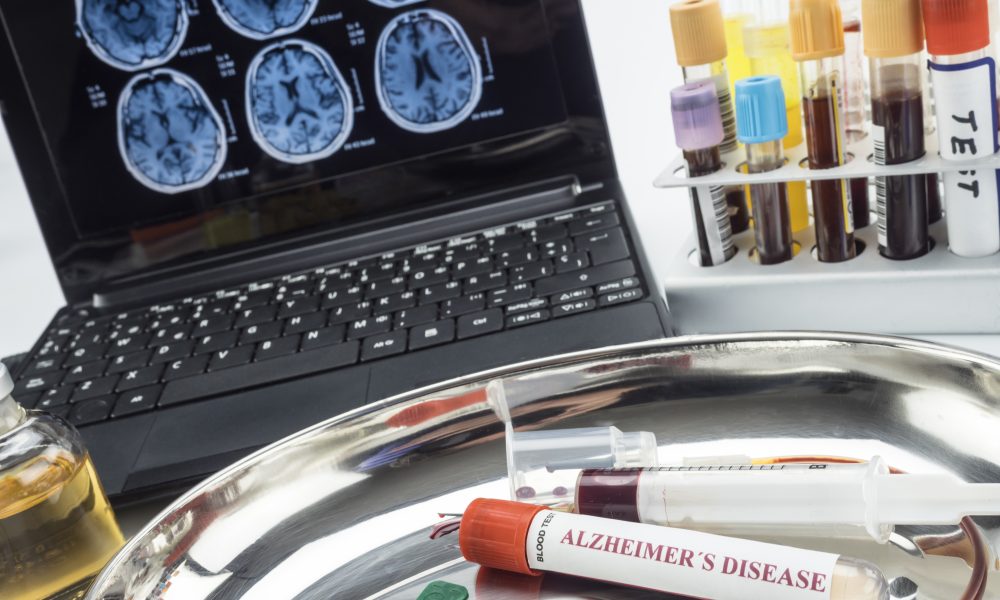
A new blood test for Alzheimer’s disease can accurately identify people with early symptoms by examining two key proteins in blood plasma.
The test, which has been approved by the US Food and Drug Administration (FDA), showed 95 per cent sensitivity in picking up people with memory problems—meaning it correctly identified the vast majority of cases with very few missed.
Researchers from the Mayo Clinic in the US tested the blood analysis on more than 500 patients at an outpatient memory clinic, providing real-world data on how well it works in a clinical setting.
The test measures two proteins—amyloid beta 42/40 and p-tau217—which are linked to the build-up of amyloid plaques in the brain, a key hallmark of Alzheimer’s.
These plaques consist of protein fragments that accumulate between nerve cells and disrupt normal brain function.
As well as its high sensitivity, the test also demonstrated 82 per cent specificity, meaning it was highly accurate in ruling out people who did not have dementia.
Dr Gregg Day, who led the study, said the blood test performed on par with more invasive tests already in use.
He said: “Our study found that blood testing affirmed the diagnosis of Alzheimer’s disease with 95 per cent sensitivity and 82 per cent specificity.
“When performed in the outpatient clinical setting, this is similar to the accuracy of cerebrospinal fluid biomarkers of the disease and is much more convenient and cost-effective.”
Cerebrospinal fluid tests require a lumbar puncture—a procedure involving a needle inserted into the lower spine to collect fluid from around the spinal cord.
The study also found that p-tau217 levels were higher in patients with Alzheimer’s than in those without the disease.
Dr Day said the next phase of research would look at how well the test performs in more diverse patient populations, including people with early-stage Alzheimer’s who do not yet show cognitive symptoms.
Dr Richard Oakley, associate director for research and innovation at the Alzheimer’s Society in the UK, said the findings “suggest this test is very accurate” and could be used alongside other assessments and clinical observations.
He added: “This study shows how blood tests are making diagnosis of Alzheimer’s disease quicker, easier and more accessible than ever before in a real-world setting.
“While focused on Alzheimer’s disease, the test was evaluated in people with other types of dementia too, showing that it may help differentiate causes of cognitive decline—though more research in diverse groups and community-based settings is still needed.
“Currently, diagnosis options in the UK are often slow, expensive and can be invasive, meaning thousands miss out on the benefits early diagnosis can bring.
“It’s great to see blood tests like this approved for clinical use in the US. We hope to see the same in the NHS, which is why we’re part of the Blood Biomarker Challenge.”
The Blood Biomarker Challenge is a multimillion-pound research programme supported by the Alzheimer’s Society, Alzheimer’s Research UK and the National Institute for Health and Care Research (NIHR).
It aims to make blood tests for dementia diagnosis available on the NHS by 2029.
Oakley added: “Blood tests will be critical to accelerate diagnosis and give more people access to the care, support and treatments they desperately need faster than ever before.
“We must see long-term investment in the tools and workforce needed to ensure everyone living with dementia can get an early and accurate diagnosis—especially with disease-modifying treatments on the horizon.”
Dr Julia Dudley, head of research at Alzheimer’s Research UK, said: “We urgently need to improve how we diagnose dementia, and it’s great to see international research working towards this goal.
“This study focused on p-tau217 and amyloid beta 42/40, and showed the tests offered high accuracy in confirming Alzheimer’s disease.
“It adds to the growing body of evidence that blood tests can detect the diseases that cause dementia in people with early memory and thinking problems.”
She added that clinical research doesn’t always reflect the diversity of people affected by dementia, who may have additional conditions or different characteristics.
“That is why more work is needed to understand whether these blood tests are effective in real-world settings.
“In the UK, studies like the Blood Biomarker Challenge are helping to build this evidence.
“The study is testing blood tests—including p-tau217—in thousands of people from sites across the country.
“This research is vital in making diagnosis easier and faster, and will help bring us closer to a cure.”

News
AI can predict Alzheimer’s with almost 93% accuracy, researchers say

Alzheimer’s AI can predict the disease with nearly 93 per cent accuracy using more than 800 brain scans, researchers say.
The system identified anatomical changes in the brain linked to the onset of the most common form of dementia, a condition that gradually damages memory and thinking.
The findings build on years of research suggesting AI could help spot early Alzheimer’s risk, predict disease and identify patients whose condition has not yet been diagnosed.
Benjamin Nephew, an assistant research professor at the Worcester Polytechnic Institute in Massachusetts, said: “Early diagnosis of Alzheimer’s disease can be difficult because symptoms can be mistaken for normal ageing.
“We found that machine-learning technologies, however, can analyse large amounts of data from scans to identify subtle changes and accurately predict Alzheimer’s disease and related cognitive states.”
The study used MRI scans, a type of detailed brain imaging, from 344 people aged 69 to 84.
The dataset included 281 scans showing normal mental function, 332 with mild cognitive impairment, an early stage of memory and thinking decline, and 202 with Alzheimer’s.
The scans covered 95 of the brain’s nearly 200 distinct regions and used an AI algorithm to predict patients’ health.
Being able to use AI to help diagnose Alzheimer’s earlier could give patients and doctors crucial time to prepare and potentially slow the progression of the disease.
The analysis showed that one of the top predictive factors was brain volume loss, or shrinkage, in the hippocampus, which helps form memories, the amygdala, which processes fear, and the entorhinal cortex, which helps provide a sense of time.
This pattern held across age and sex, with both men and women aged 69 to 76 showing volume loss in the right part of the hippocampus, suggesting it may be an important area for early diagnosis, the researchers noted.
However, the research also found that the way brain regions shrink differs by sex.
In females, volume loss occurred in the brain’s left middle temporal cortex, which is involved in language and visual perception. In males, it was mainly seen in the right entorhinal cortex
The researchers believe this could be linked to changes in sex hormones, including the loss of oestrogen in women and testosterone in men.
These conclusions could help improve methods of diagnosis and treatment going forward, Nephew said.
More than 7.2m Americans are living with Alzheimer’s, according to the Alzheimer’s Association.
More research is being done to reveal other impacting factors.
Nephew said: “The critical challenge in this research is to build a generalisable machine-learning model that captures the difference between healthy brains and brains from people with mild cognitive impairment or Alzheimer’s disease.”
News
Vision implant firm raises US$230m
News
Radiology AI may improve workflows

Radiology AI may improve workflows and patient care, but the technology also brings challenges for radiology departments, research suggests.
A focus issue from the Journal of the American College of Radiology brings together invited research and reviews exploring how AI is being used across different practice types.
Barriers include insufficient infrastructure, strict institutional regulations and a lack of insurance reimbursement, all of which can hamper the integration of AI into routine clinical workflows.
Radiology, the branch of medicine that uses imaging such as X-rays and scans to diagnose and treat disease, is widely seen as one of the fields most likely to be reshaped by AI.
The research includes contributions arguing that workflow improvement is not simply a secondary benefit of AI, but a main determinant of whether a tool succeeds.
Gelareh Sadigh, associate editor for health services research at the Journal of the American College of Radiology, said: “When thoughtfully implemented, AI can complement human expertise and improve efficiency and patient care.
“Successful workflow optimisation requires the integration of AI technology into routine workflows.
“This can be hampered by insufficient infrastructure, strict institutional regulations, and lack of insurance reimbursement.
“Poor integration of AI may degrade workflows, satisfaction, and safety and perpetuate bias in healthcare.”
According to Dr Sadigh, the articles in the focus issue reflect a broader shift in radiology: workflow is not a secondary benefit of AI, but a key factor in whether a tool is successful.
If AI is going to meaningfully help radiology, it must make care delivery better and not more complicated.
Ruth C. Carlos, editor-in-chief of the Journal of the American College of Radiology, said: “This focus issue provides meaningful signposts for AI effectiveness as we navigate a rapidly shifting landscape.”
News2 weeks agoInterview: The US company appealing Europe’s rejection of daily Alzheimer’s pill
News4 weeks agoLongevity startup Biopeak raises US$2.7m
News4 weeks agoBryan Johnson launches US$1m longevity programme
Markets & Industry4 weeks agoAgetech investment & innovation round-up
News2 weeks agoCentenarians’ blood reveals longevity clues
News4 weeks agoInterview: Dr Matthew Bennett on building resilience and a pain-free healthspan
Wellness4 weeks agoRe:Cognition and Cera expand Alzheimer’s clinical trials access
News4 weeks agoFrench biotech raises €12m for osteoarthritis trial