Mobility
Cera delivers one patient home visit every second as it reaches $500 million in annualised revenues

Technology‑enabled home healthcare pioneer celebrates ongoing expansion – easing NHS pressures and advancing preventative care across the UK
MONDAY 12 MAY 2025, LONDON, UK: Cera, the UK’s leading digital-first home healthcare provider, today announces new milestones in its rapid expansion, as it continues its journey to transform healthcare through technology.
Cera, which launched in 2016, has now reached annualised revenues of c. $500 million, up from $5 million annualised revenues at the start of 2020 – with this rapid growth fuelled by growing demand for its more sustainable, preventative model of care.
Cera is also now delivering around 2.5 million patient home visits every month – equating to an average of one visit every second.

Dr Ben Maruthappu, Founder and CEO of Cera, said: “Every visit we deliver marks a unique moment of care, compassion and connection with older and vulnerable people across the UK and beyond.
“As we continue to roll out our preventative AI tools, each of these visits also marks another step towards a more sustainable future for healthcare – easing NHS pressures, and improving patient health outcomes.
“Knowing our carers are making a new visit on average every second is a great reminder that we are making a continuous, meaningful difference in people’s lives, at scale.”
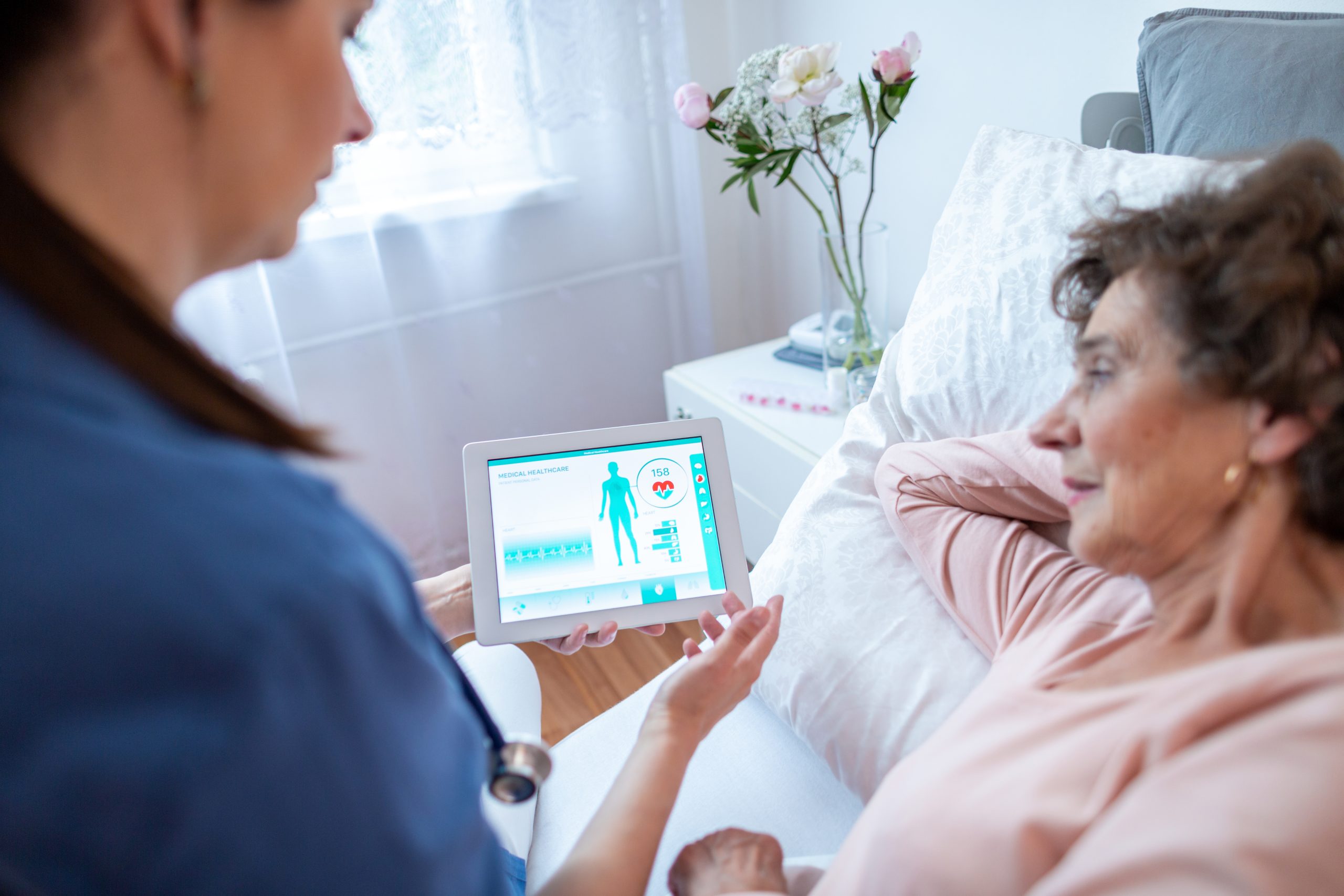
Cera empowers its workforce of more than 10,000 carers and nurses with proprietary predictive AI tools, including a Falls Prevention AI and a Hospitalisation Predict-Prevent tool, supporting them to keep patients out of hospital and safe and well at home.
These technologies forecast health risks such as falls and infections seven days in advance – allowing Cera to take preventative action which reduces patient falls by 20% and hospitalisations by up to 70%. Analyses show Cera saves the NHS and Government £1 million a day.
The company now has almost 150 regulated sites across the UK, spanning over 150 UK Local Governments and two-thirds of NHS Integrated Care Systems. Cera also has a presence in Germany.
Over the coming years, Cera plans to continue to scale its technology-enabled model of care, as well as expanding into new service lines in the home – aiming to meet even more of a patient’s healthcare needs from the comfort of their own home, from physiotherapy, nursing and doctors’ visits, to specialist, complex or palliative care.
Dr Maruthappu said: “When we launched Cera in 2016, we set out with an ambition to make a meaningful, long-term difference to the future of care, in the UK and beyond.
“Milestones like these mark our progress towards that goal, thanks to the ongoing hard work, creativity and dedication of our teams, the support of our partners, and the faith of the patients and family members who entrust us with their care. We’re grateful to everyone who’s played a part in our journey so far, and we’re excited to see what’s next.”









Captify won AARP’s AgeTech pitch at CES, taking US$10,000 for captioning glasses that show real-time subtitles for people with hearing loss.
San Francisco-based Captify beat four other AgeTech firms at the 2026 AgeTech After Dark event.
The glasses show captions in the wearer’s field of view and are claimed to be 98 per cent accurate, including in noisy settings.
The frames resemble standard eyewear and cost US$499 or US$799 depending on the model.
An optional US$15 monthly subscription offers AI-generated conversation summaries and other features. Captions can be translated into more than 70 languages.
The AgeTech Collaborative from AARP, which backs technologies to help adults age well, has hosted pitch competitions since 2015.
Other start-ups featured were Accelera, which makes wearable bands using gentle vibrations to improve balance and help prevent falls; ATDev, developing personal robotics for people with mobility impairments; Kinemo Proprio, enabling hands-free control of digital devices via body gestures; and Memcara, using music therapy to help people with dementia communicate.
Memcara co-founder Christina Tadin, a board-certified music therapist, said: “Even as memory fades, the capacity to communicate, feel and express identity remains far more intact than most people realise.
“What is missing is the infrastructure to support what remains.”

Cycling instead of driving or taking public transport is linked to a 19 per cent lower risk of developing dementia.
An analysis of nearly 480,000 people in Great Britain also found regular cyclists had a 22 per cent lower risk of Alzheimer’s disease compared with those using cars, buses or trains.
More than 55m people worldwide currently live with dementia, with numbers predicted to almost triple by 2050.
Physical activity has been identified as one of 14 factors that could prevent or delay about 45 per cent of cases.
Researchers from the UK Biobank study tracked the health of more than 500,000 people aged 40 to 69, recruited between 2006 and 2010.
Participants, who were aged 56.5 on average, answered questionnaires about which transport modes they used most often for non-work journeys.
Over a median follow-up of 13.1 years, 8,845 developed dementia and 3,956 developed Alzheimer’s disease.
The study examined nonactive travel (car, bus, train), walking, mixed walking (walking with nonactive modes), cycling, and mixed cycling (cycling with other modes).
Brain scans showed that cycling and mixed cycling were most strongly linked to greater hippocampal volumes.
The hippocampus is the part of the brain responsible for memory and learning.
Walking and mixed walking were associated with a 6 per cent lower dementia risk but, unexpectedly, a 14 per cent higher Alzheimer’s risk.
Dr Joe Verghese, professor and chair of neurology at Stony Brook University in New York, who was not involved in the study, said: “This study is the first to show that cycling is linked not only to a lower risk of dementia but also to a larger hippocampus.”
The APOE ε4 gene, the strongest genetic risk factor for Alzheimer’s, also influenced outcomes.
Participants without this gene variant had a 26 per cent lower dementia risk, while carriers had a 12 per cent lower risk.
“Travel modes were self-reported at a single time point, so we don’t know how people’s habits changed over time,” said Dr Sanjula Singh, instructor of neurology at Harvard Medical School.
Singh was not involved in the study.
“Most participants were White and healthier at baseline, so the results may not apply to all communities.
“And, most importantly, as this is an observational study, it cannot prove that cycling directly prevents dementia.
“It only shows an association.”
Older adults who cycle regularly are likely a healthier subgroup, and cycling may also reflect favourable genetics, with risk lowest among those without genetic susceptibility, Verghese said.
Participants choosing active travel were more often women, nonsmokers, more educated, more physically active overall, with lower body mass index and fewer chronic conditions.
Those in the cycling groups were more often men with healthier lifestyles.
The higher Alzheimer’s risk linked with walking could reflect participants already having balance or driving issues, said Dr Glen Finney, behavioural neurologist and director of the Memory and Cognition Program at Geisinger Health System in Pennsylvania.
Walking pace matters too, Finney added. Leisurely walking, especially for short distances, may not give the same benefit as brisker, longer walks.
The study did not report frequency, pace or duration of walking or cycling.

Jumping may help protect ageing bones and cut fracture risks, with research showing short daily routines can strengthen bone density in adults.
High-impact exercise strengthens bones, which weaken as the body’s rate of bone formation slows with age.
Regular jumping can raise bone density – the level of calcium and other minerals that indicates bone strength and fracture risk.
A study involving 60 women aged 25 to 50 found that doing ten high-impact jumps twice a day for four months increased hip bone density.
Dr Larry Tucker, a professor at Brigham Young University, said: “Our study showed significant benefits over time.
“Women have to do the jumps daily to get the benefits. In addition, keep in mind, as women age it’s more and more difficult to improve bone density.”
Women are particularly at risk as they lose bone mass earlier and faster than men, having smaller, thinner bones.
The hormone oestrogen, which falls sharply after menopause, accelerates this decline, according to the Bone Health & Osteoporosis Foundation.
That raises the likelihood of osteoporosis – a disease where bones become fragile enough to fracture from minor knocks or even a cough.
About 10m people in the US live with the condition, more than 8m of them women.
Bone loss, however, affects both sexes, with 44m Americans having low bone density, according to the American Medical Association. Genetics and other health issues also influence how quickly bones weaken.
Lifestyle is described as “pivotal” for bone health by The Ohio State University.
Dr Jackie Buell, a sports dietitian there, highlighted the value of varied nutrition and strength training.
She said: “The nature of the exercise you want to do to help your bones is something that loads the bone, like jumping for the hips or push-ups for the wrists.”
Daily training is not essential. A few dozen jumps done twice weekly could “go a long way in benefiting your bone health throughout your lifespan,” said Pam Bruzina, a professor of nutrition and exercise physiology at the University of Missouri.
Improvements to bone density may be seen in as little as six months. Benefits are seen in younger and older adults, though most people reach peak bone mass in their early thirties.
Some caution is needed. Without sufficient muscle strength or if joint pain is present, jumping may risk injury.
Experts advise people with osteoporosis not to jump unsupervised because of the chance of fractures. Several months of resistance training around the hips and spine can help reduce risks.
Not all jumps are equally effective. Options such as explosive back-and-forth or side-to-side movements, or box jumps, bring the most benefit. Jumping rope is less useful, as bone growth depends on maximising landing impact and skeletal stress.
“Any intervention that slows that loss or mitigates it is better than nothing,” said Jocelyn Wittstein, an associate professor of orthopaedic surgery at Duke University School of Medicine.
“Any load-bearing activity on your legs is better than being sedentary.”

Agetech investment & innovation round-up

Bryan Johnson launches US$1m longevity programme

Cognition and Cera expand Alzheimer’s clinical trials access

First blood test for Alzheimer’s in primary care

Space station partnership for bioprinting research

Shingles vaccine may slow biological ageing in older adults

Thousands of men in England to be offered life-extending prostate cancer drug

Nanoparticles target disease proteins in dementia

L-Nutra raises US$36.5m in series D funding

Blood sugar spike after meals may increase Alzheimer’s risk
 News4 weeks ago
Shingles vaccine may slow biological ageing in older adults
- News4 weeks ago
Thousands of men in England to be offered life-extending prostate cancer drug
- News3 weeks ago
Nanoparticles target disease proteins in dementia
- Technology3 weeks ago
L-Nutra raises US$36.5m in series D funding
- News4 weeks ago
Blood sugar spike after meals may increase Alzheimer’s risk
- Insights4 weeks ago
Study reveals why memory declines with age
- Insights2 weeks ago
Dentordu: Digital dentistry for healthier ageing
- Insights2 weeks ago
Interview: Dr Annu Navani on biotechnology and ‘the power to recode life itself’