Technology
From the brain to the heart to treat heart failure


AgeTech World sat down with Nadim Yared, CEO of CVRx, to explore how the brain can play a major part in treating heart failures.
In the UK, heart failure affects about 900,000 people with 60,000 new cases annually and is predominantly a disease of older people, according to NHS England.
Heart failure is condition that affects the patient long-term and that, for most people, can’t be cured. In addition to healthy lifestyle changes, some patients affected by heart failure need to have a procedure to implant a small device in their chest that can help control their heart’s rhythm.
The most commonly used devices are implantable cardioverter defibrillators (ICDs), pacemakers, cardiac resynchronisation therapy devices (CRT) and CRT-Ds. The way the majority of these implants work is through electric shocks directly given to the heart.
On the other hand, Barostim gives patients a new heart failure treatment option. Barostim Baroreflex Activation Therapy (BAT) works by electrically stimulating carotid baroreceptors and, in return, the baroreflex.
Carotid baroreceptors detect the blood pressure in the carotid artery, which supplies blood to the brain. The nerve terminals of carotid baroreceptors are located bilaterally at the carotid artery bifurcation, close to the internal carotid artery.
The baroreflex is a body natural reflex that is responsible for the maintenance of arterial blood pressure.

Once electricity stimulate the carotid baroreceptors, the autonomic nervous system is triggered to regulate heart, kidney and vascular function through both sympathetic and parasympathetic pathways.
The parasympathetic nervous system controls the body at rest and it is responsible for the body’s “rest and digest” functions while the sympathetic nervous system controls the body’s responses to a perceived threat.
Yared says: “Many decades ago people discovered that by massaging the carotid artery, you could lower the blood pressure in the body. Actually, documents dated about 150 years ago from the Fiji Islands, show that this was a technique used to induce sleep, particularly with patients with a fever”.
Barostim transformed this into an implantable device that triggers the electrical mechanism all the time.
Yared explains that in heart failure patients the heart beats as fast as when doing intense physical activity. With more blood pumped, the heart gets bigger and bigger, and the walls of the organ come thinner.
To counteract this mechanism, Barostim “reduces the sympathetic tone and increase the parasympathetic tone,” says Yard.
In heart failure patients, the sympathetic tone is almost always too high and the parasympathetic tone is not high enough. This imbalance feels like if the patients is “working out 24 hours a day”.
This technology strength is that the therapy is not based on the heart. “We put a wire outside the carotid artery and we connect this wire to our pulse generator,” says Yared. “There is no wire or part of our device that goes inside the bloodstream or inside the heart. It is not invasive.”
The Barostim therapy aims to put the responsibility back in the hand of healthcare providers. “One of the main issues we have with heart failure patients is that they are rarely compliant,” says Yared. “The beauty of our device is that it shifts the responsibility to the doctor and the patient doesn’t have to do anything.
“We ask the patient to come back every six months to have the device checked and every five years the battery needs to be replaced.”
In Europe, Barostim has received the approval for the treatment of resistant high blood pressure and for the treatment of heart failure.
On the other hand, the company has an approval for the treatment of heart failure in the US.
“The governments should provide more access to technology,” says Yared. “It took CVRx almost 20 years to get the device approved with a lot trials, data collected and experimentations involved.
“It required a lot of development and a lot of money. We invested around $400 million before we did our IPO. Our plan now with the money we raised at the IPO is to go all the way towards profitability.”



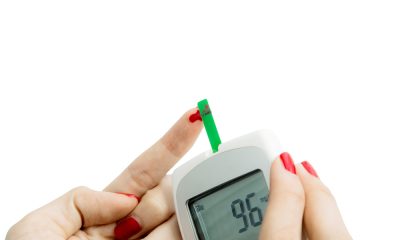






Biological age testing pioneer GlycanAge plans to use the cash raised from its recent US$8.7m funding round to expand its reach, explore additional bio-marking capabilities of its unique technology and fund its recently-opened Californian lab. Agetech World editor Peter McCusker met Jonathan White, head of its UK office, to find out more.
GlycanAge was founded in 2020 by Prof Gordan Lauc and his daughter Nikolina Lauc to capitalise on the former’s groundbreaking work on the capabilities of glycan sugars as ageing biomarkers.
Glycans coat all cell surfaces and are present in most human tissues where they help regulate cell signalling and development.
In his Zagreb lab Prof Lauc was able to interpret glycan signals around chronic inflammation as a pernicious – but reversible – drivers of premature ageing.
This led to the development of GlycanAge’s ‘inflammaging’ clock which estimates biological age by measuring patterns of glycan abundance on Immunoglobulin G’ – the most abundant antibody in blood.
This analysis allows for a detailed assessment of an individual’s biological age, and offers insights into how variable lifestyle choices – poor diet, stress, inactivity – and other environmental factors impact ageing.
World-leading US lab
Speaking to Agetech World from its headquarters on the Newcastle University-partnered Helix innovation hub, next to Newcastle United’s St James Park home, UK office head Jonathan White elaborated on its future ambitions and recounted its success to date.
“Glycan testing is a very complex process and about 85% of the underlying research on glycans and biological ageing stems from over 20 years of work by Prof Lauc and his team in their Zagreb lab.

Prof Gordan Lauc, co-founder, GlycanAge
“This latest investment round will allow us to produce indication-specific products – all from the original science – that can be implemented into various avenues such as a menopause-specific product, or a cardiovascular one, for example.
“We’ve recently established our second lab in California, which will streamline analysis and processing for our US clients and help us maintain our world-leading capabilities.”
GlycanAge’s unique chronic inflammation test involves analysis of a blood sample with the company having undertaken over 300,000 of these, worldwide, since inception.
Global potential
One area of interest to the GlycanAge team is in the onset of female menopause with Mr White highlighting how glycan testing can help smooth this process.
“This is a time of life when women are prime candidates for a chronic inflammatory-based disease to develop and in this environment there is the potential for our testing capabilities to be able to recognise this change and help with identifying approbate treatment, such as hormone supplements.”
Its geographical footprint is expanding rapidly with representation in the United Arab Emirates, South America, Singapore, New York, Japan, Indonesia, Bulgaria, and Spain..
As well as the recently-opened US lab it is on course to create an additional lab in the King Abdulaziz City for Science and Technology, in Saudi Arabia.
GlycanAge’s tests have mostly been adopted in private and individual health settings with the company now delivering its first lab-developed tests in a hospital setting.
Hospital setting
This year it expects to deploy its technology into more than 10 hospitals across Europe and the Middle East, with St Catherine Specialty Hospital in Zagreb recently becoming the first hospital globally to integrate glycan-based biomarkers into routine cardio-metabolic risk screening.
Professor Lauc said: “Hospitals are conservative – and they should be. But we’ve now made the first big step. We’ve put our machine into a hospital, and together with clinicians we’re developing diagnostic applications that actually make sense in practice.”
This is a key development for GlycanAge as it looks to see its technologies adopted in mainstream medical settings such as the UK National Health Service.
Although the company is realistic in recognising many existing healthcare systems are limited as they focus on symptoms, whilst the GlycanAge test focuses on measuring and tackling chronic inflammation, years before it manifests as a disease.
Last month, GlycanAge secured Its €7.4m (US$8.7m) in fresh funding following an earlier seed round In 2024, which saw the company raise €3.9m in seed-funding.
Its investors include Fifth Quarter Ventures, Guinness Ventures, BrightCap Ventures, South Central Ventures, Impetus Capital, Vesna Deep Tech VC, Lightfield Equity, LaunchHub Ventures and Kadmos Capital.


Non-invasive sound stimulation altered Alzheimer’s-linked proteins in aged monkeys in a recent study, with effects lasting more than five weeks.
Alzheimer’s involves abnormal amyloid proteins that form plaques and damage synapses, the junctions between nerve cells.
Cerebrospinal fluid is the liquid that bathes the brain and spinal cord.
In a study of nine rhesus macaques aged 26 to 31, animals received one hour of 40Hz auditory stimulation daily for seven days.
Researchers at the Chinese Academy of Sciences reported a sharp rise in amyloid levels in the cerebrospinal fluid after treatment, consistent with proteins being cleared from the brain.
Levels remained elevated five weeks after stimulation ended.
The researchers wrote: “Seven days’ stimulation triggered a rapid CSF Aβ increase by more than 200 per cent.
“This study provides the first primate evidence that 40Hz auditory stimulation can sustainably modulate the Aβ metabolism in the brain, supporting its potential as a non-invasive AD treatment method.”
The team said the approach could be developed as a non-invasive, low-cost physical intervention compared with antibody drugs used in early disease, though clinical testing in people will be needed to confirm benefit.

SimpleC has launched Wellby, an AI companion for unpaid dementia carers, offering round-the-clock emotional support and practical guidance.
Announced at CES in Las Vegas, Wellby is designed for caregivers of people with Alzheimer’s disease and related dementias.
Some 63 million people in the US provide unpaid care to older adults, including 12 million specifically caring for those with dementia. SimpleC says many face emotional strain, uncertainty and limited timely guidance.
Unlike general-purpose AI tools, Wellby is built for caregiving support, delivering personalised, real-time assistance through natural conversation.
Kevin Henze, chief executive of SimpleC, said: “This launch reinforces our belief that technology should support caregivers with both intelligence and compassion.
“As a privately owned, mission-driven company, we’re able to prioritise affordability, accessibility, and long-term caregiver impact. Wellby represents technology with soul—AI designed to truly walk alongside caregivers.”
Future releases will integrate the companion into SimpleC’s Connected Care Platform and extend it to serve older adults ageing in place.
Jun Ying, chief product officer, said: “By integrating AI across our platform, we’re creating a connected ecosystem where caregivers and care recipients can access multiple services—support, monitoring, guidance, and coordination—through a single, trusted SimpleC experience.”

Shingles vaccine may slow biological ageing in older adults

Thousands of men in England to be offered life-extending prostate cancer drug

Blood sugar spike after meals may increase Alzheimer’s risk

Study reveals why memory declines with age

Agetech research round-up: brain health vital, £38m to combat Alzheimers, and more…

FDA clears automated brain fluid device

Agetech World’s latest innovation & investment round-up

Insilico signs US$888m oncology deal with Servier

Food preservatives linked to increased diabetes and cancer risk, study finds

UK bans junk food ads before 9pm to protect child health
 News2 weeks ago
FDA clears automated brain fluid device
- News2 weeks ago
Agetech World’s latest innovation & investment round-up
- News2 weeks ago
Insilico signs US$888m oncology deal with Servier
- News2 weeks ago
Food preservatives linked to increased diabetes and cancer risk, study finds
- Insights2 weeks ago
UK bans junk food ads before 9pm to protect child health
- News1 week ago
Captioning glasses win AARP pitch at CES
- Leadership2 weeks ago
Global longevity initiative launches North American chapter
- Research6 days ago
Interview: GlycanAge launch first hospital-based tests