Insights
Current tests are not catching cancer recurrence early enough, say oncologists

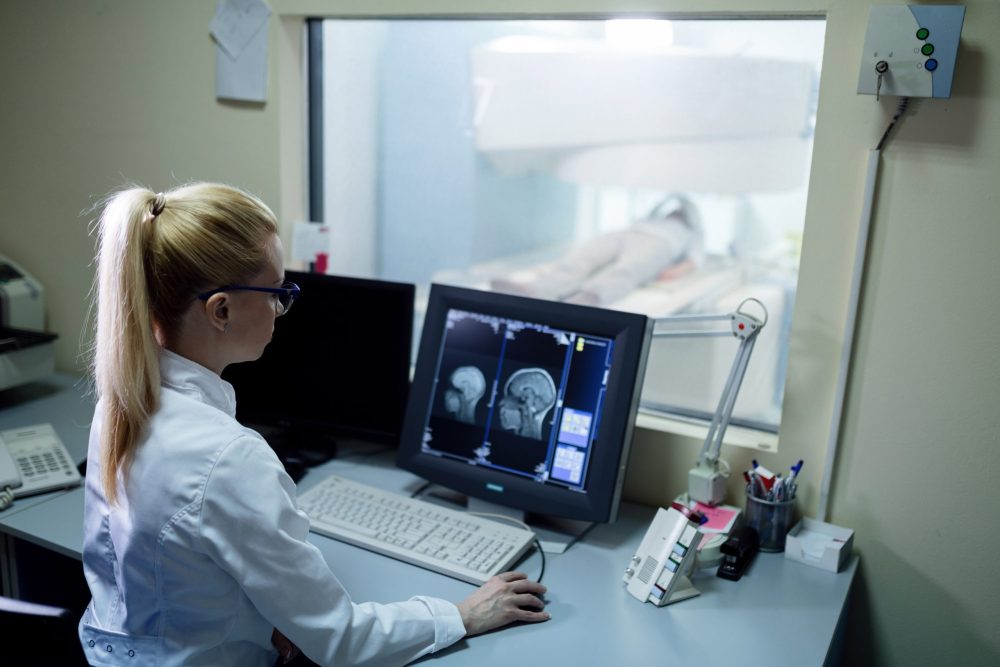
In a new report, oncologists reveal they are seeing more and more patients with advanced cancers, and worry that current tests may not catch cancer recurrence early enough.
Based on a survey conducted by The Harris Poll on behalf of Quest Diagnostics, the new report highlights perspectives of medical and surgical oncologists about the prevalence of advanced-stage cancers, the anxieties and barriers they believe patients face in accessing care, and the need for better post-treatment tools.
It also provides novel insights into the perceptions of oncologists of an emerging area of clinical testing: ctDNA minimal residual disease (MRD) blood tests to aid in monitoring for residual or recurring cancer in patients treated for solid tumours.
“We call it the cancer paradox: As medical advances improve longevity, more patients than ever face the looming risk of cancer recurrence – and the anxieties and challenges that go with it,” said board-certified oncologist Yuri A. Fesko, senior vice president and chief medical officer, Quest Diagnostics.
“Our new survey reveals the unique challenges oncologists face at a time when an unprecedented number of Americans are alive following cancer treatment but for whom the spectre of recurrence remains a real concern for both the patient and the provider.”
Despite new treatments, new cancer cases in the U.S. are expected to cross the two million mark in 2025 for the second year in a row and the number of survivors is expected to rise from 18.1 million in 2020 to 26 million by 2040. Cancer recurrence varies by type and stage, but as many as 20 to 40 per cent of the four most common solid tumour cancers – breast, colorectal, lung and prostate – recur after surgery.
Key survey findings include that 76 per cent of oncologists feel they are seeing more advanced-stage cancers, and of these, 75 per cent believe that screening barriers are the leading cause, followed by a rise in ageing population (48 per cent) and lifestyle factors (43 per cent).
Roughly one in three (32 per cent) cite “factors that we don’t understand yet” behind the perceived increase.
While 89 per cent of oncologists believe identifying cancer recurrence at the earliest possible stage can improve outcomes, roughly eight in 10 oncologists (79 per cent) report seeing patients whose cancer recurrence was missed in an earlier stage.
Of these oncologists, 68 per cent claim missing, skipping and/or delaying follow-up care and monitoring appointments is the most common reason cancer recurrence is typically missed.
87 per cent of oncologists claim anxiety/worry is among the most challenging aspects of cancer care for patients, versus 53 per cent who cite treatment side effects as among the most challenging.
Nine in 10 oncologists (89 per cent) express frustration that insurance reimbursement models are unable to keep up with the latest tech innovations in cancer care, screening, and diagnostics.
Oncologists have traditionally monitored for residual or recurring cancer using a range of expensive or invasive technologies, including positron emission tomography (PET) scans, magnetic resonance imaging (MRI), and tissue biopsies, as well as more accessible but typically nonspecific lab tests.
Yet, oncologists expressed concerns about these traditional methods. Among oncologists whose patients’ recurrence was missed in an earlier stage, half (50 per cent) said imaging tests not detecting recurrence early enough was among the primary reasons for why cancer recurrence is typically missed.
By comparison, nearly all oncologists (96 per cent) said MRD testing has the potential to identify cancer recurrence earlier than other current methods, with 89 per cent saying test sensitivity to accurately detect residual disease/recurrence as early as possible is one of the most important features of MRD tests.
“We were struck by how many oncologists cited the limitations of imaging in detecting cancer recurrence early,” said Dan Edelstein, vice president, general manager and co-founder of Haystack Oncology, a Quest Diagnostics company.
“There’s a clear desire for more sensitive tools, and oncologists increasingly see high-performance ctDNA blood tests as a promising solution for earlier detection of residual or recurrent cancer.”
Nearly nine in 10 oncologists (88 per cent) agree that MRD testing should be incorporated into the standard of care for cancer-recurrence follow-up monitoring.
However, over half say they would be more likely to start, continue, or restart recommending MRD tests if they had more clinical evidence to support effectiveness (61%), were in clinical guidelines (64 per cent), and have expanded insurance or reimbursement coverage (56 per cent).
The survey also polled oncologists on their preferences for accessing laboratory tests: 71 per cent said they prefer to work with a single laboratory with a broad selection of cancer tests spanning the care continuum versus several labs that each focus on one portion of the patient’s journey.








Harnessing the multi-dimensional capabilities of the human body is key to overcoming chronic pain and boosting longevity, say the authors of a new book.
While the primary focus of established health care systems is to target pain points through medication or surgery a more holistic approach is emerging, as US chronic pain doctor Matthew Bennett explains.
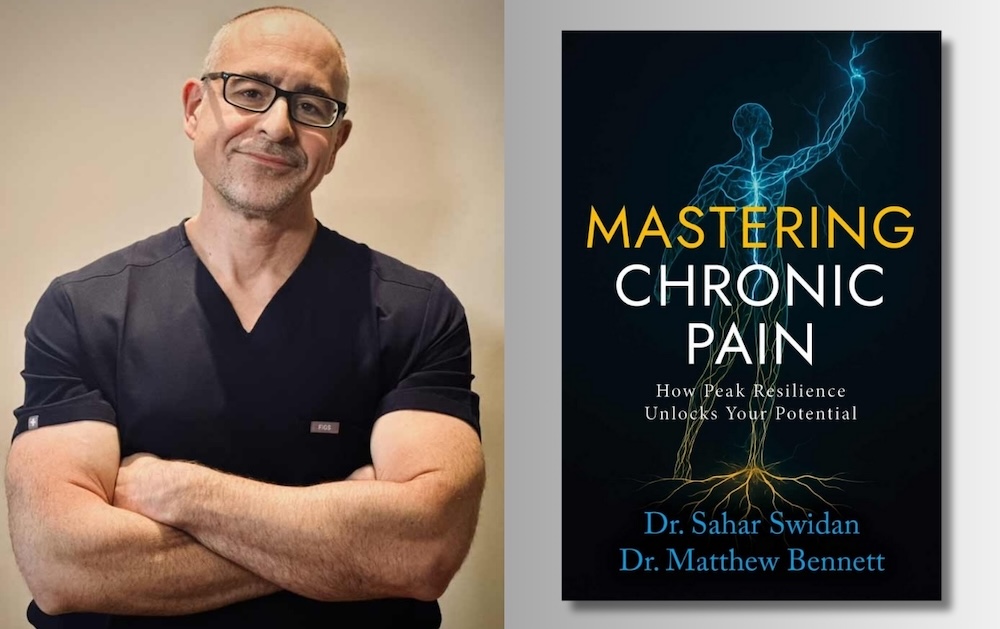
Published late last year by Dr Bennett and colleague Dr Sahar Swidan’s book, Mastering Chronic Pain: How Peak Resilience Unlocks Your Potential offers grounded insights into pain resolution.
Speaking to Agetech World from his New York base he said: “I’ve been treating patients in chronic pain for over 20 years.
“And, it becomes obvious that while some pain is very responsive to simple interventions, like a nerve block or a surgery, there’s a large number of people which that does not move the needle for.
“We used to look at it like, ‘Hey, the MRI shows this one spot that’s pushing on this one nerve. If we can take that spot off that nerve, everything’s going to be better’.
“And, that just doesn’t always play out that way. It’s become apparent that there are a lot of situations where the problem is more systemic.
“It’s really more of a metabolic problem, and pain is the expression of these system failures.”
‘Fight or flight’
The upstream drivers of acute pain can be numerous as Dr Bennett explains: “You can take as much pressure as you want off of nerves, but if your inflammatory system isn’t fixed, if the neurological system isn’t fixed, if your autonomic nervous system – meaning your fight-or-flight versus your rest-and-relaxation – isn’t balanced, if your gut biome is off, if your sleep is off – a lot of these problems aren’t going to improve.”
Key elements in developing a longevity-focused healthpsan – devoid of chronic pain and opioids – are simple, every day measures, focused on movement, sleep and breathing.
This includes developing the right muscles to create a ‘good deep core musculature’.
He continued: “An even bigger one is the way people breathe – the way they use their diaphragm.
“The diaphragm is a great big muscle that controls the deep core part of the spine. When the diaphragm’s not working correctly, the whole core musculature isn’t working right.
“You can’t get that stability in the lower spine, so other muscles jump in and try to do the work for you. That causes downstream problems.
“You need someone getting to that root cause,.. (and) we teach people how to do that, and they’ll have big breakthroughs.”
He continued: “Sleep is a big problem in people with chronic pain. There’s a lot of healing that occurs with deep sleep.
“Unfortunately, in a lot of pain states, sleep gets disrupted, and people can’t get into deep sleep, so the brain can’t clear itself of the byproducts of metabolism; that glymphatic system doesn’t work.
“Poor sleep also interferes with endocrine connectors; growth or sex hormones can be depleted. Obstructive sleep apnea can play a huge role. There’s just a big correlation between sleep disorders and chronic pain.”
Seeking calm
These key elements of Dr Bennett’s work – which has been described as ‘biopsychosocial’ – come concomitant with a keen focus on nervous systems, chronic inflammation and neuroplasticity.
Dr Bennett, co-founder of NoceViva, continued: “When we think about neurologics, one of the things that’s very far upstream of a lot of health is the balance between the fight-or-flight system and the rest-and-relaxation system – that autonomic nervous system.
“All of these things are ‘two-way streets’ with pain; meaning the pain can cause the dysfunction, and the dysfunction can cause the pain; it becomes this feedback cycle where things get entrenched in a bad loop.
“So, balancing that autonomic nervous system is a really helpful upstream fix to make. Simple things like breathwork. Some people do well with meditation.
“Some people do well with making sure they’re involved in hobbies. These are things that can help just calm that fight-or-flight system down.”
Nerves & neuroplasticity
Allowing ourselves to adjust to emerging health challenges is achievable in the right settings and with the right approach.
He continued: “The body’s nervous system has the ability to change. And it can change based on various inputs.
“The nervous system can become increasingly sensitised, or it can become de-sensitised. And so that’s one of the bigger things that we see in the chronic pain state, is this sensitisation that comes along with it.
“This neuroplasticity can make the nerves in the extremities more sensitive.
“It can also make the nerves in the central nervous system more sensitive – so nerves in the spinal cord, or even nerves in the brain can become hyper-sensitised – so they’re triggering more of a pain response in the person.
“But the same thing that can cause the system to go in what we would consider a bad direction, where it gets more sensitive, the neuroplasticity can actually become undone, and you can make the nerves less sensitive.”
AI to boost lifespan?
Looking ahead Dr Bennett foresees a future where a deeper understanding of the functional pathways of pain, combined with AI, stem cell therapies and regenerative biologics will all speak to a future of greater longevity for mankind.
“I think the more attentive we are to the root cause, the more attentive we are to functional pathways – when we start thinking about how the system really works? And we get out of just an algorithmic approach to things.
“We still have quite a ways to go. I think we are making progress. There was a time where we would not be thinking about any of this.
“I think everyone’s excited about what AI will bring. And are we going to be able to make some big steps? I think we’re able to intervene on a genetic level at this point.
“Will we be able to do it well enough to change lifespan? I would guess, yes, but by how much? I don’t know!”


Up to four in ten cancer cases worldwide could be prevented, a new global analysis has found.
The study examines 30 preventable causes, including tobacco, alcohol, high body mass index, physical inactivity, air pollution, ultraviolet radiation and, for the first time, nine infections that can cause the disease.
Released ahead of World Cancer Day on 4 February, the analysis from the World Health Organization (WHO) and its International Agency for Research on Cancer (IARC) estimates that 37 per cent of all new cancer cases in 2022, around 7.1 million cases, were linked to preventable causes.
Drawing on data from 185 countries and 36 cancer types, the study identifies tobacco as the leading preventable cause of cancer, globally responsible for 15 per cent of all new cancer cases, followed by infections (10 per cent) and alcohol consumption (3 per cent).
Three cancer types, lung, stomach and cervical cancer, accounted for nearly half of all preventable cancer cases in both men and women globally.
Lung cancer was primarily linked to smoking and air pollution, stomach cancer was largely attributable to Helicobacter pylori infection (a bacterial infection of the stomach lining), and cervical cancer was overwhelmingly caused by human papillomavirus (HPV).
Dr André Ilbawi, team lead for cancer control at WHO and author of the study, said: “This is the first global analysis to show how much cancer risk comes from causes we can prevent.
“By examining patterns across countries and population groups, we can provide governments and individuals with more specific information to help prevent many cancer cases before they start.”
The burden of preventable cancer was substantially higher in men than in women, with 45 per cent of new cancer cases in men compared with 30 per cent in women.
In men, smoking accounted for an estimated 23 per cent of all new cancer cases, followed by infections at 9 per cent and alcohol at 4 per cent.
Among women globally, infections accounted for 11 per cent of all new cancer cases, followed by smoking at 6 per cent and high body mass index at 3 per cent.
Dr Isabelle Soerjomataram, deputy head of the IARC Cancer Surveillance Unit and senior author of the study, said: “This landmark study is a comprehensive assessment of preventable cancer worldwide, incorporating for the first time infectious causes of cancer alongside behavioural, environmental and occupational risks.
“Addressing these preventable causes represents one of the most powerful opportunities to reduce the global cancer burden.”
Preventable cancer varied widely between regions.
Among women, preventable cancers ranged from 24 per cent in North Africa and West Asia to 38 per cent in sub-Saharan Africa.
Among men, the highest burden was observed in East Asia at 57 per cent, and the lowest in Latin America and the Caribbean at 28 per cent.
These differences reflect varying exposure to behavioural, environmental, occupational and infectious risk factors, as well as differences in socioeconomic development, national prevention policies and health system capacity.

Agetech investment & innovation round-up

Bryan Johnson launches US$1m longevity programme

Cognition and Cera expand Alzheimer’s clinical trials access

First blood test for Alzheimer’s in primary care

Space station partnership for bioprinting research

Shingles vaccine may slow biological ageing in older adults

Thousands of men in England to be offered life-extending prostate cancer drug

Nanoparticles target disease proteins in dementia

L-Nutra raises US$36.5m in series D funding

Blood sugar spike after meals may increase Alzheimer’s risk
 News4 weeks ago
Shingles vaccine may slow biological ageing in older adults
- News4 weeks ago
Thousands of men in England to be offered life-extending prostate cancer drug
- Technology3 weeks ago
Nanoparticles target disease proteins in dementia
- News3 weeks ago
L-Nutra raises US$36.5m in series D funding
- News4 weeks ago
Blood sugar spike after meals may increase Alzheimer’s risk
- Insights4 weeks ago
Study reveals why memory declines with age
- Insights2 weeks ago
Dentordu: Digital dentistry for healthier ageing
- Research2 weeks ago
Interview: Dr Annu Navani on biotechnology and ‘the power to recode life itself’