Medtech / devices

Researchers in the US are testing technology that could help doctors detect Alzheimer’s disease early and slow its advance. The project focuses on the brain’s metabolism — how it uses glucose, the sugar that fuels thought, movement and emotions. The research is led by Travis Gibbons, assistant professor in the Department of Biological Sciences, at [...]
Scientists have uncovered a mechanism that could lead to treatments aimed at reversing osteoporosis rather than only slowing its progression. The finding involves a cell receptor called GPR133, also known as ADGRD1, which regulates osteoblasts – the cells that build new bone tissue. When triggered by a compound called AP503, this receptor increased bone strength [...]
A new pill being tested could halt dementia progression and reverse the brain’s biological age by a decade, according to its developers. The treatment, called RTR242, works by reviving the brain’s natural cleaning system to clear harmful protein clumps that build up with age. Such clumps are linked to Alzheimer’s, Parkinson’s and Lewy body dementia. [...]
An international team has secured around £500k to advance a therapy that could halt multiple sclerosis progression, repair nerve damage and potentially restore lost functions. The treatment targets excitotoxicity – a destructive process that kills nerve cells in MS. By blocking this without disrupting normal brain activity, the compound promotes repair of myelin, the protective [...]
Age Tech World explores the latest developments in the world of ageing and longevity. First AI-Powered personalised mobile app for brain health and longevity Digital health company Tolion Health has announced the beta release of its flagship product, the Tolion Brain Coach mobile application. This beta release offers early access to Tolion AI Engine, designed [...]
Doctors have launched a clinical trial of a £100 blood test for Alzheimer's, aiming to speed up diagnosis of the condition within the NHS. More than 1,000 patients with suspected dementia are being recruited from memory clinics across the UK to test whether the approach provides quicker and more reliable results, and improves care for [...]
NHS drones could soon deliver defibrillators to cardiac arrest patients more quickly than ambulances, with trials showing they may cut response times in rural areas. Researchers at the University of Warwick tested a drone delivery system in countryside locations. Backed by the National Institute of Health and Care Research, the trial found drones could deliver [...]
Lowering levels of a protein called FTL1 in the brain may reverse memory loss and help prevent Alzheimer’s disease, a study suggests. The research points to therapies that could ease what scientists describe as the “worst consequences of old age” by targeting a molecular mechanism behind cognitive decline. Ageing takes a heavy toll on the [...]
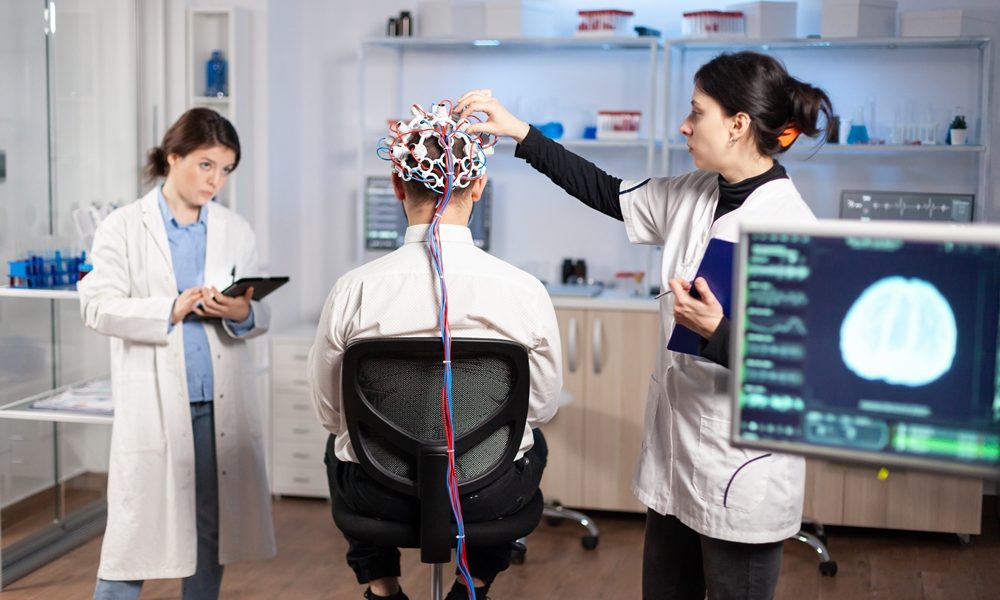
A three-minute brainwave test can spot Alzheimer's-linked memory problems long before diagnosis, and has now been shown to work in patients' homes. The Fastball EEG test records electrical activity in the brain while participants view images. It identifies memory impairment in people with mild cognitive impairment (MCI), a condition that can lead to Alzheimer’s. Unlike [...]
A three-minute brainwave test can detect memory problems linked to Alzheimer’s disease long before typical diagnosis, raising hopes it could identify who may benefit from new drugs. The Fastball test uses electroencephalogram (EEG) sensors on the scalp to record electrical brain activity while people view images on a screen. It works by analysing automatic responses [...]