News
Brainwave test spots early Alzheimer’s signs years before diagnosis
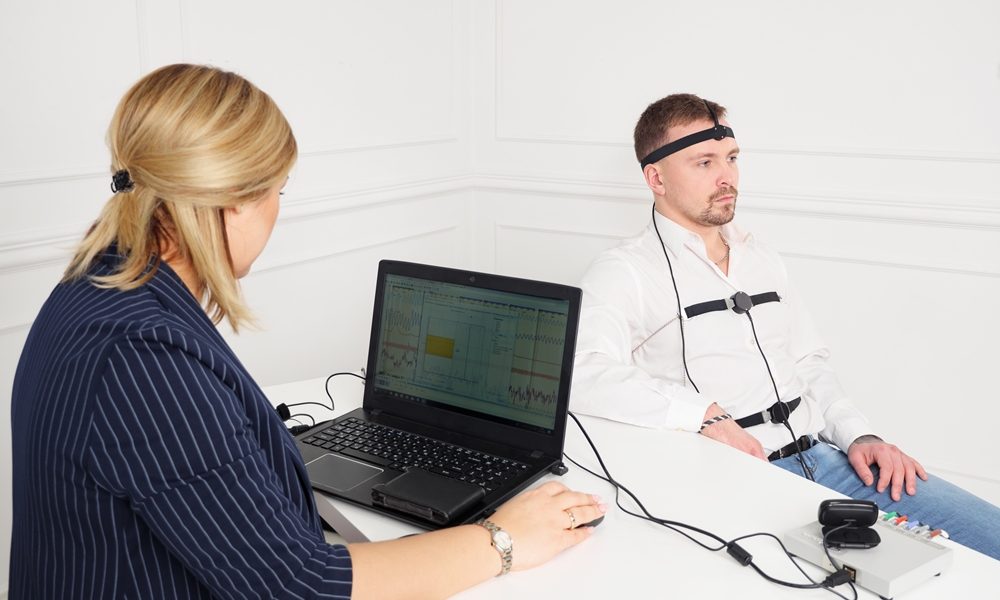
A three-minute brainwave test can spot Alzheimer’s-linked memory problems long before diagnosis, and has now been shown to work in patients’ homes.
The Fastball EEG test records electrical activity in the brain while participants view images.
It identifies memory impairment in people with mild cognitive impairment (MCI), a condition that can lead to Alzheimer’s.
Unlike traditional memory checks, the passive test tracks the brain’s automatic responses without requiring participants to follow instructions or recall information, making it a more objective tool.
Researchers from the University of Bath and University of Bristol showed for the first time that the technology can be used reliably in home settings, opening the way for wider use with low-cost, accessible equipment.
Dr George Stothart, a cognitive neuroscientist at the University of Bath who led the study, said current diagnostic methods miss crucial early stages.
“We’re missing the first 10 to 20 years of Alzheimer’s with current diagnostic tools. Fastball offers a way to change that – detecting memory decline far earlier and more objectively, using a quick and passive test.”
The test revealed reduced memory responses in MCI patients who later developed dementia, suggesting it can identify those at greatest risk.
With new drugs donanemab and lecanemab proving most effective in early-stage disease, early detection is becoming increasingly important.
In England, an estimated one in three people with dementia do not have a formal diagnosis, delaying treatment and support.
Fastball was first trialled in 2021, when it showed sensitivity to memory impairment in people with Alzheimer’s.
The latest study confirms it can detect changes much earlier in disease progression.
EEG technology uses small sensors on the scalp to measure the brain’s electrical activity. MCI involves problems with memory, thinking or language that are not severe enough to stop daily activities but increase the risk of dementia.
Dr Stothart said: “There’s an urgent need for accurate, practical tools to diagnose Alzheimer’s at scale. Fastball is cheap, portable, and works in real-world settings.
The research was funded by the Academy of Medical Sciences and supported by dementia research charity BRACE.
Chris Williams, CEO of BRACE Dementia Research, said: “Fastball is an incredible tool that could offer anyone who, for whatever reason, cannot access a dementia diagnosis in a clinical setting.
“BRACE has been supporting the development of Fastball for several years, and we are excited to see what Dr Stothart’s team will achieve over the next few years with ongoing support from the charity.”

News
Mole rat gene extends mouse lifespan
News
AI can predict Alzheimer’s with almost 93% accuracy, researchers say

Alzheimer’s AI can predict the disease with nearly 93 per cent accuracy using more than 800 brain scans, researchers say.
The system identified anatomical changes in the brain linked to the onset of the most common form of dementia, a condition that gradually damages memory and thinking.
The findings build on years of research suggesting AI could help spot early Alzheimer’s risk, predict disease and identify patients whose condition has not yet been diagnosed.
Benjamin Nephew, an assistant research professor at the Worcester Polytechnic Institute in Massachusetts, said: “Early diagnosis of Alzheimer’s disease can be difficult because symptoms can be mistaken for normal ageing.
“We found that machine-learning technologies, however, can analyse large amounts of data from scans to identify subtle changes and accurately predict Alzheimer’s disease and related cognitive states.”
The study used MRI scans, a type of detailed brain imaging, from 344 people aged 69 to 84.
The dataset included 281 scans showing normal mental function, 332 with mild cognitive impairment, an early stage of memory and thinking decline, and 202 with Alzheimer’s.
The scans covered 95 of the brain’s nearly 200 distinct regions and used an AI algorithm to predict patients’ health.
Being able to use AI to help diagnose Alzheimer’s earlier could give patients and doctors crucial time to prepare and potentially slow the progression of the disease.
The analysis showed that one of the top predictive factors was brain volume loss, or shrinkage, in the hippocampus, which helps form memories, the amygdala, which processes fear, and the entorhinal cortex, which helps provide a sense of time.
This pattern held across age and sex, with both men and women aged 69 to 76 showing volume loss in the right part of the hippocampus, suggesting it may be an important area for early diagnosis, the researchers noted.
However, the research also found that the way brain regions shrink differs by sex.
In females, volume loss occurred in the brain’s left middle temporal cortex, which is involved in language and visual perception. In males, it was mainly seen in the right entorhinal cortex
The researchers believe this could be linked to changes in sex hormones, including the loss of oestrogen in women and testosterone in men.
These conclusions could help improve methods of diagnosis and treatment going forward, Nephew said.
More than 7.2m Americans are living with Alzheimer’s, according to the Alzheimer’s Association.
More research is being done to reveal other impacting factors.
Nephew said: “The critical challenge in this research is to build a generalisable machine-learning model that captures the difference between healthy brains and brains from people with mild cognitive impairment or Alzheimer’s disease.”
News
Vision implant firm raises US$230m
News2 weeks agoInterview: The US company appealing Europe’s rejection of daily Alzheimer’s pill
News4 weeks agoLongevity startup Biopeak raises US$2.7m
News4 weeks agoBryan Johnson launches US$1m longevity programme
News4 weeks agoAgetech investment & innovation round-up
News4 weeks agoInterview: Dr Matthew Bennett on building resilience and a pain-free healthspan
News2 weeks agoCentenarians’ blood reveals longevity clues
News4 weeks agoRe:Cognition and Cera expand Alzheimer’s clinical trials access
News4 weeks agoFrench biotech raises €12m for osteoarthritis trial