Connect with us

Leadership

Cera delivers one patient home visit every second as it reaches $500 million in annualised revenues
Published

on

Technology‑enabled home healthcare pioneer celebrates ongoing expansion – easing NHS pressures and advancing preventative care across the UK

MONDAY 12 MAY 2025, LONDON, UK: Cera, the UK’s leading digital-first home healthcare provider, today announces new milestones in its rapid expansion, as it continues its journey to transform healthcare through technology.

Cera, which launched in 2016, has now reached annualised revenues of c. $500 million, up from $5 million annualised revenues at the start of 2020 – with this rapid growth fuelled by growing demand for its more sustainable, preventative model of care.

Cera is also now delivering around 2.5 million patient home visits every month – equating to an average of one visit every second.

Dr Ben Maruthappu, Founder and CEO of Cera, said: “Every visit we deliver marks a unique moment of care, compassion and connection with  older and vulnerable people across the UK and beyond. 

“As we continue to roll out our preventative AI tools, each of these visits also marks another step towards a more sustainable future for healthcare – easing NHS pressures, and improving patient health outcomes.

“Knowing our carers are making a new visit on average every second is a great reminder that we are making a continuous, meaningful difference in people’s lives, at scale.”

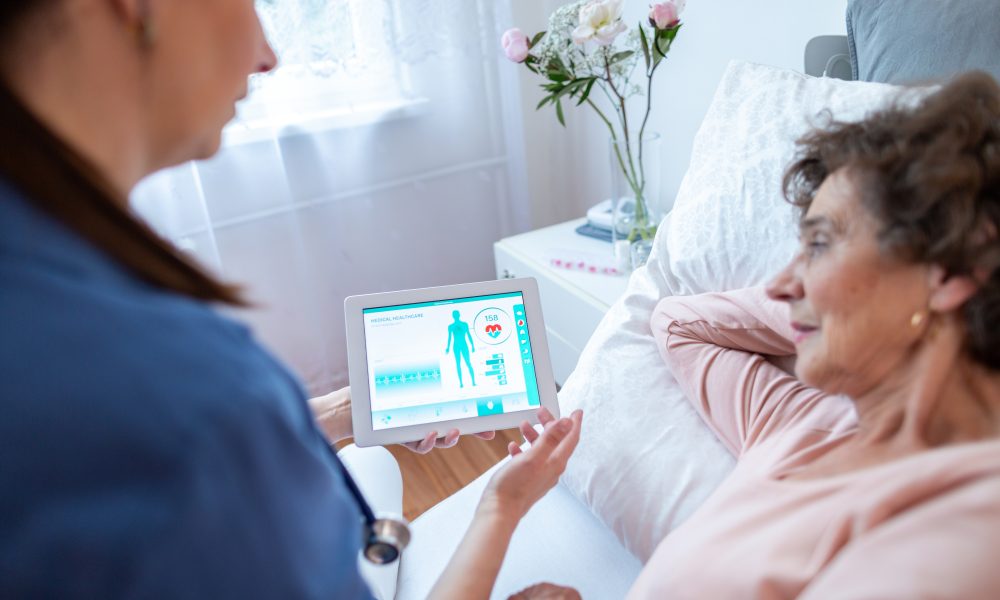
Cera empowers its workforce of more than 10,000 carers and nurses with proprietary predictive AI tools, including a Falls Prevention AI and a Hospitalisation Predict-Prevent tool, supporting them to keep patients out of hospital and safe and well at home. 

These technologies forecast health risks such as falls and infections seven days in advance – allowing Cera to take preventative action which reduces patient falls by 20% and hospitalisations by up to 70%. Analyses show Cera saves the NHS and Government £1 million a day.

The company now has almost 150 regulated sites across the UK, spanning over 150 UK Local Governments and two-thirds of NHS Integrated Care Systems. Cera also has a presence in Germany. 

Over the coming years, Cera plans to continue to scale its technology-enabled model of care, as well as expanding into new service lines in the home – aiming to meet even more of a patient’s healthcare needs from the comfort of their own home, from physiotherapy, nursing and doctors’ visits, to specialist, complex or palliative care. 

Dr Maruthappu said: “When we launched Cera in 2016, we set out with an ambition to make a meaningful, long-term difference to the future of care, in the UK and beyond.

“Milestones like these mark our progress towards that goal, thanks to the ongoing hard work, creativity and dedication of our teams, the support of our partners, and the faith of the patients and family members who entrust us with their care. We’re grateful to everyone who’s played a part in our journey so far, and we’re excited to see what’s next.”

 

Continue Reading
Click to comment

Leave a Reply

Your email address will not be published. Required fields are marked *

News

Agetech investment & innovation round-up

Published

on

Two London boroughs have launched their own initiatives aimed at supporting their ageing resident populations. 

Long-term gut health and female finance, London likes longevity

New York innovator Salvo Health has secured $8.5m in Series A round as it looks to develop new, long-term, gut-health treatments.

The funding round was led by ManchesterStory, City Light Capital and Threshold Ventures, with additional support from The Artemis Fund, Owl Capital, Impact X Capital Partners, Torch Capital and Felicis Ventures. 

Eric Collins, co-founder and general partner of Impact X Capital Partners, a UK-based venture capital firm, said: “The key with Salvo is patient-centred care.

“It’s critical to expand access to food as medicine and behavioural health to improve outcomes and lower, long-term health care costs.

“Salvo does exactly that and has shown 76 per cent of patients report improved symptoms, with five accepted abstracts on outcomes, and a 79 per cent drop in GI-related ER utilisation for its patients.

“We can have better care at lower costs with innovation, in the US, and ultimately in the UK and Europe as well.”

The raise brings Salvo’s total equity funding to US$21.6m. Roughly 60m Americans experience chronic gastrointestinal conditions each year.

Salvo Health is positioning itself in the space between overburdened clinics and patients’ everyday lives.

Female longevity in focus

Xella Health – a women’s precision platform focused on fertility, ageing, and body changes – has raised over US$3.7m in pre-seed funding.

The funds will support product finalisation, partnerships, and a Spring 2026 launch, focused on sex-specific longevity and preventive care.

The round was led by Precursor Ventures, with participation from Capital F, Ulu Ventures, and other funds, as well as, strategic angel investors across healthcare, diagnostics, and consumer technology.

Xella is aiming to propel women’s health beyond symptom-based care and fragmented testing to deliver ‘integrated biological insight, clarity, and foresight’. 

The company combines advanced diagnostics, longitudinal data, and personalised clinician-led guidance to help women understand what’s happening in their bodies today – and what lies ahead – across fertility, chronic conditions, hormonal health, early cancer detection, and preventative care.

“Our mission is to give women the answers and care they have always deserved,” said Kelly Lacob, co-founder & CEO of Xella.

“Xella is building the infrastructure to decode female biology – getting to the root cause of conditions that uniquely, differently or disproportionately affect women, many of which suffer from an unacceptably poor standard of care today.”

“Xella is rethinking women’s health from the ground up – starting with the insight women need to make sense of their own biology over time,” said Ashtan Jordan, principal at Precursor Ventures. 

Age well in London

Two London boroughs have launched their own initiatives aimed at supporting their ageing resident populations. 

Basildon Council has approved a new Ageing Population Strategy to support older residents live healthy, independent and connected lives.

The number of residents aged 65 and over in Basildon is projected to rise steadily over the next decade, reflecting national longevity trends.

The council says its ‘taking a proactive, preventative approach to ensure Basildon remains an inclusive, accessible and sustainable place for residents of all ages’.

The strategy emphasises strong partnership working with health services, voluntary and community organisations, local businesses and residents.

Key commitments include:

  •       Supporting people to remain independent in their own homes for longer,
  •       Promoting age-friendly design in town centres and public spaces,
  •       Strengthening dementia-friendly communities,
  •       Expanding opportunities for volunteering and employment, and
  •       Continuing investment in activity centres and community-led initiatives that reduce loneliness.

Cllr Melissa McGeorge, cabinet member for ageing population & health, said: “Our ambition is clear: to make Basildon a place where people can age well, feel valued, and continue to thrive at every stage of later life.

The ‘Life Curve’

Meanwhile the London Borough of Richmond has launched a new self-assessment tool developed by ADL Research and Newcastle University to help boost longevity.

The ‘Life Curve’ tool is designed to support healthy ageing with personalised advice and practical steps on how to stay active and independent.

Councillor Allen, lead member for adult social care, said: “Getting older doesn’t have to mean we stop being independent and there are small steps we can take to help reduce how getting older limits our lives.

“We have tools and services available in the borough to support residents to take these small daily steps to maintain their health and reduce the risk of conditions like heart disease, cancer and dementia. 

“A new tool accessible right from your phone or any other online device is ‘Independent Richmond’, which helps you understand where you are on The Life Curve to help stay on track with healthy habits, keeping active and stay independent for longer.” 


Continue Reading

Insights

Interview: Dr Annu Navani on biotechnology and ‘the power to recode life itself’

Published

on

Key developments in biologics and technology are paving the way for a future in which degenerative diseases – such as Alzheimer’s and Parkinson’s – can be identified and nullified before their onset.

US physician Dr Annu Navani is driving these developments, which she believes will allow mankind to develop ‘the power to recode life itself’.

Speaking to Agetech World from her Californian base, she said: “These are exciting times and we are making great progress, so much so that we are actually going to be able to predict who is going to develop degenerative conditions.

“Then, we are going to be able to correct the host microenvironment to be able to receive renewed cellular therapies which will target particular conditions, systemically, and be able to prevent them.

“And then, if they are present, treat them by regenerating tissues, not just repairing and restoring.”

Dr Navani is a respected physician with decades of experience in pain management, anesthesiology, interventional spine care, ageing and regenerative medicine.

The founder and chief medical officer at California-based Le Reve Wellness sees regenerative science as being at a tipping point, with synthetic biology set to play a huge role.

Stem cells matter

The key medical development which shifted the paradigm in this field dates back to 2006, and Shinya Yamanaka’s revolutionary work which permits adult cells to be converted into pluripotent stem cells.

This reverse cell-editing process allows the regenerated cells to rejuvenate the body’s multi-faceted functions.

Their potential is currently being explored in musculoskeletal, neural regeneration, and ageing, with trials on the way.

But, as things stand under the existing regulations, US clinicians are using autologous stem cell therapies.

These treatments, in combination with the mapping of inherent biomarkers, are paving the way for a medical revolution.

One which will  prompt a shift in focus to allow physicians to become preventive doctors – and move from reactive to proactive treatments.

Dr Navani continued: “By detecting earlier signs, which we can now do with biomarkers, we would be able to prevent these conditions from coming on, rather than just treating them.

“So, I think the future will not be so much about treating and diagnosing after the fact, but predicting and preventing these conditions.”

The future of medicine

Speaking at the Second Annual Latin American Pain Society Congress in Mexico City in 2024 Dr Navani began her address with a short segment on the future of medicine.

Entitled; Blurring the Boundaries Between Biologics and Technology: 2024 And Beyond it starts with a segment challenging the audience to elevate their horizons from the now, to the future.

“What happens when humans begin combining biology with technology?”  It begins.

And continues: “It is the power to recode life itself.  We will see human organ farms, governments using artificial wombs to rebuild populations, robots with biological parts.

“There will be genetically altered humans who are able to heal people through touch, and so much more. This is the world of biotechnology.”

This video is available on her website and discusses additional aspects of biotechnology including gene editing, robotics and neural engineering.

The ‘code to cure’

This passion for biotechnology will see Dr Navani shortly release her first book, Code to Cure: Physician’s Guide To Intelligent Healthcare.

She says: “I want each person to be aware of what’s out there, and the  book doesn’t just cover longevity medicine or regenerative medicine.

“It goes over things like 3D bio-printing, or nanotechnology, of course, stem cells, VR, AR (augmented reality), and MR (mixed reality). VR is now FDA approved for back pain.

“People need to know this so that they can actually go out and seek these treatments from their doctors.

“It should become a normal day-to-day process for us. And we need to democratise these therapies of regenerative and longevity medicine.”

The World Institute of Regenerative Medicine

This passion for democratising medicine has seen Dr Navani and colleagues launch The World Institute of Regenerative Medicine.

It will host its first conference in California in April and is designed to unite ‘world-class clinicians, scientists, investors, industry innovators, and technology leaders in a powerful ecosystem dedicated to accelerating progress’.

She says: “Doctors need to know about this so that they can help their patients at the point of care, and, you know, it should become a normal day-to-day process for us, but it is not, at this time.

“So, I feel like that effort has to be taken to democratise these therapies of regenerative and longevity medicine.”

Tackling the five neurodegenerative diseases

In the ageing sector work is underway in relation to the five neurodegenerative conditions – Alzheimer’s disease, Parkinson’s disease motor neurone disease, Huntington’s disease and multiple sclerosis – using biotechnology.

This comes, concomitant, with a future focused on healthspan, not just lifespan.

“Even in healthy people, the thing that they’re scared of is neuro-cognitive decline;  Alzheimer’s and dementia.

“There is this concern; ‘What’s the point of living healthy if my brain doesn’t function well?

“So, a lot of patients in my practice want to really know about the risks of neuro-cognitive decline, and neurodegenerative conditions, and there are biomarkers that we use, such as neurofibrillary tangles.

“And, if there are ways in which we can incorporate therapies like glutathione or NAD (nicotinamide adenine dinucleotide; oxidized form), which are essential for our body to be able to delay those, symptoms from coming on, or improve the brain health.

“Along with stem cells, but with growth factors and mRNA types of therapies, along with cytokines, that would actually prevent neuro-degeneration happening,” says Dr Navani.

Continue Reading

News

Dementia driving hospital discharge delays, new data shows

Published

on

Nearly a quarter of older patients facing delayed hospital discharge have dementia, costing the NHS £328m in 2024/25, a new report has revealed.

Around 24 per cent of people aged 65 and over who are fit to be discharged but kept in hospital for a week longer than necessary are believed to have the condition, nearly 29,000 people in one year.

Figures published by Alzheimer’s Society show the impact worsens the longer people stay in hospital.

The proportion rises to almost a third (31 per cent) for patients kept in at least 21 days longer than they should be.

Michelle Dyson CB, chief executive of Alzheimer’s Society, said: “Every year, the NHS faces extreme winter pressures and we see time and time again the struggle to cope with the numbers of people needing urgent care.

“It is clear from these figures that dementia is a key part of the puzzle.

“People living with dementia are being left stranded in hospital, which is neither good for them nor the NHS.

“Tackling dementia care and support would make a huge difference to the NHS’s ability to cope at this time of year.

“Early diagnosis and access to appropriate services can help to prevent hospital admissions in the first place, while better care and support would also mean those in hospital could leave when they are well enough.

“The Government has a once-in-a-decade opportunity to fix this, as it prepares its new blueprint for dementia health and social care, the Modern Service Framework. Dementia is the UK’s biggest killer and the greatest challenge facing health and social care services.

“The new plan must rise to the magnitude of the challenge, improving care to keep people healthier for longer and ultimately reduce the devastation caused by dementia.”

NHS England data, analysed by HSJ Information and Alzheimer’s Society, shows keeping people living with dementia in hospital unnecessarily accounts for 584,080 bed days.

Delayed discharge happens when someone is medically fit to leave but cannot return home. Causes often include poor planning and limited dementia-appropriate follow-on support in health and social care.

The figures also show wide local variation. Suffolk and North East Essex ICB reports that one in five people (19 per cent) aged over 65 kept in hospital for 21 days longer than necessary were believed to have dementia.

This more than doubles at North Central London ICB, where 44 per cent of over 65s kept in longer than 21 days were believed to have dementia.

Staying in hospital unnecessarily increases the risk of complications. For people with dementia, unfamiliar wards can worsen confusion.

Risks include infections, falls, worsening cognitive function (thinking, memory and reasoning), poor mental health, malnutrition and dehydration.

Professor Martin Green OBE, chief executive of Care England, said: “The system is not working for people with dementia, and I am very grateful for the important work Alzheimer’s Society is doing to bring this issue to light.

“Social care should be seen as a critical partner to the NHS, receiving the funding needed to deliver the best outcomes for people living with dementia.

“This is particularly important in the context of winter pressures. The capacity in social care needs to be utilised in order to ease pressure on the NHS and deliver for patients.”

Continue Reading

Trending

Agetech World