Wellness
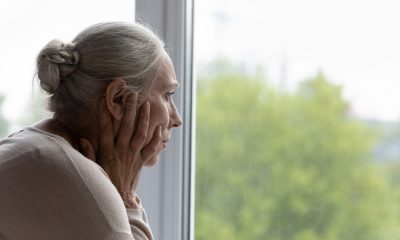
Loss of senses impacts mental health and loneliness in ageing adults


New research shows sensory decline in older adults is linked to worse mental health and increased loneliness.
Most people — up to 94% of U.S. adults — experience at least some dulling of their senses with age, finding themselves squinting at screens, craving stronger flavours, and missing snatches of conversations more and more frequently.
Researchers at the University of Chicago Medicine are looking into how these changes can go beyond mere inconvenience and actually worsen overall mental health in older adults.
“When your senses decline, you can’t experience the world as well,” said Jayant Pinto, MD, a physician and expert in olfactory dysfunction at UChicago Medicine.
“You can’t hear colleagues or friends at the dinner table; you can’t discern what’s going on in your environment; you may have a hard time reading or making things out when you’re in your neighborhood. It makes all your cognitive burdens a little harder, and that probably wears you down over time and causes mental health problems.”
Along with Alexander Wang, a medical student at the UChicago Pritzker School of Medicine, Pinto recently led a study examining the prevalence and impact of sensory impairments among older adults.
They found that people with sensory disabilities tend to have worse mental health, and that different types of sensory disability were associated with different aspects of mental health.
Revealing associations between perception and emotion
The UChicago researchers analysed data on sensory function (vision, hearing and sense of smell) and self-reported mental health from nearly 4,000 older adults, collected over 10 years of follow-up as part of the National Social Life, Health & Aging Project.
They found that people who had multiple senses impaired experienced more loneliness and had significantly worse self-reported mental health overall, and people with three sensory disabilities were more likely to experience frequent depressive episodes. In analyses that differentiated between the senses, vision impairment was most strongly associated with both loneliness and poor self-rated mental health.
Scientists are still exploring how changes in all five senses can impact people, but the UChicago researchers can already point to many ways sensory decline contributes directly to feelings of loneliness, sadness and boredom.
Older people with vision impairment may have trouble getting out of the house or seeing the faces of their friends and family, and hearing loss can make conversations stilted and frustrating.
Even loss of smell can affect someone’s ability to find joy in familiar scents — like a favourite home-cooked meal or a loved one’s signature perfume — and perceive pheromones, which (though not registered consciously) contribute to social dynamics.
“We saw that hearing and vision disability tended to be associated with lower self-rated mental health and feelings of loneliness, but olfactory disability had a weaker association,” Wang said.
“This stood out to me because hearing and vision disabilities tend to be much more stigmatized than olfactory disability. This made me reflect on the ways in which social stigma may be driving this worse mental health.”
Caring for one another in an aging society
In the face of that stigma, the researchers say their results highlight the importance of improving access to mental health services and increasing awareness of the connection between sensory loss and mental distress.
In particular, understanding how different sensory disabilities impact the long-term mental health of older adults could help healthcare professionals — especially primary care providers, otolaryngologists and ophthalmologists — screen for mental health conditions when they identify sensory loss in their patients, providing opportunities for personalised and timely interventions.
In addition to proactively treating older adults’ mental health, the researchers pointed to steps that can be taken to directly lessen the day-to-day effects of sensory difficulties, which would in turn lessen their negative mental health implications.
“We have an aging society; everybody has a relative who’s getting older and having a harder time in life. It’s a burden for us all to share,” Pinto said.
“Lessening the burdens of your aging relatives and friends can have a huge impact on people’s lives, their productivity and their quality of life.”
On a personal level, family members and friends can help by being patient and finding ways to communicate more effectively, such as speaking clearly or using written notes. On a societal level, public policies and community programs can ensure accessibility in public spaces and provide resources that improve quality of life.
Pinto also highlighted a wide range of technologies and medical interventions are available that can help compensate for sensory impairment. For hearing loss, there are cochlear implants, hearing aids and other hearing-assistive devices — which research has indicated could slow cognitive decline in addition to improving quality of life.
For vision loss, there are glasses, contacts, cataract surgery and LASIK surgery, along with accommodations like text-to-speech computer programs. Even for the sense of smell, health experts can sometimes help by reducing sinus inflammation or conducting smell training exercises.
“In many cases, we can mitigate sensory difficulties in ways that might actually improve people’s lives, mental health and sense of loneliness — which is a huge epidemic,” Pinto said.
“These are simple ways we can intervene to help people and potentially have a huge impact on society.”
Recognising and destigmatising sensory disability
The researchers said they intentionally used the word “disability” throughout the paper to underscore the significant impact of sensory impairments on individuals’ lives. This terminology also aligns with efforts to destigmatise these conditions and promote a more inclusive approach to healthcare.
“To some extent, our society already considers decreased sensory function to be a disability: think of the blind and d/Deaf communities,” Wang said.
“Like many marginalised communities, the disabled community has historically had a very contentious relationship with the medical field, which can cause distress and limit access to mental health services. With better understanding and compassion, we can strive to improve the care we provide to older adults and disabled patients.”
He said that by framing the data this way, he hopes to encourage more healthcare providers to move away from thinking in terms of the Medical Model of Disability and move towards the Social Model of Disability.
“My understanding is that the Medical Model characterises disability as something that is ‘deficient’ with a person, thus requiring some sort of ‘fixing’ of the individual,” he explained.
“The Social Model characterizes disability as more of an identity, so limitations relating to disability stem from a society’s lack of accessibility and accommodation for disabled people.”
Recognising sensory impairments as disabilities and acknowledging their impact on mental health are important steps toward more comprehensive and compassionate care. By addressing the medical, social and environmental barriers that exacerbate these impairments, clinicians — and society as a whole — can better support older adults in maintaining their independence.









Veteran male athletes may face higher heart risk during exercise if they have existing heart scarring, new research suggests.
The study found that male endurance athletes aged over 50 were more likely to experience abnormal heart rhythms during training if scarring was present.
Nine in 10 sudden cardiac deaths during sport occur in older male athletes.
Researchers at the University of Leeds tracked 106 healthy male endurance athletes aged over 50 who had been doing more than 10 hours of running or cycling weekly for at least 15 years.
They matched training data from wearables with implantable loop recorders to align heart rhythms with activity.
Over two years, about one in four participants experienced ventricular tachycardia, a fast, abnormal rhythm arising from the heart’s lower chambers, during or just after exercising.
Three quarters of those who had these episodes had heart scarring. There were three sustained episodes during exercise, all in athletes with scarring.
Scarring may be caused by heart attacks, disease or cumulative exertion from years of high-intensity exercise.
Dr Wasim Javed, research fellow at the University of Leeds and lead author, said: “Our study shows that exercise was only associated with a risk of developing abnormal heart rhythms in those who were already high risk due to heart scarring.
“Athletes who developed abnormal heart rhythms were not exercising more or harder than athletes without abnormal heart rhythms.
“This suggests that exercise itself is not the cause, but could act as a trigger for dangerous heart rhythms in those athletes already with an underlying heart issue.”
“Exercise is safe and has immense benefits – but athletes in this group should have regular health checks to make sure they stay healthy.”
The researchers said their findings support the use of wearable technology for athletes who want to monitor their heart rate for unusual activity.

Childhood exposure to indoor air pollution may have long-term effects on brain health, with cognitive impairment appearing decades later, new research suggests.
The study analysed data from over 7,000 Chinese adults aged 45 and above using machine learning techniques.
Nearly 30 per cent of the global population, roughly 2.4bn people, still cook without clean fuels such as gas or electricity, instead using solid fuels like coal, wood and plant waste.
Researchers at the University of Helsinki found that individuals exposed as children to indoor air pollution from solid fuels performed significantly worse on cognitive tests in adulthood, particularly in episodic memory and overall mental health.
The study identified two main pathways through which childhood exposure may contribute to poorer cognitive performance: biological, including being overweight and limitations in daily activities; and socioeconomic, with exposure associated with lower education and income levels.
Men, smokers and regular alcohol users were particularly vulnerable to the detrimental effects.
Xu Zong, the study’s author, said: “Our study emphasises that early exposure to air pollution affects later cognitive health through both biological and social pathways.
“That is why public health efforts should combine clean energy initiatives with preventive strategies that support lifelong health and positive behaviours.
“Switching to cleaner fuels, such as gas or electricity, is not merely an environmental or respiratory health measure.
“It is also an investment in long-term cognitive wellbeing that could safeguard brain health for future generations.”

SimpleC has launched Wellby, an AI companion for unpaid dementia carers, offering round-the-clock emotional support and practical guidance.
Announced at CES in Las Vegas, Wellby is designed for caregivers of people with Alzheimer’s disease and related dementias.
Some 63 million people in the US provide unpaid care to older adults, including 12 million specifically caring for those with dementia. SimpleC says many face emotional strain, uncertainty and limited timely guidance.
Unlike general-purpose AI tools, Wellby is built for caregiving support, delivering personalised, real-time assistance through natural conversation.
Kevin Henze, chief executive of SimpleC, said: “This launch reinforces our belief that technology should support caregivers with both intelligence and compassion.
“As a privately owned, mission-driven company, we’re able to prioritise affordability, accessibility, and long-term caregiver impact. Wellby represents technology with soul—AI designed to truly walk alongside caregivers.”
Future releases will integrate the companion into SimpleC’s Connected Care Platform and extend it to serve older adults ageing in place.
Jun Ying, chief product officer, said: “By integrating AI across our platform, we’re creating a connected ecosystem where caregivers and care recipients can access multiple services—support, monitoring, guidance, and coordination—through a single, trusted SimpleC experience.”

Older male athletes may face increased risk of serious heart problems during exercise

Childhood exposure to indoor air pollution linked to long term brain harms

SimpleC launches AI companion for dementia carers

Billionaire Platt backs Engitix again with US$25m

Thymus regeneration firm TECregen raises CHF 10m

Commonly-prescribed drugs liked to 50% increased risk of dementia

Vaccine raises hope for million living with knee osteoarthritis

Study reveals habits that could lower brain age by eight years

Loss of confidence in midlife linked to dementia

Concurrent frailty and depression likely boost dementia risk in older people, study finds
 News4 weeks ago
Commonly-prescribed drugs liked to 50% increased risk of dementia
- News4 weeks ago
Vaccine raises hope for million living with knee osteoarthritis
- Insights4 weeks ago
Study reveals habits that could lower brain age by eight years
- News4 weeks ago
Loss of confidence in midlife linked to dementia
- News4 weeks ago
Concurrent frailty and depression likely boost dementia risk in older people, study finds
- News4 weeks ago
Sanofi and ADEL sign US$1.04bn Alzheimer’s deal
- News4 weeks ago
Yellow wristbands launched to help locate people with dementia
- Insights4 weeks ago
Sitting by window improves blood sugar control in diabetes patients – study