Connect with us

Research

New tool to enhance deep brain stimulation for Parkinson’s

Published

on

A new spectroscopy probe, with optical fibres to provide real-time information to doctors, could enhance deep brain stimulation procedure for Parkinson’s disease patients.

Deep brain stimulation (DBS) has become an increasingly common treatment for patients with advanced Parkinson’s disease, but the procedure still carries significant risks. 

A new probe that performs two types of spectroscopy could make the procedure safer and improve success rates by helping doctors more accurately navigate instruments inside the brain. 

The research team identified white and grey matter using principal component analysis (PCA), proving that spectroscopic measurements could be suitable for neuronavigation.

For DBS, surgeons place electrodes in the brain to disrupt the errant signals that cause debilitating tremors and stiffness associated with advanced Parkinson’s disease. It can be an effective treatment for patients who no longer benefit from available medications, but placing an electrode in the wrong spot can reduce the effectiveness and lead to psychological disorders.

Mireille Quémener from CERVO Brain Research Center (Université Laval) in Québec, said: “Improving neurosurgical guidance for the DBS electrode insertion would streamline the surgical process, decrease the surgery time, reduce the overall health treatment cost and prevent adverse neuropsychological consequences.”

Real-time navigation support

DBS is a two-part procedure, including one surgery to place electrodes in specific parts of the brain and a second surgery to implant a battery pack that delivers electrical current to the electrodes. 

For the first procedure, doctors typically rely on pre-surgery magnetic resonance imaging (MRI) scans to plan where they will insert electrodes. However, this can sometimes lead to an inaccurate placement since the brain can shift by up to 2 mm during the process of drilling an access hole through the skull.

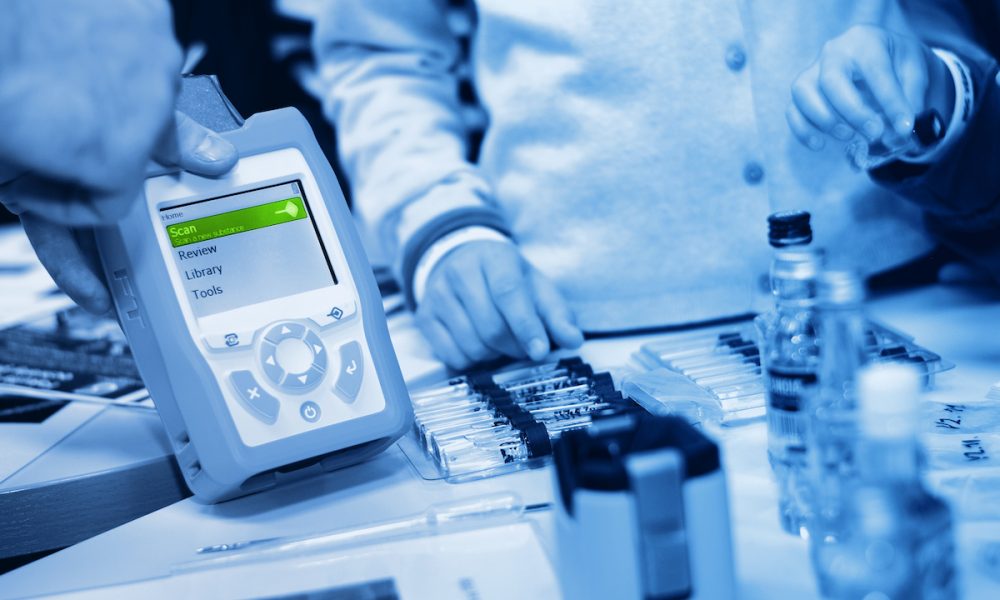
In the new work, researchers created a DBS electrode that is enhanced with an optical probe to perform coherent anti-Stokes Raman scattering spectroscopy (CARS) and diffuse reflectance spectroscopy (DRS) on brain tissues during the insertion process. 

The probe fits within the DBS electrode and contains two fibres for CARS and DRS illumination and a third fibre for collecting the signals. Once the electrode reaches the target position, the optical probe can be while the electrode stays in place.

Confirming accuracy

To test the new probe, a neurosurgeon used it to implant electrodes in six regions of the brain of a human cadaver. CARS and DRS measurements were collected along a total length of 50 mm in each of the brain’s two hemispheres. After the procedure, researchers extracted the brain and visually identified the white and grey matter through which the probe had passed.

Comparing the readouts from the CARS and DRS measurements to the visual record of brain structures, the researchers found the CARS and DRS methods identified brain tissue with great accuracy. These findings confirm that spectroscopy could be a useful tool to help neurosurgeons navigate the brain.

The researchers plan to study whether the approach could be used to collect even more detailed spectroscopic information, for example to measure neurotransmitters that provide a chemical signature of brain activity.  

Quémener added: “Our team is currently working on adapting the optical probe to use it in clinical trials for patients who will receive a DBS surgery. We are convinced that optical methods have enormous potential for surgical guidance, and hope that our technology will emerge in the clinic to assist surgeons in various brain procedures.”

Quémener will detail the new research at Optica’s Biophotonics Congress being held in Vancouver, British Columbia and online 23 – 27 April 2023.

News

AI can predict Alzheimer’s with almost 93% accuracy, researchers say

Published

on

Alzheimer’s AI can predict the disease with nearly 93 per cent accuracy using more than 800 brain scans, researchers say.

The system identified anatomical changes in the brain linked to the onset of the most common form of dementia, a condition that gradually damages memory and thinking.

The findings build on years of research suggesting AI could help spot early Alzheimer’s risk, predict disease and identify patients whose condition has not yet been diagnosed.

Benjamin Nephew, an assistant research professor at the Worcester Polytechnic Institute in Massachusetts, said: “Early diagnosis of Alzheimer’s disease can be difficult because symptoms can be mistaken for normal ageing.

“We found that machine-learning technologies, however, can analyse large amounts of data from scans to identify subtle changes and accurately predict Alzheimer’s disease and related cognitive states.”

The study used MRI scans, a type of detailed brain imaging, from 344 people aged 69 to 84.

The dataset included 281 scans showing normal mental function, 332 with mild cognitive impairment, an early stage of memory and thinking decline, and 202 with Alzheimer’s.

The scans covered 95 of the brain’s nearly 200 distinct regions and used an AI algorithm to predict patients’ health.

Being able to use AI to help diagnose Alzheimer’s earlier could give patients and doctors crucial time to prepare and potentially slow the progression of the disease.

The analysis showed that one of the top predictive factors was brain volume loss, or shrinkage, in the hippocampus, which helps form memories, the amygdala, which processes fear, and the entorhinal cortex, which helps provide a sense of time.

This pattern held across age and sex, with both men and women aged 69 to 76 showing volume loss in the right part of the hippocampus, suggesting it may be an important area for early diagnosis, the researchers noted.

However, the research also found that the way brain regions shrink differs by sex.

In females, volume loss occurred in the brain’s left middle temporal cortex, which is involved in language and visual perception. In males, it was mainly seen in the right entorhinal cortex

The researchers believe this could be linked to changes in sex hormones, including the loss of oestrogen in women and testosterone in men.

These conclusions could help improve methods of diagnosis and treatment going forward, Nephew said.

More than 7.2m Americans are living with Alzheimer’s, according to the Alzheimer’s Association.

More research is being done to reveal other impacting factors.

Nephew said: “The critical challenge in this research is to build a generalisable machine-learning model that captures the difference between healthy brains and brains from people with mild cognitive impairment or Alzheimer’s disease.”

Continue Reading

News

The medicinal power of music therapy in aged care

Published

on

By Tuned Global

Music in the medicine and research space has proved to have significant therapeutic benefits in aged care, treating conditions including dementia, Parkinson’s disease, PTSD and ADHD. Now, with the evolution of music technology and AI, the potential to heal the mind through music has become even more powerful.

At a recent industry event, three experts sat down to discuss this exciting and complex space and to explore how in trying to bring these treatments to patients or the broader market, the not-so-common intersection of medtech and music surfaces a number of challenges.

Music therapy powered by AI

                    Felicity Baker

Music therapy itself is not new, and therapists have been delivering such interventions in one-on-one sessions and small groups for decades.

The exciting prospect highlighted during the session was that technology and AI can now enable this at scale and with evidence-based approach.

If more people can gain access to music treatment through technology, there is the potential to decrease medication intake, reduce healthcare costs and improve outcomes.

However, scaling these therapies does introduce new considerations and challenges that traditional clinical settings have not had to face.

Felicity Baker is a music therapist, professor at the University of Melbourne and Founder of Matchplus.ai, a sensor-based AI solution that detects early physiological markers of agitation and delivers personalised music interventions to improve the wellbeing of people living with dementia and other cognitive conditions.

With over three decades of experience in dementia care and music therapy, Baker is leading this project at prototype stage to reduce distress, medication reliance and create a more enabling environment for individuals with cognitive decline.

Having successfully secured USD $1.3m from Google.org (the philanthropic arm of Google LLC) to develop scalable technology, Baker has become one of just 15 recipients worldwide from more than 800 applications.

“We’re using wearables to actually develop algorithms that can predict when someone is going to start wandering or is going to get up and have a fall or hit another resident in the nursing home,” she said.

“We’ve got it down to between five and 15 minutes, so a carer or family member can anticipate that something’s going to happen.”

Baker said using AI to help preempt when to use music was one thing, but then what order the music should come in, what kind of music and how to be sensitive to the specific symptoms of people with dementia created further challenges they continue to work on.

Simone Dalla Bella, co-director of the BRAMS laboratory at the University of Montreal is conducting research focused on rhythm interventions for patients with various disorders, including Parkinson’s disease.

Simone Dalla Bella

The interventions include rhythmic serious games such as Beat Workers, and mobile apps such as BeatMove, developed by the start-up BeatHealth that Dalla Bella co-founded. For example, BeatMove can adjust music tempo to help Parkinson’s patients walk more effectively.

“Imagine that you have music in the background that you chose, and the music is going a bit faster than you, so it motivates you to run a bit faster.

“But then if you’re tired and you slow down, the music will follow you gently as if you were running or walking with a theoretical partner,” he said.

“A clinical trial is currently ongoing in France to test a large group of patients with Parkinson’s who basically take the app outside in a park, they use it, and we are seeing beneficial effects of that kind of intervention.”

Navigating Licensing Challenges

The prospect of music-powered therapy is rather inspiring and life-affirming. Providing outcomes for patients with debilitating conditions in a non-invasive way is certainly a noble cause for academics and entrepreneurs alike to take up.

However, what many might not have considered is how these medical applications acquire and manage music rights.

Virginie Chelles, VP and Global Head of Marketing and Communications for music licensing and technology company Tuned Global, described the complexity facing these innovators.

In working with medical technology clients, Chelles highlighted that while founders deeply understand the science and tech behind their products and projects, they often have no knowledge of music industry operations.

“When it comes to us, there is a whole new industry, being the music industry which has little or no connection with the medical industry, [which in itself also] has a lot of regulation,” she said.

In the medical music space, Tuned Global currently works with MediMusic, a UK startup that uses AI to analyse brain responses and select music for anxiety and pain management.

Companies like MediMusic are obviously performing powerful and important work, but in cases where they are not up to speed on all of the requirements to correctly licence music, they are adding layers of risk to an already compliance-heavy environment.

                 Virginie Chelles

“They’re dealing with the legal side of medicine in being able to have it delivered in NHS Hospitals in the UK, and going for trials and all that is involved.

“There is a lot of paperwork to do there,” Chelles said.

“But then, if they play the wrong track, [a] track that was not licensed, the business is in trouble.

“[They would be looking at lawsuits], and they wouldn’t be paying the rights to the right people.

“There are master rights, there’s publishing rights. [So they think], ‘How do I do that? How do I find the right tracks?’.”

Often in these kinds of apps, an AI personalisation solution will drive the selection of tracks that resonate with certain patients, so another challenge for medtech clients in knowing the extent of what other tracks they will need access to.

Companies must also consider whether their licenses permit training medical algorithms on music assets.

“Thousands of tracks are released every day, and [if you look at what’s being produced] with AI. It’s even more,” she said.

“Many companies don’t need millions of tracks. If you work on dementia, just working on a back catalogue, like the catalog that makes sense for these people when they were in their 20s.

“For us, it helped us to understand what you need to license the right catalog, rather than millions of tracks, because accessing millions of tracks is a lot of money in storage and in processing.”

Addressing music licensing early in tech development

For medtech companies wanting to leverage music, Chelles was direct about the challenges and decisions they face when they first approach music licensing.

A lot of consideration needs to be made about how much music they need, what kind, whether they need commercial music or production music and more.

When MediMusic first engaged Tuned Global, these considerations presented a big challenge.

“Because licensing music is not a science. It’s not predictable, but we can definitely help,” she said.

Elaborating further, Chelles said that companies tended to be more successful when they addressed music licensing early in development rather than treating it as an afterthought.

“It’s going to take as much time to build the music and the licensing and compliance technology as building your medical device or app or science behind it,”

“Talk to a music expert early on, it can be us, but it can also be entertainment lawyers or licensing specialists that are going to be able to help from the beginning … to just understand what it is about.

“We can also help them to build their business case to pitch to those labels, because this can be quite strategic depending on the label and their current objectives. Making big pitches without understanding them or the broader environment could cost a lot of time and money if they don’t sign you up right away.

“Being able to demonstrate and communicate value in this industry on the industry’s terms is really important for success, so if you can work with people that have these relationships and can engage with them it’s very helpful.”

Working with an established music technology company can help medtech startups navigate label negotiations.

Labels recognise that companies already working with licensing specialists have typically secured funding and understand the commercial requirements.

“[The labels are] like, okay, they are legit, because if Tuned Global can work with them, they already have the funding and they understand what they’re doing,” Chelles said.

Securing licensing agreements is only the first step. Companies then need backend technology to access the actual tracks.

Tuned Global maintains 190 million tracks, with the catalog growing daily. Companies must negotiate separately with both master rights holders (the record labels) and publishers who represent musicians and writers.

Commercialising music therapies

Neither researcher came from a background that prepared them for music industry negotiations. Despite publishing in The Lancet and Nature and securing major medical research grants, Baker found music licensing remained unfamiliar territory.

Dalla Bella received more than $USD 3.5m in European research funding but similarly had no training in navigating music rights.

Startup activity at universities is growing, but this has not always been the case.

Baker noted that while the institutions themselves were very supportive and really wanted to push research innovations into the market, there still exists some commercialisation stigmas among some researchers.

“For some researchers, commercialising your research is kind of almost like a dirty word.

“To them it’s like you’re not being true to the science if you want to actually make a company and do something with this,” she said.

Dalla Bella described how moving from pure research into commercial applications required stepping outside his comfort zone.

“Sometimes in science, we’re very closed, right? We do work just in science, in our niche, we are happy with what we do, but then you have to go beyond your comfort zone to start to work with engineers and start to work with a startup company,” he said.

“[I’ve seen for a lot of people] it took time to build this collaboration, this common language, and to be able to work together. After a certain amount of time, you discover the real potential of doing that.”

The future of AI-powered music therapy in aged care

The medical music technology sector is an exciting and expanding space for aged care.

As more innovators enter the industry, the intersection between healthcare regulation and music licensing will likely require more standardised frameworks and understanding of the complexities so they aren’t bogged down or exposed to complications that could cut their journey to provide care short.

For now, companies navigating both industries must build relationships with experts in each domain.

The medical science may be groundbreaking, but without proper music licensing infrastructure, therapeutic applications cannot reach patients or compensate the artists whose work makes treatment possible.

About Tuned Global

Tuned Global is the leading data-driven cloud and software platform that empowers businesses to integrate commercial music into their apps or launch complete streaming experiences using advanced APIs, real-time analytics, licensing solutions, and customisable white-label apps.

Our turnkey solutions for music, audio, and video — coupled with a broad ecosystem of third-party music tech integrations — make us the most comprehensive platform for powering any digital music project.

We streamline complexities in licensing, rights management, and content delivery, enabling rapid innovation and bringing new ideas to life.

Since 2011, we’ve supported 40+ companies in 70+ countries — across telecom, fitness, media, aviation, and more — to deliver innovative music experiences faster and more cost-effectively. For more information, visit www.tunedglobal.com.

Continue Reading

News

The Agetech World research roundup

Published

on

Super-ageing key, Seaweed’s special, hair-raising breakthrough and more

The secret of how ‘super-agers’ have the mental agility of people decades younger is centred around brain health, say US researchers.

Some elderly people are able to regenerate brain cells twice as quickly as other, healthy adults, of the same age.

While it has recently been established that we continue creating brain cells throughout our lives, the new research suggests that some people age without any signs of cognitive decline because their bodies are much better at renewing brain cells.

This is known as neurogenesis and happens in the hippocampus – which is crucial for memory.

“Super agers had twice the neurogenesis of the other healthy older adults,” said Professor Orly Lazarov, of the University of Illinois at Chicago.

“Something in their brains enables them to maintain a superior memory. I believe hippocampal neurogenesis is the secret ingredient, and the data support that.

Amino acid alert

“This is a big step forward in understanding how the human brain processes cognition, forms memories and ages.”

A super-ager is someone aged 80 or older who exhibits cognitive function that is comparable to an average person who is middle-aged.

A study of more than 270,000 participants from the UK Biobank has uncovered a link between a common amino acid and how long men live. 

Researchers found that higher levels of tyrosine – an amino acid found in protein-rich foods and often marketed as a focus-boosting supplement – were associated with shorter life expectancy in men.

The study published in Aging-US, from the University of Hong Kong and the University of Georgia, examined the role of phenylalanine and tyrosine in longevity.

Their findings suggest that higher tyrosine levels are associated with shorter life expectancy in men, raising the possibility that longevity strategies may need to differ by sex.

‘Seaing’ into the future

Researchers are using a unique Australian seaweed that mimics the biological functions of human skin to develop sustainable, regenerative wound-healing, anti-ageing solutions for complex skin injuries and burns.

The healing power of seaweed is not a new discovery.

There is evidence that it was chewed medicinally in what is now Chile more than 14,000 years ago, and that seaweed has been a versatile resource for Indigenous Australians for millennia. 

It is now believed there are some 12,000 species of seaweed around the world, and that current scientific understanding of the possible benefits of those species is just scratching the surface.

Over the last decade, University of Wollongong researchers at the Intelligent Polymer Research Institute (IPRI) have been investigating a unique Australian green seaweed with antibacterial, anti-inflammatory and regenerative properties. 

The team believes this discovery could revolutionise complex wound healing and boost longevity.

Link between obesity and muscle loss

Researchers at the UK’s University of Birmingham have identified a new mechanism by which obesity may contribute to muscle loss in older adults.

The study, published in the Journal of Cachexia, Sarcopenia and Muscle and delivered through the National Institute for Health and Care Research (NIHR) Birmingham Biomedical Research Centre (BRC) shows for the first time that extracellular vesicles – tiny particles released by fat tissue – can directly trigger muscle atrophy in human cells.

Sarcopenic obesity, where excess body fat coexists with reduced muscle mass and strength, is an increasingly common condition in ageing populations and is associated with frailty, reduced mobility, and poorer overall health outcomes. 

It is estimated to affect around 11 per cent of the population. 

In the study, researchers found that extracellular vesicles released from obese adipose tissue caused significant thinning of muscle fibres derived from older adults, whilst researchers found
that muscle cells derived from younger adults were resilient to these effects. 

Lead researcher Dr Joshua Price, first author and Postdoctoral Researcher, said: “It isn’t just having more fat tissue that matters.

“Obesity changes how fat tissue behaves and how it communicates with muscle.

“Ageing muscle is far more vulnerable to these altered signals, which helps explain why muscle loss accelerates with obesity later in life.”

Hair-raising breakthrough

Japanese regenerative health firm OrganTech has pinpointed the trio of cells required to prevent hair loss.

The Tokyo-based biotech said its researchers have defined a three-cell configuration capable of reconstructing hair follicle organ germs to sustain a hair growth cycle.

The work, published in Biochemical and Biophysical Research Communications, provides a potential blueprint for regeneration of hair follicles; which are complex, mini-organs that repeatedly manifest through growth, regression, rest and shedding cycles. 

Previous regenerative approaches have combined epithelial stem cells and dermal papilla cells to form early follicular structures.

But, working with researchers at the RIKEN Center for Biosystems Dynamics Research, OrganTech identified a third, previously uncharacterised, cell type that appears to be essential for complete regeneration. 

This mesenchymal cell was shown to play a critical role in triggering the transition from the resting to the growth phase of the hair cycle and in driving the follicle’s downward extension into surrounding tissue. 

OrganTech CEO Yoshio Shimo, said: “This work defines a foundational cellular configuration for functional hair follicle regeneration.

“Beyond hair biology, it reinforces our broader strategy of organ-level regenerative medicine, where precisely orchestrated epithelial and mesenchymal interactions enable stable and functional tissue reconstruction.”

Continue Reading

Trending

Agetech World