Research
$11m grant to study Alzheimer’s screening tool in primary care
The tool has been designed to reduce disparities in pre-dementia and dementia diagnosis among different demographics.


Researchers have been awarded a USD$11m NIH grant that will support the evaluation of a new Alzheimer’s screening tool in primary care settings.
Investigators at Albert Einstein College of Medicine, Montefiore Health System, Regenstrief Institute, and Indiana University School of Medicine have received an $11 million grant from the National Institutes of Health (NIH) to evaluate an Einstein-developed test for assessing cognitive impairment and dementia.
The 5-minute screening tool was designed for people from a range of racial and ethnic backgrounds, education levels and socioeconomic circumstances with the goal of reducing disparities in pre-dementia and dementia diagnosis and treatment and improving dementia care overall.
According to the Alzheimer’s Association, 6.5 million Americans older than 65 are living with Alzheimer’s disease, and the number is expected to rise to 12.7 million by 2040.
However, not all people are equally affected: 19 per cent of African Americans and 14 per cent of Hispanics aged 65 and older are diagnosed with Alzheimer’s, compared to 10 per cent of whites.
Despite this, Black participants in Alzheimer’s disease research studies were 35 per cent less likely to be diagnosed than white participants and were diagnosed with more severe symptoms.
Traditionally, neurologists diagnose Alzheimer’s or its precursor, mild cognitive impairment (MCI), after a lengthy evaluation. This poses a significant challenge for many groups: people with limited access to specialised care (including people from historically marginalised groups) as well as people living in poverty, in rural areas, or who require a referral from a primary care physician who may not recognise their symptoms.
Dr Malaz Boustani, co-principal investigator on the grant and the founding director of the Center for Health Innovation and Implementation Science at the IU School of Medicine, said: “Primary care physicians are on the front lines of caring for those with dementia, but it is challenging for them to make diagnoses—in fact, more than 50% of dementia cases are missed during primary care appointments.
“The 5-Cog screening paradigm seeks to address this challenge by providing a tool that does not require special equipment or training, is inexpensive, available in English and Spanish, and takes only five minutes.”
A novel test
The 5-Cog assessment involves a picture-based memory-impairment screening test, a short picture-based symbol match, and confirmation that a patient has cognitive complaints and problems with mobility.
Previous research has found that the image-based assessment effectively negates influences resulting from a person’s preferred language, education level, and gender. Having previously validated the 5-Cog assessment at one clinical site, the researchers will now evaluate the test in real-world primary care settings.
The study will enroll 6,600 participants presenting with cognitive concerns in 22 primary care clinics in the Bronx and Indiana. Primary care teams will be prompted to give the assessment by the electronic medical record system.
Responses will be automatically classified as “normal” or “abnormal” based on results, and care teams will be provided with a decision tree to ensure patients receive appropriate follow-up care and support.
Dr Joe Verghese, principal investigator on the grant and chief of the unified divisions of geriatrics in the department of medicine and cognitive and motor aging in the Saul R. Korey Department of Neurology at Einstein and Montefior, commented: “Earlier diagnosis and treatment of dementia and MCI may enable people to remain in their homes longer and will help families make appropriate plans.
“It also gives people the opportunity to modify their lifestyle to improve the trajectory of their disease.”



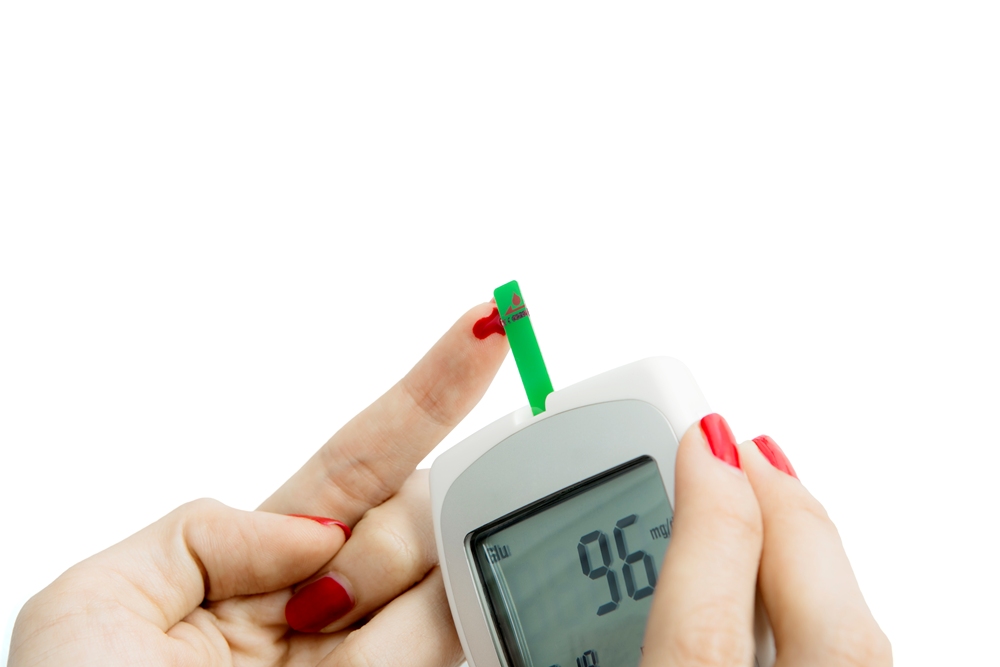
Sharp rises in blood sugar after meals may raise Alzheimer’s risk, according to genetic analysis of more than 350,000 adults.
The findings point to after-meal glucose, rather than overall blood sugar, as a possible factor in long-term brain health.
Researchers examined genetic and health data from over 350,000 UK Biobank participants aged 40 to 69, focusing on fasting glucose, insulin, and blood sugar measured two hours after eating.
The team used Mendelian randomisation, a genetic method that helps test whether biological traits may play a direct role in disease risk.
People with higher after-meal glucose had a 69 per cent higher risk of Alzheimer’s disease.
This pattern, known as postprandial hyperglycaemia (elevated blood sugar after eating), stood out as a key factor.
The increased risk was not explained by overall brain shrinkage (atrophy) or white matter damage, suggesting after-meal glucose may affect the brain through other pathways not yet fully understood.
Dr Andrew Mason, lead author, said: “This finding could help shape future prevention strategies, highlighting the importance of managing blood sugar not just overall, but specifically after meals.”
Dr Vicky Garfield, senior author, added: “We first need to replicate these results in other populations and ancestries to confirm the link and better understand the underlying biology.
“If validated, the study could pave the way for new approaches to reduce dementia risk in people with diabetes.”

A recent international study that pooled brain scans and memory tests from thousands of adults has shed new light on how structural brain changes are tied to memory decline as people age.
The findings show that the connection between shrinking brain tissue and declining memory is nonlinear, stronger in older adults, and not solely driven by known Alzheimer’s-associated genes like APOE ε4.
This suggests that brain ageing is more complex than previously thought, and that memory vulnerability reflects broad structural changes across multiple regions, not just isolated pathology.
Alvaro Pascual-Leone, MD, PhD is senior scientist at the Hinda and Arthur Marcus Institute for Aging Research and medical director at the Deanna and Sidney Wolk Center for Memory Health.
The researcher said: “By integrating data across dozens of research cohorts, we now have the most detailed picture yet of how structural changes in the brain unfold with age and how they relate to memory.”
The study found that structural brain change associated with memory decline is widespread, rather than confined to a single region.
While the hippocampus showed the strongest association between volume loss and declining memory performance, many other cortical and subcortical regions also demonstrated significant relationships.
This suggests that cognitive decline in ageing reflects a distributed macrostructural brain vulnerability, rather than deterioration in a few specific brain regions.
The pattern across regions formed a gradient, with the hippocampus at the high end and progressively smaller but still meaningful effects across large portions of the brain.
Importantly, the relationship between regional brain atrophy and memory decline was not only variable across individuals but also highly nonlinear.
Individuals with above-average rates of structural loss experienced disproportionately greater declines in memory, suggesting that once brain shrinkage reaches higher levels, cognitive consequences accelerate rather than progress evenly.
This nonlinear pattern was consistent across multiple brain regions, reinforcing the conclusion that memory decline in cognitively healthy ageing is linked to global and network-level structural changes, with the hippocampus playing a particularly sensitive role but not acting alone.
Pascual-Leone said: “Cognitive decline and memory loss are not simply the consequence of ageing, but manifestations of individual predispositions and age-related processes enabling neurodegenerative processes and diseases.
“These results suggest that memory decline in ageing is not just about one region or one gene — it reflects a broad biological vulnerability in brain structure that accumulates over decades.
“Understanding this can help researchers identify individuals at risk early, and develop more precise and personalized interventions that support cognitive health across the lifespan and prevent cognitive disability.”

Shingles vaccine may slow biological ageing in older adults

Thousands of men in England to be offered life-extending prostate cancer drug

Blood sugar spike after meals may increase Alzheimer’s risk

Study reveals why memory declines with age

Agetech research round-up: brain health vital, £38m to combat Alzheimers, and more…

FDA clears automated brain fluid device

Agetech World’s latest innovation & investment round-up

Insilico signs US$888m oncology deal with Servier

Food preservatives linked to increased diabetes and cancer risk, study finds

UK bans junk food ads before 9pm to protect child health
 Technology2 weeks ago
FDA clears automated brain fluid device
- News2 weeks ago
Agetech World’s latest innovation & investment round-up
- News2 weeks ago
Insilico signs US$888m oncology deal with Servier
- News2 weeks ago
Food preservatives linked to increased diabetes and cancer risk, study finds
- News2 weeks ago
UK bans junk food ads before 9pm to protect child health
- Technology1 week ago
Captioning glasses win AARP pitch at CES
- Insights2 weeks ago
Global longevity initiative launches North American chapter
- News6 days ago
Interview: GlycanAge launch first hospital-based tests