Woman excluded from gyms committed to promoting accessible exercise and wellbeing
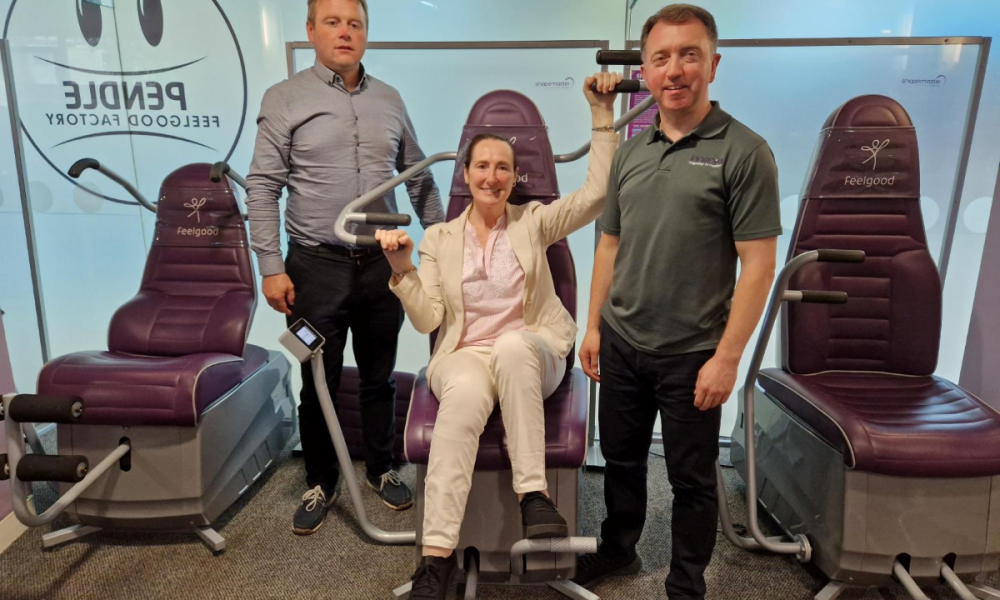
A woman who used wellness supplier Innerva’s power-assisted exercise equipment to treat her long-term health conditions has become the brand’s exclusive distributor in Ireland.
Martina Calvey, a businesswoman and former teacher and guidance counsellor, is the driving force behind Hello GoodLife Wellbeing, a new company dedicated to rolling out Innerva’s cutting-edge equipment across Ireland.
Ms Calvey is committed to making exercise more inclusive and accessible following her own wellbeing challenges which excluded her from mainstream health and fitness facilities.
The previously active 56-year-old from the West of Ireland was diagnosed with rheumatoid arthritis in 1991, which threatened to confine her to a wheelchair.
Unwilling to accept such a fate, she explored alternative therapies and treatments and eventually discovered Innerva’s power-assisted exercise equipment, which enables users to work passively or actively, with a focus on improving aerobic fitness, muscular strength, balance, flexibility and social wellbeing.
The unique power-assisted nature of Innerva’s machines that provide a full body workout in as little as 30 to 40 minutes for those who need a helping hand to be able to exercise, had a profound impact on Ms Calvey’s health.
With regular use of the equipment her symptoms improved and the condition went into remission for two decades.

Seamus Davitt and Martina Calvey
She has lived with a return of the disease since 2011, however, following a brush with cancer. The arthritis confined her to bed for months, left her unable to walk independently for almost two years, and resulted in her 14th surgery followed by six months of having to use a wheelchair.
Remembering the positive impact of power-assisted exercise years before, Ms Calvey contacted Innerva to bring the solution to Ireland.
With the support of her partner, Seamus Davitt, Ms Calvey has now set up Hello GoodLife Wellbeing.
As the exclusive distributor for Innerva’s power-assisted exercise equipment in Ireland, the pair are committed to making working out accessible to all, regardless of their age or physical limitations.
Ms Calvey understands first hand the challenges faced by individuals who are unable to access traditional gyms and aims to provide a solution through Innerva’s equipment, which is mainly used by older adults and those with long-term health conditions, within the leisure, therapy and rehabilitation, care and retirement sectors.
She said: “There are lots of people like me who can’t access standard gyms, not because we are lazy or disinterested, but because health and fitness clubs aren’t set up to cater for our needs.
“As a former gym user, I felt so excluded when I couldn’t find anywhere to exercise. Discovering Innerva’s power-assisted exercise equipment was life-changing for me, and I want to bring the solution to Ireland to make exercise accessible for everyone.”
Hello GoodLife Wellbeing is not just about supplying equipment. Ms Calvey said it’s also about creating a movement.
She wants to establish hubs across Ireland, where people can engage in inclusive and uplifting exercise experiences that prioritise their physical, social and mental wellbeing.
With Ireland’s ageing population, there is a growing need for specialised fitness solutions and Hello GoodLife Wellbeing is set to support various sectors including leisure, rehabilitation, therapy and care.
David Heathcote, Innerva’s head of business development, commented: “Martina’s inspiring journey is testament to her determination and resilience and the potential of power-assisted exercise to transform lives.
“We’re thrilled to partner with Hello GoodLife Wellbeing to bring our solution to Ireland and make inclusive exercise a reality for everyone.”