Insights
USC funds AI projects for Alzheimer’s trials


The USC Clinical Trial Recruitment Lab will fund four projects testing how AI can strengthen recruitment for Alzheimer’s trials.
The initiative, dedicated to accelerating and improving Alzheimer’s clinical trials, selected the projects from more than 30 applicants to explore digital approaches.
Alzheimer’s clinical trials are more complex, costlier and take longer than those in other therapeutic areas, despite the pressing need for new treatments.
The lab evaluates innovative recruitment strategies to improve access and representation in trials, with the goal of identifying scalable evidence-based recruitment practices.
The USC Clinical Trial Recruitment Lab is a collaboration between the USC Schaeffer Center for Health Policy and Economics and the USC Epstein Family Alzheimer’s Therapeutic Research Institute.
The four projects will explore the following strategies.
- Miriam Ashford at University of California, San Francisco will develop and test a generative AI voice agent to support remote informed consent and assess patient capacity for Alzheimer’s clinical trials.
- Erika Cottrell at OCHIN, a national network of community health centres, and Vijaya Kolachalama at Cognimark will integrate an AI-enabled diagnostic platform into primary care electronic health record workflows to support earlier identification and referral of patients.
- Andrew Kiselica at University of Georgia will establish a digitally enabled, trial-ready cohort of rural older adults to improve recruitment, participant selection and engagement.
- Raeanne Moore at University of California, San Diego will leverage electronic health record portals and digital cognitive assessments to accelerate prescreening and better match potential participants.
An estimated 5.6 million Americans are living with Alzheimer’s and related dementias, a number expected to increase dramatically in the coming decades as the population ages.
An extensive therapeutic development pipeline and new early-detection approaches, such as diagnostic blood tests and advanced digital tools, have the potential to reduce the burden of the disease.
However, fewer than one per cent of eligible individuals participate in Alzheimer’s therapeutic trials due to barriers that include limited patient awareness, health system resource constraints and lack of access to diagnostics, according to research from USC Schaeffer.
Certain populations at higher risk for the disease, including Black and Hispanic patients, remain underrepresented.
“We can only innovate as quickly as we can test new therapies,” said Dana Goldman, founding director of the USC Schaeffer Institute.
“That’s why it’s crucial we keep expanding the toolkit of evidence-based recruitment strategies for running faster, better trials.”
The lab previously funded six pilots, some of which have already yielded insights.
For example, one found remote blood collection could help identify potential participants, while another showed that offering a small gift card significantly increased enrolment in an online memory concerns registry.
“Faster and more effective recruitment is essential, and we’re excited to incorporate these solutions in an integrated way as part of our clinical trials,” said Paul Aisen, founding director of the USC Epstein Family Alzheimer’s Therapeutic Research Institute.
“As studies move earlier into pre-symptomatic disease, this opens the door to new recruitment paradigms, and continuing to push forward the science of recruitment will be critical to what comes next in Alzheimer’s research.”


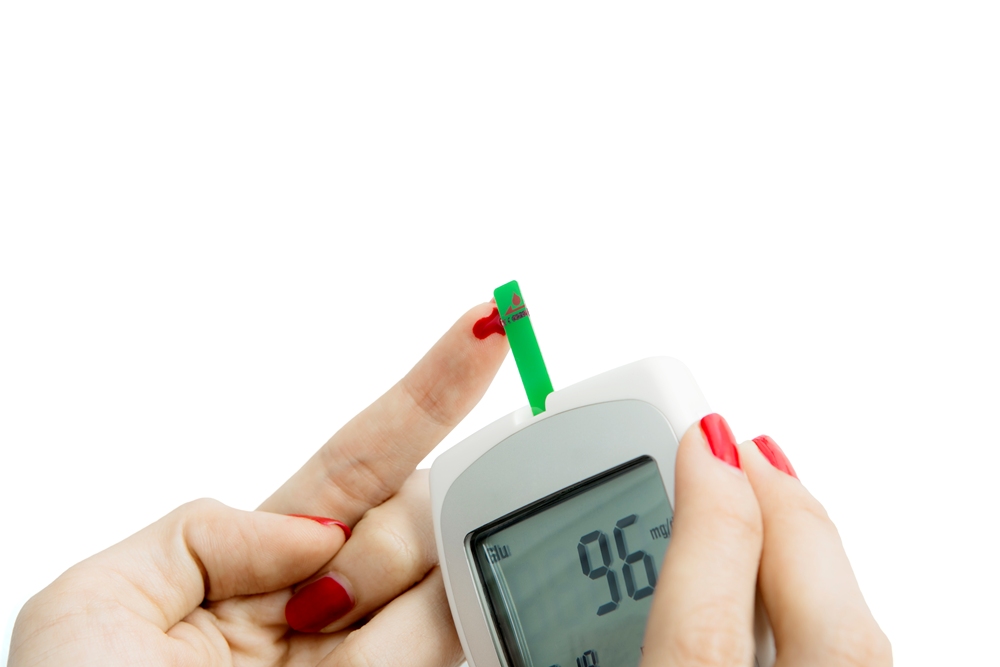
Sharp rises in blood sugar after meals may raise Alzheimer’s risk, according to genetic analysis of more than 350,000 adults.
The findings point to after-meal glucose, rather than overall blood sugar, as a possible factor in long-term brain health.
Researchers examined genetic and health data from over 350,000 UK Biobank participants aged 40 to 69, focusing on fasting glucose, insulin, and blood sugar measured two hours after eating.
The team used Mendelian randomisation, a genetic method that helps test whether biological traits may play a direct role in disease risk.
People with higher after-meal glucose had a 69 per cent higher risk of Alzheimer’s disease.
This pattern, known as postprandial hyperglycaemia (elevated blood sugar after eating), stood out as a key factor.
The increased risk was not explained by overall brain shrinkage (atrophy) or white matter damage, suggesting after-meal glucose may affect the brain through other pathways not yet fully understood.
Dr Andrew Mason, lead author, said: “This finding could help shape future prevention strategies, highlighting the importance of managing blood sugar not just overall, but specifically after meals.”
Dr Vicky Garfield, senior author, added: “We first need to replicate these results in other populations and ancestries to confirm the link and better understand the underlying biology.
“If validated, the study could pave the way for new approaches to reduce dementia risk in people with diabetes.”

A recent international study that pooled brain scans and memory tests from thousands of adults has shed new light on how structural brain changes are tied to memory decline as people age.
The findings show that the connection between shrinking brain tissue and declining memory is nonlinear, stronger in older adults, and not solely driven by known Alzheimer’s-associated genes like APOE ε4.
This suggests that brain ageing is more complex than previously thought, and that memory vulnerability reflects broad structural changes across multiple regions, not just isolated pathology.
Alvaro Pascual-Leone, MD, PhD is senior scientist at the Hinda and Arthur Marcus Institute for Aging Research and medical director at the Deanna and Sidney Wolk Center for Memory Health.
The researcher said: “By integrating data across dozens of research cohorts, we now have the most detailed picture yet of how structural changes in the brain unfold with age and how they relate to memory.”
The study found that structural brain change associated with memory decline is widespread, rather than confined to a single region.
While the hippocampus showed the strongest association between volume loss and declining memory performance, many other cortical and subcortical regions also demonstrated significant relationships.
This suggests that cognitive decline in ageing reflects a distributed macrostructural brain vulnerability, rather than deterioration in a few specific brain regions.
The pattern across regions formed a gradient, with the hippocampus at the high end and progressively smaller but still meaningful effects across large portions of the brain.
Importantly, the relationship between regional brain atrophy and memory decline was not only variable across individuals but also highly nonlinear.
Individuals with above-average rates of structural loss experienced disproportionately greater declines in memory, suggesting that once brain shrinkage reaches higher levels, cognitive consequences accelerate rather than progress evenly.
This nonlinear pattern was consistent across multiple brain regions, reinforcing the conclusion that memory decline in cognitively healthy ageing is linked to global and network-level structural changes, with the hippocampus playing a particularly sensitive role but not acting alone.
Pascual-Leone said: “Cognitive decline and memory loss are not simply the consequence of ageing, but manifestations of individual predispositions and age-related processes enabling neurodegenerative processes and diseases.
“These results suggest that memory decline in ageing is not just about one region or one gene — it reflects a broad biological vulnerability in brain structure that accumulates over decades.
“Understanding this can help researchers identify individuals at risk early, and develop more precise and personalized interventions that support cognitive health across the lifespan and prevent cognitive disability.”

BioAge expands drug into diabetic macular oedema

USC funds AI projects for Alzheimer’s trials

Insilico in US$66m deal for Parkinson’s drug

Nanoparticles target disease proteins in dementia

Exciva raises US$59.4m for Alzheimer’s therapy

FDA clears automated brain fluid device

Agetech World’s latest innovation & investment round-up

Insilico signs US$888m oncology deal with Servier

Food preservatives linked to increased diabetes and cancer risk, study finds

Captioning glasses win AARP pitch at CES
 Markets & Industry3 weeks ago
FDA clears automated brain fluid device
- News3 weeks ago
Agetech World’s latest innovation & investment round-up
- News3 weeks ago
Insilico signs US$888m oncology deal with Servier
- News2 weeks ago
Food preservatives linked to increased diabetes and cancer risk, study finds
- News2 weeks ago
Captioning glasses win AARP pitch at CES
- Insights3 weeks ago
UK bans junk food ads before 9pm to protect child health
- News1 week ago
Interview: GlycanAge launch first hospital-based tests
- Insights3 weeks ago
Global longevity initiative launches North American chapter