Space was famously seen as the final frontier as the crew of the USS Enterprise boldly went where no man had gone before.
Now UK scientists are looking to extend the boundaries of their knowledge as they reach for the stars in a bid to answer the enduring question of why people’s muscles deteriorate as they age.
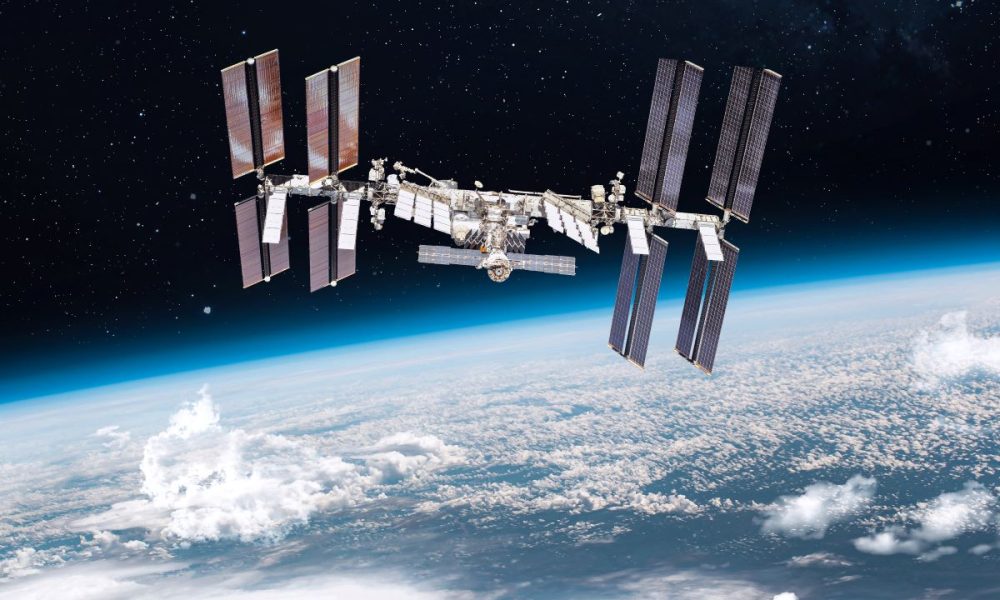
An experiment led by the University of Liverpool will blast off to the International Space Station (ISS) in 2025 and assess the impacts of the microgravity environment on lab grown human muscle.
The MicroAge II project will also look at whether mitochondria plays an important role in muscle loss in space, and if the application of tension can slow the degeneration process.
The experiment has been awarded £1.4m by the UK Space Agency, and will be conducted by astronauts on board the ISS for up to six months before returning to Earth for the results to be scrutinised.
This is the second time that the team of medical scientists based at the University of Liverpool has looked to the heavens to better improve their understanding of how muscles degenerate.
MicroAge I – also funded by the UK Space Agency – flew to the ISS in December 2021 on a SpaceX Falcon 9 rocket from the Kennedy Space Center in Florida, to test lab-grown muscle cells, each the size of a grain of rice.
The cells were placed in a 3D printed protective container the size of a pencil sharpener before being sent into space. Once on the ISS the cells were electrically stimulated to trigger contractions.
On their return in January last year, scientists analysed the results against findings from experiments on Earth as they began their own journey to piece together how the tissue responds to microgravity and ageing.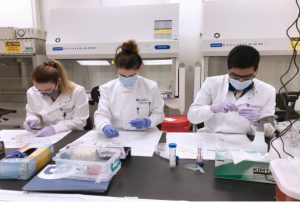
MicroAge II will further develop the scientists’ knowledge in what is the ultimate laboratory testbed on board the ISS.
It has long been known that astronauts living in space can lose muscle rapidly in what some have speculated could be an accelerated ageing process – despite exercising for at least 2.5 hours each day.
Indeed, astronauts’ muscles weaken to such an extent that on returning to Earth they are unable to walk properly until they have built their strength up again.
It’s hoped a better understanding of how the microgravity environment makes astronauts’ muscles weaken in space in much the same way as they do as humans grow older, will lead to the rapid development of therapies to reduce age-related muscle loss so people can better maintain their strength and mobility.
Whilst grudgingly accepted as a sign of ageing, loss of muscle mass is more than an unwanted inconvenience. It can not only stop people carrying out everyday tasks, but lead to more serious problems such as an increased risk of falls and a longer recovery time from injuries.
Professor Malcolm Jackson from the MicroAge II team, said: “We will use newly developed techniques to study the role of changes in mitochondria, tiny structures that are responsible for supplying energy to cells, in driving the loss of muscle mass that occurs in microgravity.
“The role that a loss of tension on muscle plays in these mitochondrial changes will be examined using innovative hardware that we are developing which modifies the amount of tension that the muscle experiences in microgravity.
“This will be used to test whether altered tension on muscle regulates the muscle loss in microgravity and to inform us on the process during muscle loss during ageing on Earth.”
The equipment for the experiment is being built by Kayser Space Ltd, a microgravity hardware specialist based in Oxfordshire.
Dr Paul Bate, Chief Executive of the UK Space Agency, said: “This ground-breaking research highlights the power of space to push through barriers, revolutionise science and enhance our lives.
“Through a combination of national funding and our vital role in the European Space Agency, we’re ensuring UK scientists have access to the unique environment of the ISS for their research, which will benefit us all.”