


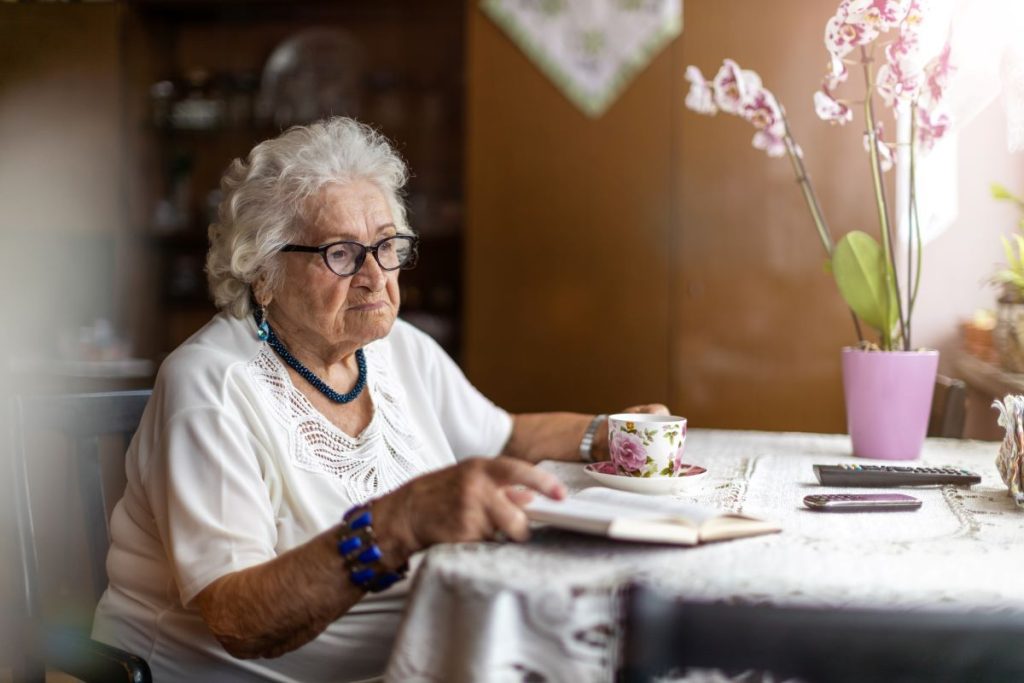
It’s a sad indictment of modern life that the world is facing a loneliness epidemic among older adults.
Whilst loneliness and social isolation aren’t just confined to the elderly, this age group is especially vulnerable to finding themselves cut off from society.
This is because older adults are more likely to be living alone, to have lost family and friends, to suffer from mobility issues and chronic illnesses that prevent them from leaving the home, and to have impaired hearing, making it difficult to communicate.
Often dubbed a forgotten epidemic, the loneliness crisis has sadly deepened since the Covid-19 pandemic and the lockdowns.
According to the NHS, around two million over-75’s in England live alone, and more than a million older people say they go over a month without speaking to a friend, neighbour or member of the family. Across the UK, nearly four million older people at any one time experience chronic loneliness.
Loneliness and social isolation have serious health consequences. Lonely individuals are more prone to depression and suicide. And it more than doubles the risk of developing dementia.
But virtual – or extended – reality (VR) may offer some hope to helping alleviate loneliness and mental health issues in older adults.
A project is underway to create a virtual world where older people can engage in fun and engaging age-appropriate activities at home with friends, family and therapists.
A consortium of academics and technology providers have come together to launch Planet WellBeing, which aims to facilitate the development of new solutions that use immersive technologies to improve the delivery of mental health and wellbeing services.
Funded through Innovate UK’s 2023 Mindset Extended Reality for Digital Mental Health competition, Planet Wellbeing is being developed in close consultation with older adults to ensure it meets their needs and that everyone, regardless of their physical abilities, can access the solution.
Activities currently being looked at include exploring the world, dancing, playing games and interacting with avatars.

The consortium includes power-assisted exercise experts Innerva, immersive technologies specialist Pixelmill Digital, Sheffield Hallam University’s Advanced Wellbeing Research Centre (AWRC), and Age UK Sheffield.
Teresa Barker, chief executive of Age UK Sheffield, said: “We are excited to be part of this consortium and to work with leading experts in the field to develop Planet WellBeing. We believe that this virtual world has the potential to revolutionise the way we approach mental health and wellbeing for older adults.”
Jon Hymus, commercial director of Innerva, added: “Loneliness and social isolation have a significant impact on the mental health and wellbeing of older adults. With Planet WellBeing we aim to address this issue by providing a virtual world that is safe, engaging and inclusive.”
Launched in June 2023, the Planet WellBeing project is expected to last 18 months, and will assess the effect of the virtual world on users’ mental wellbeing, including loneliness, depression, and anxiety, as well as general quality of life. With the support of Innovate UK, the consortium aims to pave the way for further innovation in the field of digital mental health for older adults.
AWRC previously developed a user interface that captured older-people’s real-world physical actions and used them to navigate a rich virtual world. This demonstrated that older users were able to interact and perform complex activities in the virtual world, with natural movements giving them a strong sense of presence.
Project WellBeing aims to recruit a minimum of 15-25 older users, with the potential to increase to 50, to trial the immersive hardware at home for a 12 week period.
Alongside non-moderated use, monitored sessions will be led by expert practitioners and therapists who will facilitate social interactions and conversations that participants may find difficult in real-world settings. It is hoped that the rich social engagement within this world will benefit users’ mental wellbeing and reduce feelings of loneliness.
The users’ mental health as well as feelings of loneliness will be assessed over the 12 weeks alongside their physical wellbeing and quality of life. The usability of the virtual world, as well as engagement levels, will also be evaluated ahead of a later large-scale study and eventual system rollout.
Dr Ben Heller, associate professor at Sheffield Hallam University’s AWRC, said: “This work builds on research we have been conducting for over a decade that has demonstrated how older people can be motivated to exercise more through fun, social activities in virtual worlds.
“It ties in very well with the Advanced Wellbeing Research Centre’s goal to improving health and wellbeing through movement.”
Vin Sumner, CEO at PixelMill Digital, commented: “Having worked in the field of immersive technology for over 15 years, PixelMill is excited about the opportunity through Planet WellBeing to develop an application that will help improve the lives of those suffering from loneliness.”