


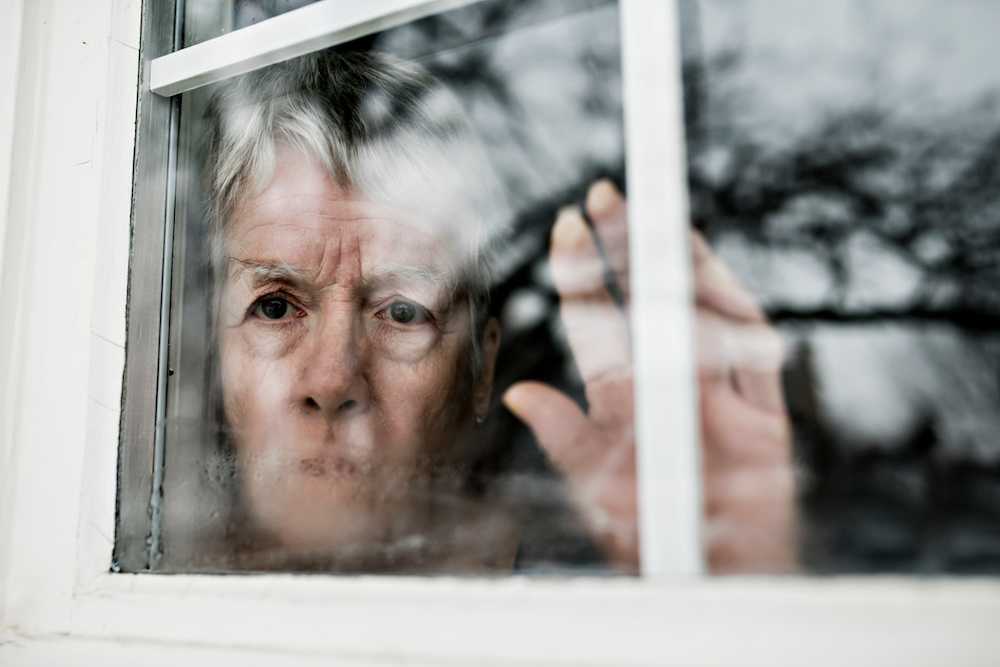
Social isolation is directly linked with changes in the brain structures associated with memory, making it a clear risk factor for dementia, scientists have found.
Setting out to investigate how social isolation and loneliness were related to later dementia, researchers from the UK and China used neuroimaging data from more than 30,000 participants in the UK Biobank data set.
Socially isolated individuals were found to have lower gray matter volumes of brain regions involved in memory and learning.
The results of the University of Warwick, University of Cambridge and Fudan University study were published on June 8 in Neurology, the medical journal of the American Academy of Neurology.
Professor Jianfeng Feng from the University of Warwick Department of Computer Science, said: “We highlight the importance of an environmental method of reducing risk of dementia in older adults through ensuring that they are not socially isolated.
“During any future pandemic lockdowns, it is important that individuals, especially older adults, do not experience social isolation.”
Modelling
Based on data from the UK Biobank, an extremely large longitudinal cohort, the researchers used modelling techniques to investigate the relative associations of social isolation and loneliness with incident all-cause dementia.
After adjusting for various risk factors (including socio-economic factors, chronic illness, lifestyle, depression and APOE genotype), socially isolated individuals were shown to have a 26 per cent increased likelihood of developing dementia.
Loneliness was also associated with later dementia, but that association was not significant after adjusting for depression, which explained 75 per cent of the relationship between loneliness and dementia.
Therefore, relative to the subjective feeling of loneliness, objective social isolation is an independent risk factor for later dementia.
Further subgroup analysis showed that the effect was prominent in those over 60 years old.
Social isolation vs loneliness
Professor Edmund Rolls, a neuroscientist from the University of Warwick Department of Computer Science, said: “There is a difference between social isolation, which is an objective state of low social connections, and loneliness, which is subjectively perceived social isolation.
“Both have risks to health but, using the extensive multi-modal data set from the UK Biobank, and working in a multidisciplinary way linking computational sciences and neuroscience, we have been able to show that it is social isolation, rather than the feeling of loneliness, which is an independent risk factor for later dementia.”
This means it can be used as a predictor or biomarker for dementia in the UK, he said.
“With the growing prevalence of social isolation and loneliness over the past decades, this has been a serious yet under-appreciated public health problem.
“Now, in the shadow of the COVID-19 pandemic there are implications for social relationship interventions and care – particularly in the older population.”
Professor Barbara J Sahakian, of the University of Cambridge Department of Psychiatry, added that it is important that the government and communities take action “to ensure that older individuals have communication and interactions with others on a regular basis”.