News
Social connection linked to better cognitive health in older adults


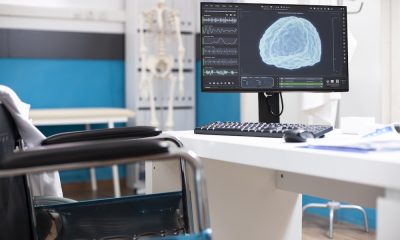
New research has linked richer social ties to better cognitive health in older adults, offering new insight into how connection relates to thinking and memory.
Earlier studies found links between specific social factors and health.
This study appears to be the first to build combined social profiles and test how they relate to cognitive health in older adults.
An interdisciplinary team from McGill University and Université Laval created three social environment categories, described as weaker, intermediate and richer.
They assembled 24 social variables such as network size, support, cohesion and isolation using data from about 30,000 participants in the Canadian Longitudinal Study on Aging, a nationally representative cohort of randomly selected Canadians aged 45 to 84 at baseline.
For cognition, the researchers examined three domains: executive function, which involves planning and decision-making; episodic memory, the ability to recall past events; and prospective memory, the ability to remember to perform planned actions.
They used data from a battery of tests previously administered to participants.
Daiva Nielsen is associate professor at the McGill School of Human Nutrition and co-first author of the paper
Nielsen said: “We identified significant associations between the social profiles and all three cognitive domains, with the intermediate and richer profiles generally exhibiting better cognitive outcomes than the weaker profile.”
The researcher noted that the effect size of the associations, a statistical measure of the strength of the relationship between variables, was relatively small, which is consistent with previous studies.
Nielsen noted that the effect sizes were somewhat stronger for participants aged 65 or older.
According to the researcher, this suggests that the social environment-cognition association may be more significant later in life.
Awareness has been increasing of the importance of social connection in public health.
Lack of social connection has been shown to be comparable to more widely acknowledged disease risk factors such as smoking, physical inactivity and obesity.
It is important to translate this knowledge to the public to empower individuals to help build meaningful connections within their communities.” she said.
The authors noted that the observed associations are correlational rather than causal, and it is possible, for example, that poor cognitive health also leads individuals to withdraw from social life.
The team, whose members span marketing, human behaviour, nutrition and epidemiology, hopes to continue using the Canadian Longitudinal Study on Aging data and the newly created social profiles in future research, said Nielsen.
The next steps involve studying changes in social environments and various health-related outcomes, including diet and chronic disease risk, she added.
“This work is an excellent example of the benefits of multidisciplinary research teams that can tackle complex research questions and bring diverse knowledge and expertise.” she said.


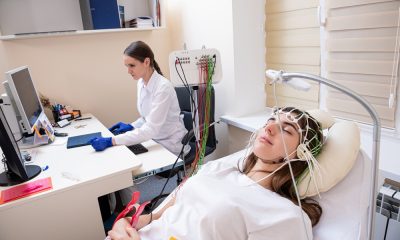


A new AI tool flags early Alzheimer’s, identifying about four in five people who would otherwise be missed by clinicians.
Trained on UCLA Health patient records and tuned to work more fairly across Black, Latino and Asian patients who are often underdiagnosed, the system aims to find people earlier, when treatment and lifestyle changes can still help.
In tests on more than 97,000 UCLA Health records, the model reached a sensitivity of about 77 to 81 per cent across non-Hispanic white, non-Hispanic African American, Hispanic/Latino and East Asian groups, roughly double that of conventional supervised models, the authors report.
UCLA Health researchers developed the tool and built fairness measures into training before checking the model’s picks against genetic benchmarks.
Patients flagged as likely cases but previously unlabelled showed higher polygenic risk scores and APOE ε4 counts than those the system did not flag.
Polygenic risk scores measure the combined effect of multiple genes on disease risk, while APOE ε4 is a genetic variant linked to increased Alzheimer’s risk.
The AI looks beyond memory-related billing or diagnostic codes and finds patterns that include signals such as decubitus ulcers, commonly known as pressure sores, and palpitations, which could prompt clinicians to take a closer look and consider screening.
“We were able to capture about 80 per cent of the people who actually would have undiagnosed Alzheimer’s disease,” said Dr Timothy Chang.
He said studies estimate up to 40 per cent of Alzheimer’s cases go undiagnosed, a gap that hits Black and Latino communities especially hard.
The framework learns from both labelled Alzheimer’s cases and unlabelled patient records, using race-specific probabilistic labelling and post-processing cutoffs tuned for group benefit equality to reduce bias.
Rather than relying only on diagnostic codes, the model draws on a wide range of electronic health record features, including diagnoses, encounter history and age, helping uncover likely cases that never received a formal label.
Earlier detection matters because disease-modifying treatments and targeted clinical referrals are now an option for people in the earliest symptomatic stages of Alzheimer’s.
Amyloid-targeting therapies such as lecanemab and donanemab are intended for early disease, which makes timely screening and specialist evaluation more consequential for patients and families.
Lifestyle changes and symptom management remain key tools for slowing decline, planning care and helping families prepare.
Researchers stress that the tool is a flagging system, not a diagnosis, and that its output should trigger follow-up evaluation rather than replace clinical judgement.
The team plans prospective validation in partner health systems to test how well the tool generalises and how useful it is in real-world practice before any routine roll-out.
Models can reveal new biases when used outside the environment where they were trained. Clinicians and ethicists will also have to weigh benefits against the risk of false positives, added patient anxiety and uneven access to specialist care.
The coming months will focus on broader testing and conversations with health systems about how to roll out the technology responsibly, if future studies support its use.


Gap is partnering with Spear Bio on Bio-Hermes-002, an Alzheimer’s study comparing blood and digital biomarkers across cognitive conditions.
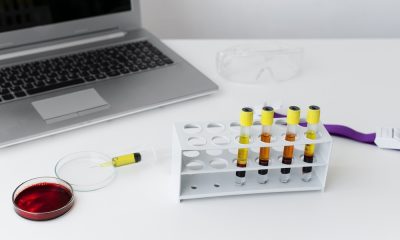
The observational platform study compares blood-based and digital biomarkers (measurable signs in blood or behaviour) across a broad range of cognitive conditions, alongside MRI and PET brain scans and diverse racial and ethnic groups, to generate data that may help predict, detect and diagnose Alzheimer’s disease and related dementias.
The study gathers data on how each biomarker, or combinations of biomarkers, perform in assessing, diagnosing or predicting pathologies linked to Alzheimer’s and related dementias, including amyloid and tau in the brain.
Amyloid plaques and tau tangles are abnormal protein deposits and are hallmark features of Alzheimer’s disease.
John Dwyer, president of GAP, said: “We’re proud to have Spear Bio as a valued partner in the Bio-Hermes-002 study.
“Their technology platform is consistent with our goal to catalyse and scale early-stage disease diagnostics and monitoring, therby transforming how we treat patients and conduct clinical trials for Alzheimer’s and related dementias.
“By advancing biomarker detection, we hope to accelerate meaningful progress for individuals and families affected by these conditions.”
In Bio-Hermes-002, Spear Bio will provide results of blood-based biomarker analysis using its SPEAR UltraDetect assay platform, which the company says offers attomolar sensitivity from a one microlitre diluted sample, and what it describes as superior specificity in a homogenous wash-free format, aiming to change early-stage diagnostics and monitoring.
This builds on findings from Bio-Hermes-001.
Data from Bio-Hermes-002 will be stored on the AD Workbench from the Gates Ventures Alzheimer’s Disease Data Initiative (ADDI).
The AD Workbench is a global, secure, cloud-based data sharing and analytics environment that enables researchers worldwide to share, access and analyse data across multiple platforms.
Spear Bio joins industry partners in the study, including Biogen, Eli Lilly and Company, IXICO and Roche, along with a growing list of partners providing blood-based biomarker assessments or digital assessments for Bio-Hermes-002.
To date, the partners include AINOSTICS, Alamar Biosciences, Beckman Coulter Diagnostics, Cambridge Cognition Limited, Cognivue, Cumulus Neuroscience Limited, Fujirebio, iLoF, LifeArc, Linus Health, Lucent Diagnostics, a Quanterix brand, Sunbird Bio and ViewMind.

Social connection linked to better cognitive health in older adults

AI tool flags undiagnosed Alzheimer’s cases

L-Nutra to open Abu Dhabi nutrition centre

Gap partners with Spear Bio on Bio-Hermes-002

Scanning ultrasound safe in Alzheimer’s pilot

FDA clears automated brain fluid device

Agetech World’s latest innovation & investment round-up

Captioning glasses win AARP pitch at CES

Insilico signs US$888m oncology deal with Servier

Food preservatives linked to increased diabetes and cancer risk, study finds
 News3 weeks ago
FDA clears automated brain fluid device
- News3 weeks ago
Agetech World’s latest innovation & investment round-up
- Technology2 weeks ago
Captioning glasses win AARP pitch at CES
- News3 weeks ago
Insilico signs US$888m oncology deal with Servier
- News3 weeks ago
Food preservatives linked to increased diabetes and cancer risk, study finds
- News2 weeks ago
Interview: GlycanAge launch first hospital-based tests
- News3 weeks ago
UK bans junk food ads before 9pm to protect child health
- Insights3 weeks ago
Global longevity initiative launches North American chapter