


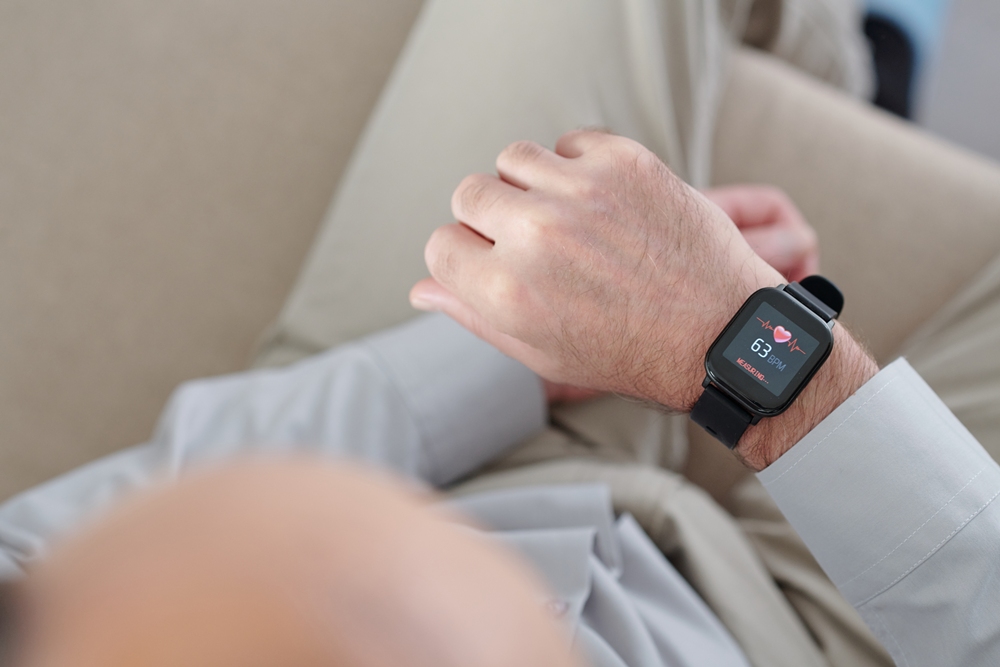
A smart wearable may detect cardiac arrest automatically, which could speed help outside hospital and improve survival, a study suggests.
The technology could act as a “digital witness” when cardiac arrest happens out of hospital and no one is there to call for help.
Senior study author Dr Judith Bonnes, a cardiologist at Radboud University Medical Center in Nijmegen, said the findings could support future systems that alert emergency services or nearby trained responders.
“Our findings are important because many out-of-hospital cardiac arrests are unwitnessed.”
“A smart technology wristband capable of automatically detecting cardiac arrest and triggering an alert could function as a digital witness.”
“With the device automatically notifying emergency services or nearby trained responders, help could arrive sooner, which may significantly improve survival chances.”
In the small study of adults in the Netherlands, the algorithm-based wristband detected cardiac arrest 92 per cent of the time.
The DETECT-1b study analysed data from 49 adults with abnormal heart rhythms who were undergoing routine medical procedures.
During the procedures, clinicians briefly induced life-threatening heart rhythms as part of treatment to correct an irregular heartbeat.
These included pulseless ventricular tachycardia and ventricular fibrillation. Ventricular fibrillation, considered the most serious abnormal heart rhythm, is extremely dangerous and can lead to sudden cardiac death.
The wristband uses a light-based technique called photoplethysmography to measure changes in blood flow at the wrist.
The study found the device detected 100 per cent of ventricular fibrillation events and 90 per cent of pulseless ventricular tachycardia events.
Nine events were classed as false positives during 125 hours of recording.
Lead study author Roos Edgar, a technical physician at Radboud University Medical Center, said the research was an important step towards real-world detection.
Edgar added: “This is the first study to externally validate such an algorithm using patient data, which is an important step towards developing a reliable detection system for real-world use.”
The researchers said the algorithm could eventually be used to alert nearby lay rescuers, emergency services or both when cardiac arrest is detected.
Bonnes said: “The goal is to connect the wristband to emergency dispatch centres and volunteer responder networks in the Netherlands so that nearby rescuers and ambulance services can be alerted immediately when cardiac arrest is detected.”
The study involved adults wearing the wristband while undergoing ventricular tachycardia ablation or implantation of a subcutaneous implantable cardioverter defibrillator.
Ablation is a procedure used to destroy a small area of heart tissue that is causing rapid and irregular heartbeats. An implantable cardioverter defibrillator is a device that can deliver a shock to restore a safer heart rhythm.
Participants had a median age of 66 years and 41 of the 49 participants were men.
Seven people underwent a procedure for an implantable defibrillator and 43 had ablation.
Cameron Dezfulian, chair of the American Heart Association’s resuscitation science symposium programme committee, who was not involved in the study, said that, even though it was a small study, the results were exciting.
“What is more impressive than the ability of this technology to detect cardiac arrest is the fairly low frequency of false positives it detected.”
“This study parallels findings from a study in Canada and one in the US that shows this technology has great potential.”
“Pulseless electrical activity remains the most common presenting rhythm in all cardiac arrest. However, it accounts for a small number of the validation data for such wearable sensors.”
“Further research will be important.”
The research was conducted in a controlled clinical setting, and the system’s effectiveness and reliability in real-world conditions still need to be evaluated in future studies.
The work forms part of the broader DETECT project, a collaboration of several hospitals and a company in the Netherlands developing a smart wristband for the automated detection of cardiac arrest and alerting emergency services.
 NHS artificial pancreas rollout narrows diabetes inequalities, figures show


