Connect with us

News

NHS scanning trucks help thousands get potentially life-saving liver cancer checks

Published

on

Thousands more people are being referred for potentially life-saving liver cancer checks following the expansion of the NHS’s community liver health check programme.

The number of mobile liver scanning teams has almost doubled in the last two years, with 20 roaming teams now offering scans to communities in every region of England – up from 11 when the pilot started.

Almost 113,000 people (112,831) have had a fibroscan of their liver, and almost 8,500 (8,470) have been referred on for vital liver cancer checks since the programme began.

The on-the-spot scans check for cirrhosis or advanced fibrosis which increases the risk of liver cancer.

If liver damage is detected people are referred on for further tests, helping to catch cancers earlier and ensuring people can get the right treatment and support.

NHS National Cancer Director, Professor Peter Johnson, said: “By reaching out into communities and making it easier for people to get checked, we will catch more cancers at an early stage, when the chances of successful treatment are much higher, and this can save lives.

“This programme has seen thousands more people referred for important further tests, allowing them to get vital treatment sooner alongside the support they need from the NHS to lead healthier lives.

“It’s a great example of the health service increasing its focus on prevention, as set out in the 10-year health plan.”

The NHS programme is targeting at-risk groups in the community, including people with high levels of alcohol consumption, a current diagnosis or history of past viral hepatitis, or non-alcoholic liver disease, as these factors increase the risk of developing liver cancer.

The mobile trucks move around different areas offering checks in GP practices, recovery services, food banks, diabetes clinics, sexual health clinics and homeless shelters to perform quick, non-invasive scans.

Some areas have also taken the scanning vehicles to football matches, workplaces and outside supermarkets, making it as convenient as possible for people to get tested.

NHS teams delivering the scans are working closely with local community and charities to identify people most in need of tests and support, and some have also partnered with GP practices to scan people with conditions including type 2 diabetes and obesity.

Public Health and Prevention Minister, Ashley Dalton, said: “This expansion of NHS mobile liver scanning teams represents exactly the kind of preventative healthcare approach this government is championing through our 10 Year Health Plan.

“By taking these vital checks directly into communities – from GP surgeries to food banks, football matches to homeless shelters – we’re ensuring that no one is left behind when it comes to early cancer detection.

“If you have been identified as a person at risk of liver cancer, please speak to your GP to see if there is a mobile truck near you.”

Patients found to be at an increased risk of developing liver cancer following a fibroscan are referred for further testing in a hospital clinic where they might be put on a liver cancer surveillance programme, which aims to detect cancer earlier when there is a higher chance of successful treatment.

In some areas, peer support workers who have lived experience of liver disease are also offering support to help people attend appointments.

People who are deemed at low risk of liver cancer or cirrhosis will be provided with information about their level of risk and referred to their GP if needed.

Liver cancer is the fastest-rising cause of cancer related deaths in the UK. The most common primary liver cancer is hepatocellular carcinoma (HCC), which makes up 85 per cent of all liver cancers.

The on-the-spot liver scanning initiative is an essential part of the NHS’s ambition of detecting more cancer as early as possible when treatment is more effective.

Latest figures showed the NHS hit the Faster Diagnosis Standard with 76.8 per cent – or 218,463 people – having cancer ruled out or diagnosed within 28 days, the highest June since the standard was introduced.

Over 53,000 patients also started treatment for cancer within 31 days.
 

News

Mole rat gene extends mouse lifespan

Published

on

A mole rat gene inserted into mice extended lifespan and improved health, findings that may point to new ways of supporting healthier ageing.

The gene increased production of a large form of hyaluronan, a naturally occurring gel-like substance between cells that helps tissue repair and cell-to-cell communication. Mice carrying the naked mole rat version of the gene showed an approximately 4.4 per cent increase in median lifespan, alongside multiple markers of healthier ageing.

Naked mole rats have become a focus of ageing research because they combine an exceptional lifespan with unusual resistance to many age-linked diseases, including cancer.

Researchers at the University of Rochester traced part of that resilience to hyaluronan. The molecule’s effects depend on its size: large forms are often linked to anti-inflammatory and tissue-protective behaviour, while smaller fragments can act as danger signals that increase inflammation.

Vera Gorbunova, professor of biology and medicine at the University of Rochester in the US, said: “Our study provides a proof of principle that unique longevity mechanisms that evolved in long-lived mammalian species can be exported to improve the lifespans of other mammals.”

The engineered mice were better protected against both spontaneous tumours and chemically induced skin cancer. They also showed reduced inflammation across tissues, a notable finding because persistent low-grade inflammation, sometimes called inflammaging, is widely seen as one of the central drivers of age-related decline.

The research also linked the large form of hyaluronan to age-related gut health. As animals age, the gut barrier can become leakier, allowing inflammatory triggers to pass into the bloodstream. The engineered mice showed protection against this deterioration.

Follow-up work found abundant high-molecular-mass hyaluronan across multiple species of subterranean mammals, often absent in closely related above-ground species, suggesting it may be part of a broader evolutionary toolkit for surviving long lives under harsh conditions.

The team said gene transfer is not the end goal. Gorbunova said: “It took us 10 years from the discovery of HMW-HA in the naked mole rat to showing that HMW-HA improves health in mice.”

“Our next goal is to transfer this benefit to humans.”

Two practical routes are being pursued: increasing production of the large form of hyaluronan, or slowing its breakdown. Andrei Seluanov, who co-leads the research, said: “We already have identified molecules that slow down hyaluronan degradation and are testing them in pre-clinical trials.”

One candidate identified through screening is delphinidin, a plant pigment found in various fruits and vegetables. In tests, it was found to increase levels of the large form of hyaluronan in cells and mouse tissues, reduce migration and invasion in multiple cancer cell lines, and suppress melanoma metastasis in mice.

However, the researchers acknowledged the approach has limits. A later study found that mice expressing the naked mole rat gene showed improvements in several late-life health measures but did not show protection from age-related hearing loss, suggesting some organs may be less reachable by this pathway than others.

The Rochester team said turning these findings into human therapies will likely depend on precision: maintaining the right molecular form of hyaluronan, targeting the right balance of production versus breakdown, and monitoring carefully for trade-offs as different tissues respond in different ways.

Continue Reading

News

AI can predict Alzheimer’s with almost 93% accuracy, researchers say

Published

on

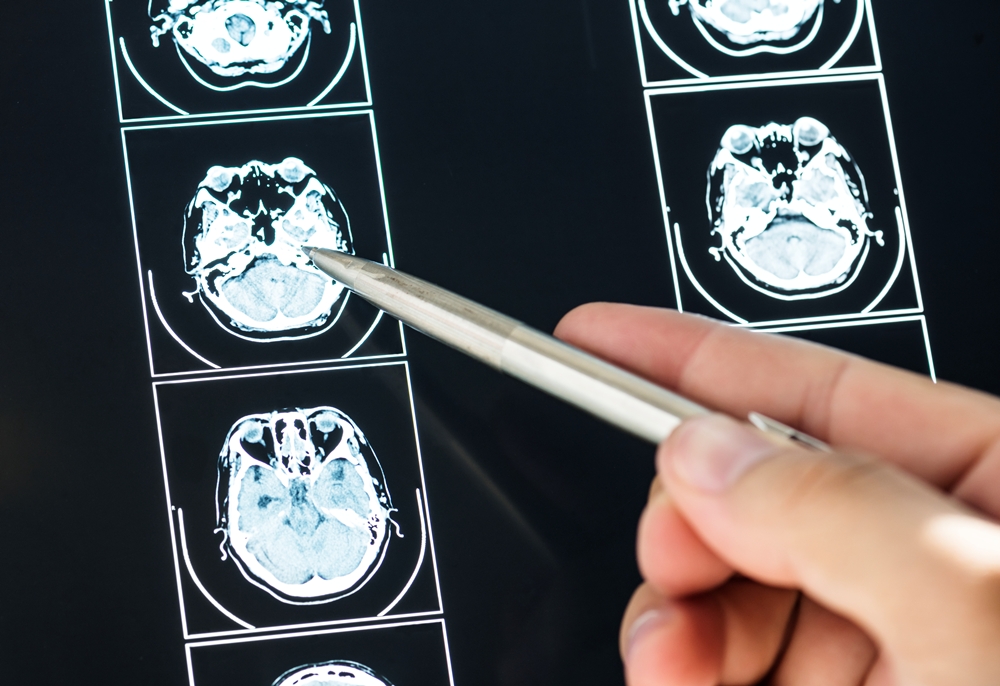
Alzheimer’s AI can predict the disease with nearly 93 per cent accuracy using more than 800 brain scans, researchers say.

The system identified anatomical changes in the brain linked to the onset of the most common form of dementia, a condition that gradually damages memory and thinking.

The findings build on years of research suggesting AI could help spot early Alzheimer’s risk, predict disease and identify patients whose condition has not yet been diagnosed.

Benjamin Nephew, an assistant research professor at the Worcester Polytechnic Institute in Massachusetts, said: “Early diagnosis of Alzheimer’s disease can be difficult because symptoms can be mistaken for normal ageing.

“We found that machine-learning technologies, however, can analyse large amounts of data from scans to identify subtle changes and accurately predict Alzheimer’s disease and related cognitive states.”

The study used MRI scans, a type of detailed brain imaging, from 344 people aged 69 to 84.

The dataset included 281 scans showing normal mental function, 332 with mild cognitive impairment, an early stage of memory and thinking decline, and 202 with Alzheimer’s.

The scans covered 95 of the brain’s nearly 200 distinct regions and used an AI algorithm to predict patients’ health.

Being able to use AI to help diagnose Alzheimer’s earlier could give patients and doctors crucial time to prepare and potentially slow the progression of the disease.

The analysis showed that one of the top predictive factors was brain volume loss, or shrinkage, in the hippocampus, which helps form memories, the amygdala, which processes fear, and the entorhinal cortex, which helps provide a sense of time.

This pattern held across age and sex, with both men and women aged 69 to 76 showing volume loss in the right part of the hippocampus, suggesting it may be an important area for early diagnosis, the researchers noted.

However, the research also found that the way brain regions shrink differs by sex.

In females, volume loss occurred in the brain’s left middle temporal cortex, which is involved in language and visual perception. In males, it was mainly seen in the right entorhinal cortex

The researchers believe this could be linked to changes in sex hormones, including the loss of oestrogen in women and testosterone in men.

These conclusions could help improve methods of diagnosis and treatment going forward, Nephew said.

More than 7.2m Americans are living with Alzheimer’s, according to the Alzheimer’s Association.

More research is being done to reveal other impacting factors.

Nephew said: “The critical challenge in this research is to build a generalisable machine-learning model that captures the difference between healthy brains and brains from people with mild cognitive impairment or Alzheimer’s disease.”

Continue Reading

Markets & Industry

Vision implant firm raises US$230m

Published

on

A vision implant firm has raised US$230m as it seeks approval in Europe and the US for a device that restored sight in a small clinical trial.

The Alameda, California-based startup said the funding would support commercialisation of its Prima device.

It said an upcoming launch is planned in Europe and that it would become the first brain computer interface company to have a vision restoration device on the market.

A clinical trial in Europe found the small implant could work as artificial photoreceptors in the retina to restore functional central vision.

The implant is placed under the retina to replace the function of light-sensitive cells lost to disease. A special pair of glasses with an embedded camera and infrared projector sends light signals to the implant.

The study assessed the system in people with advanced dry age-related macular degeneration.

Of the 38 patients who received an implant, 32 were assessed at 12 months. Results showed the device led to a clinically meaningful improvement in visual acuity in 26 people.

The patients were able to read letters, numbers and words, according to the company.

Science Corporation said it has submitted a CE mark application to the European Union and applied to the US Food and Drug Administration for regulatory approval.

Darius Shahida, chief strategy officer, said: “Our imperative is to become the first BCI company to scale and achieve profitability.”

Founded in 2021, the company has now raised about US$490m in total. It said it is expanding its clinical trial programme to include other retinal diseases, such as Stargardt disease and retinitis pigmentosa.

The Series C round included existing investors Khosla Ventures, Lightspeed Venture Partners, Y Combinator, IQT and Quiet Capital.

Science Corporation said demand for the round exceeded its capital needs, with funds also earmarked for expanding research, manufacturing infrastructure and operations.

Continue Reading

Trending

Agetech World