News
Nanoparticles target disease proteins in dementia


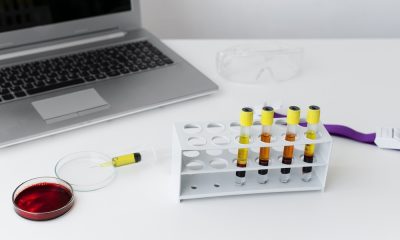
Scientists have developed a nanoparticle strategy to broaden which disease-causing proteins medicines can target, giving options for dementia and brain cancer.
A perspective outlines an approach designed to remove harmful proteins that drive disease. By broadening the proteins that can be treated, the technology could help tackle conditions such as dementia and brain cancer.
The work was led by chair professor in nanomedicine Bingyang Shi at the University of Technology Sydney, in collaboration with professor Kam Leong of Columbia University and professor Meng Zheng of Henan University.
Professor Shi said: “Proteins are essential for nearly every function in the body, but when they become mutated, misfolded, overproduced or build up in the wrong place, they can disrupt normal cell processes and trigger disease.
He added: “Many conditions, including cancer, dementia, and autoimmune disorders, are driven by abnormal proteins, and some have shapes or behaviours that make them particularly resistant to drug treatments.”
To tackle these challenges, the researchers created a type of engineered nanoparticle called nanoparticle-mediated targeting chimeras (NPTACs).
The particles are designed to recognise specific disease-associated proteins and promote their breakdown in the body.
Professor Shi said: “We have developed an efficient and flexible method to guide disease-causing proteins, whether inside or outside the cell, into the body’s natural recycling system, where they can be broken down and removed.”
Interest in targeted protein degradation has surged in recent years.
Companies such as Arvinas have attracted more than US$1bn in investment and formed partnerships with pharmaceutical firms including Pfizer, Bayer and Roche.
However, existing protein degradation technologies face limitations.
Challenges such as poor tissue penetration, unintended interactions with other proteins and complex chemical design have slowed their use, particularly for brain disorders and solid tumours.
Professor Shi said: “Our nanoparticle-based strategy overcomes these bottlenecks.”
The researchers say the NPTAC platform can enable degradation of both proteins inside and outside cells, offers tissue and disease-specific targeting including across the blood-brain barrier (the protective barrier around the brain), and has plug-and-play modularity to adapt to diverse protein targets.
They say it is scalable and clinically translatable, leveraging FDA-approved nanomaterials and industry-proven synthesis strategies, and can combine with diagnostic or therapeutic capabilities.
Protected by multiple international patents, NPTACs have shown preclinical results against targets such as EGFR (a protein often driving tumour growth) and PD-L1 (a protein that helps cancer cells evade the immune system).
Professor Shi said: “This progress paves the way for applications in oncology, neurology, and immunology. It changes how we think about nanoparticles, not only as delivery tools but also as active therapeutic agents.
He added: “With the targeted protein degradation market expected to surpass $10 billion USD by 2030, NPTACs provide a powerful platform for the next generation of smart, precision therapies.
“We are now seeking strategic industry partners to accelerate clinical development, licence applications across therapeutic fields, and prepare for regulatory approval.”









Long-term gut health and female finance, London likes longevity
New York innovator Salvo Health has secured $8.5m in Series A round as it looks to develop new, long-term, gut-health treatments.
The funding round was led by ManchesterStory, City Light Capital and Threshold Ventures, with additional support from The Artemis Fund, Owl Capital, Impact X Capital Partners, Torch Capital and Felicis Ventures.
Eric Collins, co-founder and general partner of Impact X Capital Partners, a UK-based venture capital firm, said: “The key with Salvo is patient-centred care.
“It’s critical to expand access to food as medicine and behavioural health to improve outcomes and lower, long-term health care costs.
“Salvo does exactly that and has shown 76 per cent of patients report improved symptoms, with five accepted abstracts on outcomes, and a 79 per cent drop in GI-related ER utilisation for its patients.
“We can have better care at lower costs with innovation, in the US, and ultimately in the UK and Europe as well.”
The raise brings Salvo’s total equity funding to US$21.6m. Roughly 60m Americans experience chronic gastrointestinal conditions each year.
Salvo Health is positioning itself in the space between overburdened clinics and patients’ everyday lives.
Female longevity in focus
Xella Health – a women’s precision platform focused on fertility, ageing, and body changes – has raised over US$3.7m in pre-seed funding.
The funds will support product finalisation, partnerships, and a Spring 2026 launch, focused on sex-specific longevity and preventive care.
The round was led by Precursor Ventures, with participation from Capital F, Ulu Ventures, and other funds, as well as, strategic angel investors across healthcare, diagnostics, and consumer technology.
Xella is aiming to propel women’s health beyond symptom-based care and fragmented testing to deliver ‘integrated biological insight, clarity, and foresight’.
The company combines advanced diagnostics, longitudinal data, and personalised clinician-led guidance to help women understand what’s happening in their bodies today – and what lies ahead – across fertility, chronic conditions, hormonal health, early cancer detection, and preventative care.
“Our mission is to give women the answers and care they have always deserved,” said Kelly Lacob, co-founder & CEO of Xella.
“Xella is building the infrastructure to decode female biology – getting to the root cause of conditions that uniquely, differently or disproportionately affect women, many of which suffer from an unacceptably poor standard of care today.”
“Xella is rethinking women’s health from the ground up – starting with the insight women need to make sense of their own biology over time,” said Ashtan Jordan, principal at Precursor Ventures.
Age well in London
Two London boroughs have launched their own initiatives aimed at supporting their ageing resident populations.
Basildon Council has approved a new Ageing Population Strategy to support older residents live healthy, independent and connected lives.
The number of residents aged 65 and over in Basildon is projected to rise steadily over the next decade, reflecting national longevity trends.
The council says its ‘taking a proactive, preventative approach to ensure Basildon remains an inclusive, accessible and sustainable place for residents of all ages’.
The strategy emphasises strong partnership working with health services, voluntary and community organisations, local businesses and residents.
Key commitments include:
- Supporting people to remain independent in their own homes for longer,
- Promoting age-friendly design in town centres and public spaces,
- Strengthening dementia-friendly communities,
- Expanding opportunities for volunteering and employment, and
- Continuing investment in activity centres and community-led initiatives that reduce loneliness.
Cllr Melissa McGeorge, cabinet member for ageing population & health, said: “Our ambition is clear: to make Basildon a place where people can age well, feel valued, and continue to thrive at every stage of later life.
The ‘Life Curve’
Meanwhile the London Borough of Richmond has launched a new self-assessment tool developed by ADL Research and Newcastle University to help boost longevity.
The ‘Life Curve’ tool is designed to support healthy ageing with personalised advice and practical steps on how to stay active and independent.
Councillor Allen, lead member for adult social care, said: “Getting older doesn’t have to mean we stop being independent and there are small steps we can take to help reduce how getting older limits our lives.
“We have tools and services available in the borough to support residents to take these small daily steps to maintain their health and reduce the risk of conditions like heart disease, cancer and dementia.
“A new tool accessible right from your phone or any other online device is ‘Independent Richmond’, which helps you understand where you are on The Life Curve to help stay on track with healthy habits, keeping active and stay independent for longer.”

Bryan Johnson has launched a US$1m-a-year longevity programme with just three places, offering access to the exact protocol he has followed for five years.
The programme, called “Immortals”, is offered by the former fintech entrepreneur, now a prominent and often controversial figure in longevity.
Johnson’s unconventional methods have included Botox injections in his genitals (Botox relaxes muscles) and transfusions of blood from his teenage son.
There is no evidence these will help him outlive others.
The “Immortals” package includes a dedicated concierge team, 24/7 access to the BryanAI health coach, extensive testing, continuous tracking of millions of biological data points and what Johnson calls the “best skin and hair protocols.
A lower-cost supported tier is available at US$60,000 per year.
Rivals also target the ultra-wealthy: Biograph’s premium membership costs US$15,000 per year, while Fountain Life’s “ultimate longevity programme” is priced at US$21,500 annually.
Despite the higher price, Johnson’s offer is built on exclusivity, with only three spots available.

Cognition Health and Cera have partnered to expand access to Alzheimer’s clinical trials across the UK.
The collaboration links Re:Cognition Health’s specialist brain health clinics and trial expertise with Cera’s 2.5 million monthly home care visits, creating new pathways to identify and support people earlier in their health journey.
By connecting home care with specialist research centres, the partners aim to offer more people the chance to join studies, giving access to advanced assessment and emerging treatments while contributing to future therapies.
Dr Ben Maruthappu MBE, chief executive and founder of Cera, said: “Many older adults are currently ‘invisible’ to the clinical trials research system because they cannot access traditional clinic-centric recruitment.
“By enabling responsible, consented identification and screening within the home, we can bridge the gap between the community and the clinic.
“We are offering the older generation a seat at the table of global drug discovery, ensuring that the path to a cure starts where they are most comfortable—in their own daily lives.”
Re:Cognition Health has contributed to the development of lecanemab (Leqembi) and donanemab (Kisunla) through international trials, introducing disease-modifying approaches that are reshaping early intervention in Alzheimer’s care.
Older adults remain under-represented in research. NIHR data indicate only about 15 per cent of trial participants are 75 or older, despite high multimorbidity in this group. Dementia trial recruitment in the UK also lags other disease areas.
Through this collaboration, individuals who have not yet accessed specialist memory services can be referred earlier for assessment and potential study participation, with access to new-generation therapies where appropriate.
Cera’s technology-enabled home healthcare model, with daily patient contact and consented data capture, allows timely referral of potential participants from familiar settings to Re:Cognition Health clinics.
Together, the organisations will support earlier and more equitable participation by leveraging Cera’s scale and real-time insights. Carers and nurses deliver visits roughly every second on average, enabling early identification of those who may benefit from memory assessment.
Dr Emer MacSweeney, chief executive and founder of Re:Cognition Health, said: “With one in three people expected to develop dementia in their lifetime, it is essential that we create more inclusive and accessible routes into research.
“This collaboration enables us to extend our reach beyond traditional clinic settings and ensure that people who may benefit from early assessment and research participation are supported to do so.
“Clinical trials offer individuals access to the most advanced diagnostics and emerging treatments, alongside expert medical oversight.
“By identifying people earlier and guiding them through every stage of their journey, we can help improve participants’ experience and potential outcomes, while accelerating the development of the next generation of Alzheimer’s therapies.”

Agetech investment & innovation round-up

Bryan Johnson launches US$1m longevity programme

Cognition and Cera expand Alzheimer’s clinical trials access

First blood test for Alzheimer’s in primary care

Space station partnership for bioprinting research

Shingles vaccine may slow biological ageing in older adults

Thousands of men in England to be offered life-extending prostate cancer drug

Nanoparticles target disease proteins in dementia

Blood sugar spike after meals may increase Alzheimer’s risk

L-Nutra raises US$36.5m in series D funding
 News4 weeks ago
Shingles vaccine may slow biological ageing in older adults
- News4 weeks ago
Thousands of men in England to be offered life-extending prostate cancer drug
- News4 weeks ago
Blood sugar spike after meals may increase Alzheimer’s risk
- News3 weeks ago
L-Nutra raises US$36.5m in series D funding
- Insights4 weeks ago
Study reveals why memory declines with age
- Insights2 weeks ago
Dentordu: Digital dentistry for healthier ageing
- Insights2 weeks ago
Interview: Dr Annu Navani on biotechnology and ‘the power to recode life itself’
- News3 weeks ago
Gap partners with Spear Bio on Bio-Hermes-002