Markets & Industry
L-Nutra raises US$36.5m in series D funding


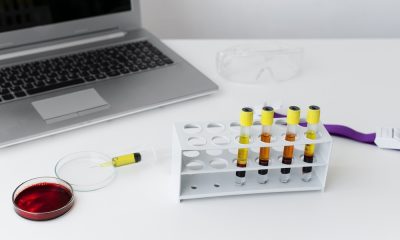
L-Nutra has raised US$36.5m in series D funding for what it describes as science-driven nutrition for longevity and nutrition as medicine.
The round brings its series D total to US$83.5m, the company said.
As part of the investment, Mubadala and L-Nutra will establish a local joint venture in Abu Dhabi to produce scientific medical nutrition therapies and longevity nutrition for the Middle East and North Africa region.
The two organisations have already begun delivering healthier nutrition and education programmes across seven Abu Dhabi schools.
Joseph Antoun, chairman and chief executive of L-Nutra, said: “We are on the cusp of enhancing human healthspan, adding years to our life and life to our years.
“As the world’s first nutri-technology company, we have spent decades advancing nutrition R&D and developing effective interventions that can be integrated within our healthcare system.
“By reformulating food into clinically validated nutrition programmes, we now can support patients and individuals seeking to embark on a healthy longevity journey.”
The investment was led by Mubadala Investment Company, an Abu Dhabi sovereign investor with more than US$330bn in assets under management.
Ismail Ali Abdulla is executive director of UAE Clusters, at Mubadala’s UAE Investment Platform.
Abdulla said: “This investment reinforces Abu Dhabi’s ambition to expand as a regional hub for longevity science, preventive health, and advanced nutrition technologies, and operates as a natural extension of the sector capabilities we are building across the UAE’s emerging life sciences ecosystem.
“In addition to Mubadala Bio, our biomanufacturing and biotechnology national champion, we continue to execute Mubadala’s life sciences strategy by investing in innovative solutions that advance human health and longevity.”
Other investors include Brentwood Associates, a private equity firm; Stéphane Bancel, a biotech leader whose work at Moderna played a pivotal role in the fight against Covid; and 618 Ventures, a San Diego-based tech venture capital firm.
L-Nutra says it leads the discovery, design and commercialisation of nutrition for longevity and nutrition as medicine programmes.
In partnership with 18 global university research centres, the company has developed nutrition formulations that it says are inspired by precision nutrition and powered by cellular longevity science.
Its programmes, which it says are supported by 47 clinical trials and 137 granted patents, include Prolon for longevity and medical nutrition therapies for chronic conditions.









Long-term gut health and female finance, London likes longevity
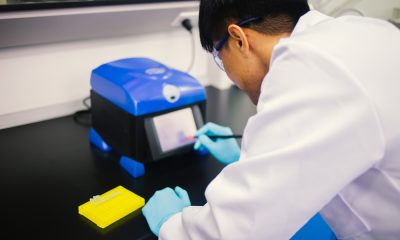
New York innovator Salvo Health has secured $8.5m in Series A round as it looks to develop new, long-term, gut-health treatments.
The funding round was led by ManchesterStory, City Light Capital and Threshold Ventures, with additional support from The Artemis Fund, Owl Capital, Impact X Capital Partners, Torch Capital and Felicis Ventures.
Eric Collins, co-founder and general partner of Impact X Capital Partners, a UK-based venture capital firm, said: “The key with Salvo is patient-centred care.
“It’s critical to expand access to food as medicine and behavioural health to improve outcomes and lower, long-term health care costs.
“Salvo does exactly that and has shown 76 per cent of patients report improved symptoms, with five accepted abstracts on outcomes, and a 79 per cent drop in GI-related ER utilisation for its patients.
“We can have better care at lower costs with innovation, in the US, and ultimately in the UK and Europe as well.”
The raise brings Salvo’s total equity funding to US$21.6m. Roughly 60m Americans experience chronic gastrointestinal conditions each year.
Salvo Health is positioning itself in the space between overburdened clinics and patients’ everyday lives.
Female longevity in focus
Xella Health – a women’s precision platform focused on fertility, ageing, and body changes – has raised over US$3.7m in pre-seed funding.
The funds will support product finalisation, partnerships, and a Spring 2026 launch, focused on sex-specific longevity and preventive care.
The round was led by Precursor Ventures, with participation from Capital F, Ulu Ventures, and other funds, as well as, strategic angel investors across healthcare, diagnostics, and consumer technology.
Xella is aiming to propel women’s health beyond symptom-based care and fragmented testing to deliver ‘integrated biological insight, clarity, and foresight’.
The company combines advanced diagnostics, longitudinal data, and personalised clinician-led guidance to help women understand what’s happening in their bodies today – and what lies ahead – across fertility, chronic conditions, hormonal health, early cancer detection, and preventative care.
“Our mission is to give women the answers and care they have always deserved,” said Kelly Lacob, co-founder & CEO of Xella.
“Xella is building the infrastructure to decode female biology – getting to the root cause of conditions that uniquely, differently or disproportionately affect women, many of which suffer from an unacceptably poor standard of care today.”
“Xella is rethinking women’s health from the ground up – starting with the insight women need to make sense of their own biology over time,” said Ashtan Jordan, principal at Precursor Ventures.
Age well in London
Two London boroughs have launched their own initiatives aimed at supporting their ageing resident populations.
Basildon Council has approved a new Ageing Population Strategy to support older residents live healthy, independent and connected lives.
The number of residents aged 65 and over in Basildon is projected to rise steadily over the next decade, reflecting national longevity trends.
The council says its ‘taking a proactive, preventative approach to ensure Basildon remains an inclusive, accessible and sustainable place for residents of all ages’.
The strategy emphasises strong partnership working with health services, voluntary and community organisations, local businesses and residents.
Key commitments include:
- Supporting people to remain independent in their own homes for longer,
- Promoting age-friendly design in town centres and public spaces,
- Strengthening dementia-friendly communities,
- Expanding opportunities for volunteering and employment, and
- Continuing investment in activity centres and community-led initiatives that reduce loneliness.
Cllr Melissa McGeorge, cabinet member for ageing population & health, said: “Our ambition is clear: to make Basildon a place where people can age well, feel valued, and continue to thrive at every stage of later life.
The ‘Life Curve’
Meanwhile the London Borough of Richmond has launched a new self-assessment tool developed by ADL Research and Newcastle University to help boost longevity.
The ‘Life Curve’ tool is designed to support healthy ageing with personalised advice and practical steps on how to stay active and independent.
Councillor Allen, lead member for adult social care, said: “Getting older doesn’t have to mean we stop being independent and there are small steps we can take to help reduce how getting older limits our lives.
“We have tools and services available in the borough to support residents to take these small daily steps to maintain their health and reduce the risk of conditions like heart disease, cancer and dementia.
“A new tool accessible right from your phone or any other online device is ‘Independent Richmond’, which helps you understand where you are on The Life Curve to help stay on track with healthy habits, keeping active and stay independent for longer.”

Bryan Johnson has launched a US$1m-a-year longevity programme with just three places, offering access to the exact protocol he has followed for five years.
The programme, called “Immortals”, is offered by the former fintech entrepreneur, now a prominent and often controversial figure in longevity.
Johnson’s unconventional methods have included Botox injections in his genitals (Botox relaxes muscles) and transfusions of blood from his teenage son.
There is no evidence these will help him outlive others.
The “Immortals” package includes a dedicated concierge team, 24/7 access to the BryanAI health coach, extensive testing, continuous tracking of millions of biological data points and what Johnson calls the “best skin and hair protocols.
A lower-cost supported tier is available at US$60,000 per year.
Rivals also target the ultra-wealthy: Biograph’s premium membership costs US$15,000 per year, while Fountain Life’s “ultimate longevity programme” is priced at US$21,500 annually.
Despite the higher price, Johnson’s offer is built on exclusivity, with only three spots available.

A French biotech has raised €12m to test whether GLP-1 drugs can modify osteoarthritis progression.
The funding will advance 4Moving Biotech’s lead programme, 4P004, toward a phase 2a proof-of-concept readout in knee osteoarthritis, a joint disease that causes pain and stiffness.
Despite affecting more than 600 million people worldwide, no therapy approved in Europe or the US has yet been shown to slow or modify disease progression in osteoarthritis.
4Moving Biotech is testing whether GLP-1 receptor agonists, drugs best known for diabetes and obesity, can succeed where others have fallen short.
“With this closing in place, we are well equipped to reach the next value-creation milestone by delivering robust phase 2a data and reaching a proof-of-concept inflection point,” said Luc Boblet, chief executive of 4Moving Biotech.
Rather than systemic administration, the company is testing whether GLP-1 biology can be made relevant to osteoarthritis by acting directly in the joint, targeting local inflammation and tissue responses that systemic approaches have repeatedly failed to address.
“By acting directly in the joint, 4P004 tackles pain, inflammation and tissue damage through GLP-1-mediated pathways,” said professor Francis Berenbaum, the company’s chief medical officer.
The study is designed to assess “dual efficacy: symptom relief and synovial health improvement via contrast-enhanced MRI,” which images the joint lining, with topline results expected in the second half of 2026.
The round was secured from private investors and family offices investing directly into 4Moving Biotech, a subsidiary of 4P-Pharma, and combines equity with loans, a structure the company says is aligned with long-term value creation.
It follows a €7.6m France 2030 i-Démo grant awarded last year and coincides with the transatlantic expansion of the INFLAM-MOTION phase 2a study to the US.
Founded in 2020 as a spin-off from 4P-Pharma, 4Moving Biotech has now raised around €30m in total, combining private capital with non-dilutive public funding.
The broader landscape for disease-modifying osteoarthritis drugs offers little room for overconfidence.
A 2025 review of phase two and three osteoarthritis trials found that while “many DMOADs have progressed to clinical trials, very few have made a significant impact and none have been approved for clinical use.
Reviewing eleven candidates tested between 2010 and 2024, including small molecules, biologics and cell or gene-based therapies, authors conclude that failure has been driven less by any single mechanism than by the difficulty of demonstrating truly disease-modifying benefit.
Several programmes reported statistically significant effects on either pain or joint structure, but rarely both.
The review notes that “the clinical relevance of a marginal increase in one without the other remains unclear,” warning that structural effects without symptom relief may be clinically meaningless, while pain relief without structural protection could even accelerate disease progression.
Over the past decade, major programmes at Pfizer, Eli Lilly, AbbVie, GlaxoSmithKline and Sanofi have been discontinued or deprioritised after failing to deliver regulator-acceptable evidence of disease modification.
In 2020, Unity Biotechnology reported phase two data showing that its senolytic candidate UBX0101, developed as a disease-modifying therapy for knee osteoarthritis, failed to deliver clinically meaningful improvements in pain or joint structure.
Unity subsequently discontinued its osteoarthritis programme, exited the field entirely and ceased operations in 2025.
The phase 2a readout will be the point at which the GLP-1 approach in osteoarthritis either earns its next chapter or joins a long list of programmes that fell short.

Agetech investment & innovation round-up

Bryan Johnson launches US$1m longevity programme

Cognition and Cera expand Alzheimer’s clinical trials access

First blood test for Alzheimer’s in primary care

Space station partnership for bioprinting research

Shingles vaccine may slow biological ageing in older adults

Thousands of men in England to be offered life-extending prostate cancer drug

Nanoparticles target disease proteins in dementia

L-Nutra raises US$36.5m in series D funding

Blood sugar spike after meals may increase Alzheimer’s risk
 Research4 weeks ago
Shingles vaccine may slow biological ageing in older adults
- News4 weeks ago
Thousands of men in England to be offered life-extending prostate cancer drug
- News3 weeks ago
Nanoparticles target disease proteins in dementia
- Insights4 weeks ago
Blood sugar spike after meals may increase Alzheimer’s risk
- Research4 weeks ago
Study reveals why memory declines with age
- Insights2 weeks ago
Dentordu: Digital dentistry for healthier ageing
- Research2 weeks ago
Interview: Dr Annu Navani on biotechnology and ‘the power to recode life itself’
- News3 weeks ago
Gap partners with Spear Bio on Bio-Hermes-002