


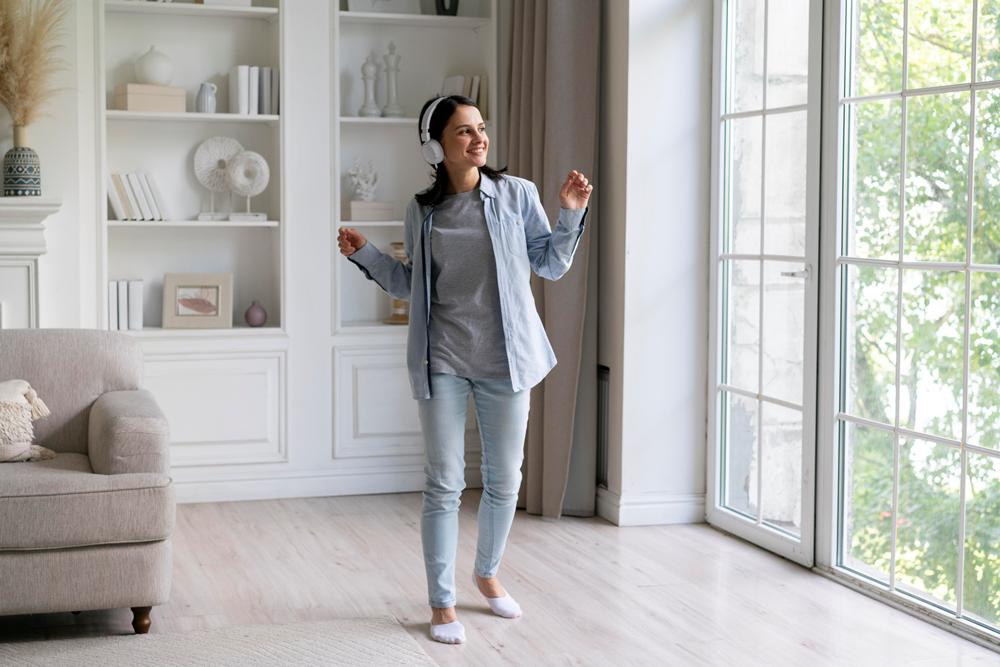
Swapping just 30 minutes of sitting for light activity, such as walking or housework, can improve mood and energy the following day, new research suggests.
A study involving more than 350 young adults found that on days when participants spent less time sitting and more time doing light activity, they felt happier and more energised the next day.
Researchers said light activity had the strongest link to improved next-day mood, while time spent sitting or lying awake was associated with poorer mood the following day.
The study, led by the University of Texas at Arlington and Monash University in Australia, tracked participants’ 24-hour movement patterns using wearable monitors.
“This study indicated that light activity — where you don’t have to go to the gym or do intense exercise — can lead to better feelings the next day when it replaces sedentary behaviour,” said Dr Yue Liao, kinesiology professor at UT Arlington.
“One doesn’t have to think, ‘I have to run,’ or ‘I have to do these big things.’ Just sitting less and moving more can have an immediate impact on your mood the next day.”
The findings are particularly relevant as 38 per cent of US adults spend nine or more hours sitting each day, according to a 2024 study by smart seating company Kalogon.
Researchers analysed daily activity across sleep, exercise, sedentary time and light movement. Moderate to vigorous activity, such as running or gym workouts, offered smaller mood benefits, while sleep duration showed no clear effect on next-day mood among participants.
“We looked at the 24-hour movement behaviour — sleep, exercise, sedentary time and light activity,” said Dr Liao.
“The 24-hour part is important because we’re not simply saying, ‘Do more of this.’ All these activities add up to 24 hours. From that perspective, when someone replaces sitting time with light activity, it predicts a better mood the next day. That’s the key point.”
The improvements were based on individual changes rather than comparisons between participants.
“Based on previous research, we assumed exercise would be the main factor, but our analysis mostly highlighted light activity,” Dr Liao said.
“You don’t have to work up a sweat to get benefits. Just moving a little more than your usual helps.”
The study suggests that small, everyday adjustments — such as standing up more often or walking briefly — can make a noticeable difference to wellbeing, the researchers concluded.