


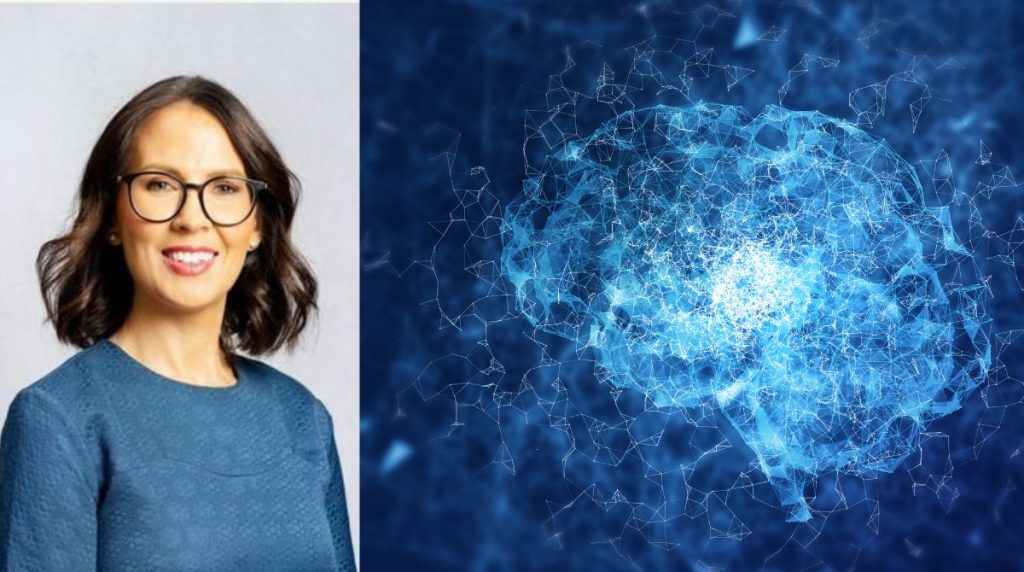
Developed with input from over 13,000 participants a new, AI-powered, speech and language software has the potential to speed-up dementia diagnoses, whilst reducing the cost.
Memory Tell stems from the work of neuroscientist Adolfo Garcia, Co-founder of the Global Brain Health Institute (GBHI), who, for the last 15 years, has been investigating dementia, digital-biomarkers.
In tandem with Northern Ireland-based, fellow GBHI member Corrina Grimes and materials science engineer Fernando Johann, they launched Memory Tell in August last year.
Speaking to Agetech World Ms Grimes said: “The 2024 Lancet Commission outlined that by addressing 14 modifiable risk factors 45 per cent of dementias are potentially preventable.
“Memory Tell shifts the dial in this regard by helping clinicians move from subjective to objective measurements in diagnosing dementia.”
How does it work?
Dementia diagnoses can be invasive, expensive and time-consuming with some people in the UK having to wait up to two years for clarity on the nature of their condition.
There are a number of methods available to clinicians which include memory tests, brain scans or lumbar punctures.
Memory Tell integrates speech and language-analysis technology to deliver a rapid, objective, and evidence-based assessment for clinicians.
It operates through an algorithm, accessible by a personal computer, with 10 short speech tasks which are analysed for the users pitch, tone, rate of speech, and pauses; their vocabulary, and how it changes over time.
Users are initially asked to describe, in as much detail, a typical day. Then on to questions about the uses of items, such as a ‘car with flat tyres’, and then re-telling the story of a video they have watched.
Ms Grimes said: “Examining people’s speech and language patterns is a much less-intrusive way of providing insights into brain function; the feedback has shown that this is a far more dignified and accurate method of diagnosing dementia.
“People can find the existing pen and paper memory tests very challenging because there may be a question they cannot answer which leaves them feeling embarrassed and humiliated.
“Everyone has their own experience of going to memory clinics. Perhaps, how difficult it is when asked questions with right or wrong answers. Memory Tell is a much better, more dignified approach, one where there’s no right or wrong answers.”
Award success
The platform has been trained with input from 13,000 participants, consisting of those with validated dementia diagnoses, and healthy volunteers. It is currently available in five languages, with more coming on stream.
It is currently being trialled in 12 different research centres in Ireland and New Zealand with the aim of securing the European CE ‘Conformité Européenne’ mark.
This process is expected to take 18 months and cost in the region of £500,000 and once secured will permit Memory Tell access to clinics across the continent and the UK.
Memory Tell has the potential to save time and money as it can be carried- out under the supervision of a technician freeing-up clinical capacity and reducing bottlenecks in a health care system.
Ms Grimes continued: “It aligns perfectly with the NHS focus of hospital to community, analog to digital, and primary to secondary and tertiary prevention.
“The policy makers, clinicians, health service managers and commissioners we speak to are very excited about Memory Tell and this and this bodes well as we look to commercialise the platform.”
The company recently secured £25,000 after winning the annual INVENT awards which showcase new entrepreneurial talent in Northern Ireland’s science and technology sector.
Ms Grimes has worked in the health care system most of her professional life as a clinical dietitian across specialties, including palliative care, and later as National Deputy Director at NHS England.
She is also an Atlantic Fellow for Equity in Brain Health with GBHI, which was has borne out of the generosity of Irish retail entrepreneur Chuck Feeney, who gave away US$8bn to charity during his life
The GBHI supports the University of California, San Francisco, and Trinity College, Dublin, in a mission to ‘reduce the scale and impact of dementia and improve brain health worldwide’.
Ms Grimes added: “Chuck Feeney’s final big bet was to create this fellowship. This was where Adolfo and I met. Adolfo was working on the algorithm in a research setting and our task now is to bring this into frontline health services.”