News
Interview: Dr Matthew Bennett on building resilience and a pain-free healthspan

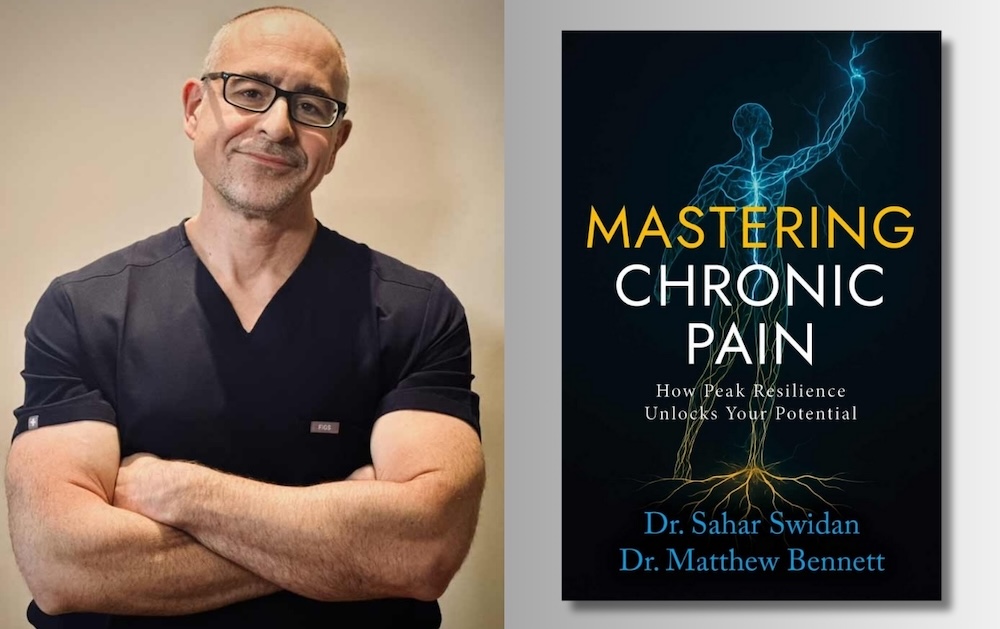
Harnessing the multi-dimensional capabilities of the human body is key to overcoming chronic pain and boosting longevity, say the authors of a new book.
While the primary focus of established health care systems is to target pain points through medication or surgery a more holistic approach is emerging, as US chronic pain doctor Matthew Bennett explains.
Published late last year by Dr Bennett and colleague Dr Sahar Swidan’s book, Mastering Chronic Pain: How Peak Resilience Unlocks Your Potential offers grounded insights into pain resolution.
Speaking to Agetech World from his New York base he said: “I’ve been treating patients in chronic pain for over 20 years.
“And, it becomes obvious that while some pain is very responsive to simple interventions, like a nerve block or a surgery, there’s a large number of people which that does not move the needle for.
“We used to look at it like, ‘Hey, the MRI shows this one spot that’s pushing on this one nerve. If we can take that spot off that nerve, everything’s going to be better’.
“And, that just doesn’t always play out that way. It’s become apparent that there are a lot of situations where the problem is more systemic.
“It’s really more of a metabolic problem, and pain is the expression of these system failures.”
‘Fight or flight’
The upstream drivers of acute pain can be numerous as Dr Bennett explains: “You can take as much pressure as you want off of nerves, but if your inflammatory system isn’t fixed, if the neurological system isn’t fixed, if your autonomic nervous system – meaning your fight-or-flight versus your rest-and-relaxation – isn’t balanced, if your gut biome is off, if your sleep is off – a lot of these problems aren’t going to improve.”
Key elements in developing a longevity-focused healthpsan – devoid of chronic pain and opioids – are simple, every day measures, focused on movement, sleep and breathing.
This includes developing the right muscles to create a ‘good deep core musculature’.
He continued: “An even bigger one is the way people breathe – the way they use their diaphragm.
“The diaphragm is a great big muscle that controls the deep core part of the spine. When the diaphragm’s not working correctly, the whole core musculature isn’t working right.
“You can’t get that stability in the lower spine, so other muscles jump in and try to do the work for you. That causes downstream problems.
“You need someone getting to that root cause,.. (and) we teach people how to do that, and they’ll have big breakthroughs.”
He continued: “Sleep is a big problem in people with chronic pain. There’s a lot of healing that occurs with deep sleep.
“Unfortunately, in a lot of pain states, sleep gets disrupted, and people can’t get into deep sleep, so the brain can’t clear itself of the byproducts of metabolism; that glymphatic system doesn’t work.
“Poor sleep also interferes with endocrine connectors; growth or sex hormones can be depleted. Obstructive sleep apnea can play a huge role. There’s just a big correlation between sleep disorders and chronic pain.”
Seeking calm
These key elements of Dr Bennett’s work – which has been described as ‘biopsychosocial’ – come concomitant with a keen focus on nervous systems, chronic inflammation and neuroplasticity.
Dr Bennett, co-founder of NoceViva, continued: “When we think about neurologics, one of the things that’s very far upstream of a lot of health is the balance between the fight-or-flight system and the rest-and-relaxation system – that autonomic nervous system.
“All of these things are ‘two-way streets’ with pain; meaning the pain can cause the dysfunction, and the dysfunction can cause the pain; it becomes this feedback cycle where things get entrenched in a bad loop.
“So, balancing that autonomic nervous system is a really helpful upstream fix to make. Simple things like breathwork. Some people do well with meditation.
“Some people do well with making sure they’re involved in hobbies. These are things that can help just calm that fight-or-flight system down.”
Nerves & neuroplasticity
Allowing ourselves to adjust to emerging health challenges is achievable in the right settings and with the right approach.
He continued: “The body’s nervous system has the ability to change. And it can change based on various inputs.
“The nervous system can become increasingly sensitised, or it can become de-sensitised. And so that’s one of the bigger things that we see in the chronic pain state, is this sensitisation that comes along with it.
“This neuroplasticity can make the nerves in the extremities more sensitive.
“It can also make the nerves in the central nervous system more sensitive – so nerves in the spinal cord, or even nerves in the brain can become hyper-sensitised – so they’re triggering more of a pain response in the person.
“But the same thing that can cause the system to go in what we would consider a bad direction, where it gets more sensitive, the neuroplasticity can actually become undone, and you can make the nerves less sensitive.”
AI to boost lifespan?
Looking ahead Dr Bennett foresees a future where a deeper understanding of the functional pathways of pain, combined with AI, stem cell therapies and regenerative biologics will all speak to a future of greater longevity for mankind.
“I think the more attentive we are to the root cause, the more attentive we are to functional pathways – when we start thinking about how the system really works? And we get out of just an algorithmic approach to things.
“We still have quite a ways to go. I think we are making progress. There was a time where we would not be thinking about any of this.
“I think everyone’s excited about what AI will bring. And are we going to be able to make some big steps? I think we’re able to intervene on a genetic level at this point.
“Will we be able to do it well enough to change lifespan? I would guess, yes, but by how much? I don’t know!”


A French biotech has raised €12m to test whether GLP-1 drugs can modify osteoarthritis progression.
The funding will advance 4Moving Biotech’s lead programme, 4P004, toward a phase 2a proof-of-concept readout in knee osteoarthritis, a joint disease that causes pain and stiffness.
Despite affecting more than 600 million people worldwide, no therapy approved in Europe or the US has yet been shown to slow or modify disease progression in osteoarthritis.
4Moving Biotech is testing whether GLP-1 receptor agonists, drugs best known for diabetes and obesity, can succeed where others have fallen short.
“With this closing in place, we are well equipped to reach the next value-creation milestone by delivering robust phase 2a data and reaching a proof-of-concept inflection point,” said Luc Boblet, chief executive of 4Moving Biotech.
Rather than systemic administration, the company is testing whether GLP-1 biology can be made relevant to osteoarthritis by acting directly in the joint, targeting local inflammation and tissue responses that systemic approaches have repeatedly failed to address.
“By acting directly in the joint, 4P004 tackles pain, inflammation and tissue damage through GLP-1-mediated pathways,” said professor Francis Berenbaum, the company’s chief medical officer.
The study is designed to assess “dual efficacy: symptom relief and synovial health improvement via contrast-enhanced MRI,” which images the joint lining, with topline results expected in the second half of 2026.
The round was secured from private investors and family offices investing directly into 4Moving Biotech, a subsidiary of 4P-Pharma, and combines equity with loans, a structure the company says is aligned with long-term value creation.
It follows a €7.6m France 2030 i-Démo grant awarded last year and coincides with the transatlantic expansion of the INFLAM-MOTION phase 2a study to the US.
Founded in 2020 as a spin-off from 4P-Pharma, 4Moving Biotech has now raised around €30m in total, combining private capital with non-dilutive public funding.
The broader landscape for disease-modifying osteoarthritis drugs offers little room for overconfidence.
A 2025 review of phase two and three osteoarthritis trials found that while “many DMOADs have progressed to clinical trials, very few have made a significant impact and none have been approved for clinical use.
Reviewing eleven candidates tested between 2010 and 2024, including small molecules, biologics and cell or gene-based therapies, authors conclude that failure has been driven less by any single mechanism than by the difficulty of demonstrating truly disease-modifying benefit.
Several programmes reported statistically significant effects on either pain or joint structure, but rarely both.
The review notes that “the clinical relevance of a marginal increase in one without the other remains unclear,” warning that structural effects without symptom relief may be clinically meaningless, while pain relief without structural protection could even accelerate disease progression.
Over the past decade, major programmes at Pfizer, Eli Lilly, AbbVie, GlaxoSmithKline and Sanofi have been discontinued or deprioritised after failing to deliver regulator-acceptable evidence of disease modification.
In 2020, Unity Biotechnology reported phase two data showing that its senolytic candidate UBX0101, developed as a disease-modifying therapy for knee osteoarthritis, failed to deliver clinically meaningful improvements in pain or joint structure.
Unity subsequently discontinued its osteoarthritis programme, exited the field entirely and ceased operations in 2025.
The phase 2a readout will be the point at which the GLP-1 approach in osteoarthritis either earns its next chapter or joins a long list of programmes that fell short.

An EEG test can identify dementia risk five to seven years before progression to mild cognitive impairment or Alzheimer’s dementia, new research suggests.
Using EEG data, which measures the brain’s electrical activity, from older adults with only subjective memory concerns, the longitudinal study found this non-invasive test can flag functional changes long before standard tools detect disease.
Researchers collected baseline resting EEG recordings from 88 older adults who had subjective cognitive impairment (self-reported decline without a clinical diagnosis of mild cognitive impairment, early memory problems or dementia).
The study was conducted by BrainScope, a commercial-stage neurotechnology company in Maryland, US, which applies artificial intelligence and computational neuroscience to brain electrical signals.
Participants then received annual clinical assessments and staging of cognitive decline. Over time, some progressed to mild cognitive impairment or dementia, while others remained cognitively normal.
Using BrainScope’s proprietary EEG-based biomarker platform, researchers identified distinct brain-activity patterns at the initial visit that accurately predicted future decline.
BrainScope’s EEG biomarker achieved an area under the curve (AUC) of 0.90, a measure of diagnostic accuracy, and performance was validated across independent international cohorts.
The findings suggest that with BrainScope’s signal processing and AI-enabled analytics, EEG could serve as a rapid, affordable and non-invasive assessment to identify Alzheimer’s-related brain dysfunction years before meaningful memory loss.
Early identification matters because by the time traditional imaging detects Alzheimer’s pathology, significant and often irreversible neurological damage may already have occurred.
Identifying risk earlier also fits a fast-evolving therapeutic landscape in which many disease-modifying therapies and prevention trials require people to be found years before conventional diagnosis.
Earlier awareness can help individuals and families pursue evidence-based lifestyle changes, proactive care planning and research participation, shifting care from reactive management to earlier intervention.
“The rapid evolution of Alzheimer’s therapeutics demands equally innovative biomarkers.” Howard Fillit, co-founder and chief science officer of the Alzheimer’s Drug Discovery Foundation, said.
“As the field moves towards more complex, combination therapy strategies and precision prevention, tools like BrainScope’s will play a critical role in early risk identification and enabling a tailored approach to treatment.” Fillit said.
Key funding for the biomarker’s development was provided by the Alzheimer’s Drug Discovery Foundation, whose early support BrainScope credits as instrumental in achieving this milestone.
The foundation has a longstanding record of advancing Alzheimer’s diagnostics, including early support for technologies such as the first amyloid PET scan and the first blood-based biomarker test for the disease.
“At BrainScope, our mission has always been to translate the brain’s electrical signals into clinically meaningful insights and build the platform that becomes the brain’s vital sign,” Matt Adams, chief executive of BrainScope, said.
“This publication in Scientific Reports validates years of research using EEG to detect functional brain changes in normal elderly with subjective cognitive complaints,” Leslie Prichep, chief scientific officer of BrainScope and first author of the study, said.
“The importance of identifying risk of future cognitive decline, long before structural damage occurs, can have significant impact on brain health in the elderly early enough to meaningfully change outcomes.”
BrainScope is expanding its AI-enabled EEG platform into new clinical indications, including neurodegenerative diseases and stroke.


French biotech raises €12m for osteoarthritis trial

Test predicts dementia risk years earlier

Harbor Health acquires dementia care startup Rippl

Scottish Medicines Consortium rejects Alzheimer’s therapy

Two teas or coffees a day could lower dementia risk, experts say

Interview: GlycanAge launch first hospital-based tests

Shingles vaccine may slow biological ageing in older adults

Older male athletes may face increased risk of serious heart problems during exercise

Thousands of men in England to be offered life-extending prostate cancer drug

Nanoparticles target disease proteins in dementia
 News4 weeks ago
Interview: GlycanAge launch first hospital-based tests
- News3 weeks ago
Shingles vaccine may slow biological ageing in older adults
- News4 weeks ago
Older male athletes may face increased risk of serious heart problems during exercise
- Insights3 weeks ago
Thousands of men in England to be offered life-extending prostate cancer drug
- News3 weeks ago
Nanoparticles target disease proteins in dementia
- Technology3 weeks ago
L-Nutra raises US$36.5m in series D funding
- News4 weeks ago
Blood sugar spike after meals may increase Alzheimer’s risk
- Insights4 weeks ago
Study reveals why memory declines with age