News
IL-17 protein identified as playing central role in skin ageing

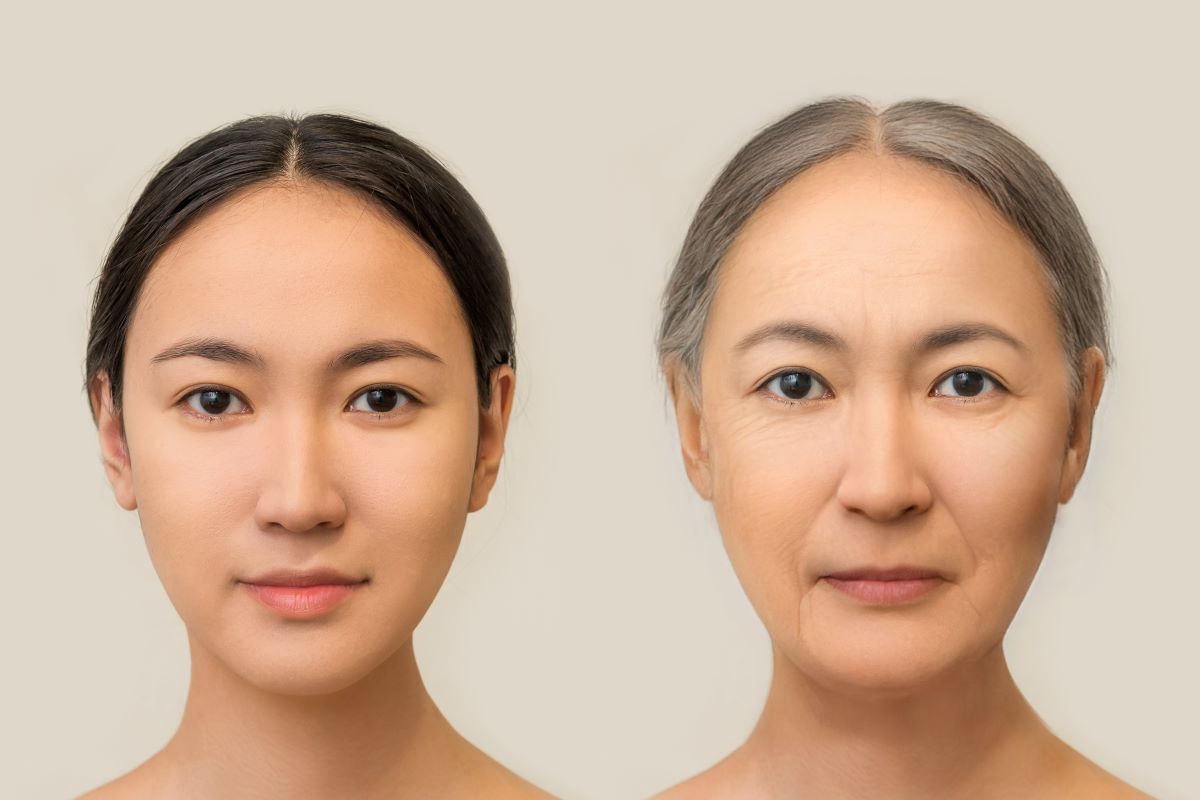
Wrinkles are a natural part of ageing. But few of us welcome their appearance.
Whilst we may be prepared to embrace the wisdom and experience that comes with age, the same can’t be said of those telltale lines, creases, furrows and folds that so visibly announce to the world that our salad days are behind us.
Such is our horror at quite literally being faced with a face full of crow’s feet and worry lines, that a multi-billion dollar industry has grown up pandering to our frantic attempts to turn back time.
The global anti-ageing market is estimated to be worth more than $60bn US dollars. As society becomes increasingly more beauty-conscious, the market for anti-ageing and skin-changing products is projected to reach a staggering $93bn by 2027.
But a new study conducted by a team of scientists from the Institute for Research in Biomedicine (IRB) and the National Center for Genomic Analysis (CNAG), both in Barcelona, has now identified the protein that plays a key role in skin ageing – opening up the possibility of new therapies being developed targeted at improving skin health.
The study published in the journal Nature Aging and led by Dr Guiomar Solanas and Dr Salvador Aznar Benitah, both of IRB Barcelona, and Dr Holger Heyn at CNAG, reveals that blocking the function of IL-17 delays the appearance of age-related features in the skin.
Skin ageing is characterised by a series of structural and functional changes that gradually contribute to the deterioration and fragility associated with age. Aged skin has a reduced capacity to regenerate, poor healing ability, and diminished barrier function.
Dr Benitah, who is head of the Stem Cells and Cancer laboratory at IRB Barcelona, said: “Our results show that IL-17 is involved in various functions related to ageing. We have observed that blocking the function of this protein slows down the appearance of various deficiencies associated with ageing skin.
“This discovery opens up new possibilities for treating some of the symptoms or facilitating skin recovery after surgery, for example.”
Dr Heyn, head of the Single Cell Genomics laboratory at CNAG, added: “Single cell sequencing has allowed us to dive deep into the complexity of cell types and states forming the skin and how these change during lifespan.
“We did not only find differences in the composition of aged skin, but also changes in cell activity states. Particularly immune cells showed specific age-related profiles, which we could pinpoint by analysing thousands of individual cells one at a time.”
In addition to a wide variety of epithelial cells, hair follicle cells, and other components, the skin is also home to immune cells, which play a crucial role in preventing infection and protecting against different damages.
The groundbreaking researh describes how, during ageing, the presence of some of these immune cells, namely gamma delta T cells, innate lymphoid cells, and CD4+ T cells, significantly increases in the skin. These same cells also start expressing very high levels of the pro-inflammatory cytokine IL-17.
Dr Paloma Solá, first author of the paper, together with Dr Elisabetta Mereu, who is now a researcher at the Josep Carreras Leukaemia Research Institute in Barcelona, said: “Ageing is associated with mild but persistent inflammation and, in the skin, this is characterised by a significant increase in IL-17, which causes skin deterioration.”
Previous studies had described that IL-17 is related to some autoimmune skin diseases, such as psoriasis, and there are existing treatments that block this protein.
The team of researchers studied the response of various aspects to blocking IL-17 activity, including hair follicle growth, transepidermal water loss, wound healing, and genetic markers of ageing.
These four parameters showed an improvement after treatment, as the acquisition of these ageing traits was significantly delayed.
Dr Solanas, associate researcher at IRB Barcelona, commented: “IL-17 protein is essential for vital body functions, such as defence against microbes and wound healing, so permanently blocking it would not be an option. What we have observed is that its temporary inhibition offers benefits that could be of interest at a therapeutic level.”
Future work by the researchers will focus on clarifying the ageing processes that are related to inflammatory states in the skin and how these are linked to IL-17.
The team will also address whether IL-17 is involved in the ageing and deterioration of other tissues and organs.





A new study says CTE should be recognised as a cause of dementia, with those in the most advanced stages facing a 4.5-fold higher lifetime risk.
Chronic traumatic encephalopathy (CTE) is a degenerative brain condition seen in some athletes.
Linked to repeated head impacts, it can cause memory loss, mood changes, poor coordination and suicidal thoughts. Diagnosis is only possible after death.
People with the most advanced CTE were 4.5 times more likely to develop dementia during life than people without CTE, researchers found.
Many former NHL and NFL players have been posthumously diagnosed with CTE, including Junior Seau, Frank Gifford and Ken Stabler.
The study from researchers at the Boston University CTE Center provides what the centre describes as the clearest evidence yet linking CTE to dementia risk.
The centre says these findings indicate CTE should be known as a cause of dementia.
“This study provides evidence of a robust association between CTE and dementia as well as cognitive symptoms, supporting our suspicions of CTE being a possible cause of dementia,” said Dr Michael Alosco, an associate professor of neurology and co-director of clinical research at the BU CTE Center.
“Establishing that cognitive symptoms and dementia are outcomes of CTE moves us closer to being able to accurately detect and diagnose CTE during life, which is urgently needed.”
Researchers studied brain tissue from more than 600 donors, the majority men.
The donors, primarily contact sport athletes, had known exposure to repetitive head impacts, but none had Alzheimer’s disease, Lewy body disease or frontotemporal lobar degeneration.
They found that 366 male donors had CTE. After examining the donor brains, they calculated the odds of developing dementia across CTE stages I to IV.
Donors with stages III and IV had the worst cognitive and functional symptoms, regardless of age or history of substance use treatment.
Lower stages were not associated with dementia, cognitive impairment or functional decline.
The team also found no link between less severe CTE and changes in mood or thinking, suggesting observed changes may stem from other effects of repetitive head impacts or unrelated medical or environmental factors.
“Understanding which brain changes drive cognitive decline is essential,” said Dr Richard Hodes, director of the National Institute of Health’s National Institute on Aging.
“This study shows that only severe CTE has a clear link to dementia, which provides an important distinction for researchers, healthcare providers and families.”
The study also found that dementia due to CTE is often misdiagnosed as Alzheimer’s disease.
Both conditions are marked by abnormal tau proteins that build up in brain cells and affect blood vessels, although the tau differs in each disease.
Of donors with CTE who had received a dementia diagnosis during life, 40 per cent were told they had Alzheimer’s disease but showed no evidence of it at autopsy.
A further 38 per cent of families were told the cause of dementia was unknown or could not be specified.
News
ATW’s research round-up: new Alzheimer trigger identified, UK university targets longevity. fibre not protein?…and more


A UK university will become one of the first in the country to make improving the health and well-being of the elderly one of its six ‘mission-led’ research priorities.
Bournemouth University’s choice to focus on pensioners is partly the result of the Labour Government’s wish for universities to specialise, whilst also reflecting the area’s demographics – the south-coast city has one of the one of the oldest populations in the world.
“Our demographics are much older than other places – about 10 years older on average compared to the rest of the UK,” explained Tom Wainwright, professor of orthopaedics at Bournemouth.
Vary your exercise
The university’s Orthopaedic Research Institute is already heavily involved in work with the surrounding area and its recently published study, in The Lancet, showed that over-65s with osteoarthritis who undertook group-based cycle classes enjoyed much better outcomes than those receiving one-to-one physiotherapy.
Research published in leading British doctors’ publication the BMJ Journal, which tracked 100,000 people over the last 30 years, has shown that mixed exercise routines can have a significant impact on overall health and longevity.
The study tracked the cohorts exercise habits over three decades and found that participants who engaged in the highest variety of exercises had a 19% lower risk of death, compared to those who engaged in the lowest variety.
Benefits were even bigger when looking at specific causes like heart disease, cancer, and respiratory illness, with risk reductions ranging from 13 to 41 percent.
“People naturally choose different activities over time based on their preferences and health conditions,” says Yang Hu, corresponding author and research scientist in the Harvard TH Chan Department of Nutrition.
“When deciding how to exercise, keep in mind that there may be extra health benefits to engaging in multiple types of physical activity, rather than relying on a single type alone.”
US researchers have identified over five dozen new potential blood-based metabolites which could predict a Type 2 diabetes risk, years in advance.
Key Alzheimer trigger identified
Scientists at Mass General Brigham and Albert Einstein College of Medicine, followed 23,634 participants for up to 26 years and over that time analysed 469 metabolites in blood samples, alongside additional genetic, diet and lifestyle data.
In doing so they identified 235 metabolites associated with higher or lower diabetes risk, including 67 new molecules previously unreported.
The researchers say their work supports a shift toward precision prevention strategies which are more reliable than current indicators such as BMI or family history.
Further research into the Alzheimer’s predicting APOE (apolipoprotein E) gene has left UK researchers with renewed conviction of their ability to develop preventive measures, earlier in life.
Researchers at University College London analysed nearly 470,000 people across four major studies, focusing on participants aged 60 and older with confirmed Alzheimer’s diagnoses and genetic data.
Whilst previous studies had identified the ε4 allele of APOE as the one most predictive of Alzheimer’s development the UCL researchers also highlighted how allele ε3 may also carry a significant risk
Dr Dylan Williams, the study’s lead author, explained that the APOE gene’s contribution to the prevalence of Alzheimer’s has been significantly underestimated for a long time, and that the ε3 allele has historically been misunderstood as having a neutral effect on risk.
He said: “Intervening on the APOE gene, or the molecular pathway between the gene and Alzheimer’s, could have huge potential for preventing or treating a large majority of cases.”
Fibre first
Researchers say that fibre – found in beans, lentils, chia seeds, oats, bran, and certain fruits – is emerging as the ‘new hero’ of nutrition science.
Longevity expert Dr Vassily Eliopoulos, MD, who trained at Cornell, highlights how protein has ruled diet trends for years, but says fibre is now stepping into the spotlight.
“Everyone’s chasing protein, but the next big longevity macro is fibre. And fibre might be the most under-appreciated longevity nutrient that you’re missing daily.”
Explaining why fibre plays such a crucial role, he highlights the connection between gut health and overall well-being.
“Here’s the secret, your gut microbes eat what you don’t digest. These microbes convert fibre into powerful compounds that protect the body. They turn fibre into short-chain fatty acids, which act as your body’s natural anti-inflammatory molecules,”
Dr Eliopoulos highlights how chronic inflammation is closely linked to ageing and disease and he recommends aiming for 30 to 40 grams of fibre a day.


Study shows clear link between CTE and dementia risk

Dentordu: Digital dentistry for healthier ageing

ATW’s research round-up: new Alzheimer trigger identified, UK university targets longevity. fibre not protein?…and more

Assisted dying should be ‘gradually’ extended to dementia, author Ian McEwan says

Study confirms gut inflammation link to Alzheimer’s

FDA clears automated brain fluid device

Agetech World’s latest innovation & investment round-up

Captioning glasses win AARP pitch at CES

Insilico signs US$888m oncology deal with Servier

Interview: GlycanAge launch first hospital-based tests
 News4 weeks ago
FDA clears automated brain fluid device
- News4 weeks ago
Agetech World’s latest innovation & investment round-up
- News3 weeks ago
Captioning glasses win AARP pitch at CES
- News4 weeks ago
Insilico signs US$888m oncology deal with Servier
- News2 weeks ago
Interview: GlycanAge launch first hospital-based tests
- News3 weeks ago
Food preservatives linked to increased diabetes and cancer risk, study finds
- News2 weeks ago
Shingles vaccine may slow biological ageing in older adults
- Insights4 weeks ago
Global longevity initiative launches North American chapter