News
Five winners of global AI cardio-health challenge announced


The five winners of a brand new challenge from a collaboration of regulators and healthcare organisations in the UK and US were announced this week.
The challenge saw 25 teams of AI and machine learning developers from across the globe compete against each other to build models that predicted heart failure-related health outcomes for veterans.
The Veterans Cardiac Health and AI Model Predictions (V-CHAMPs) Challenge was a first from the VHA Innovation Ecosystem, the FDA Digital Health Center of Excellence, precisionFDA (part of the FDA’s Office of Digital Transformation) and the UK’s Medicines and Healthcare products Regulatory Agency (MHRA).
Using synthetic datasets based on real US veteran health records, entrants explored a range of potential outcomes following heart failure, including the prediction of cardiovascular outcomes, hospital re-admission rates and mortality, over a two phase, nine-month challenge.
This insight is designed to help health systems both in the UK and US to better understand the cardiovascular risks and specific health outcomes in veterans, as well as increasing understanding of synthetic data and AI/ML models and how they could be used to explore similar topics in the future.
The five winning teams were:
- VHeartAI
- ZS Associates ADS Team
- TeamDSS
- CognizantGoodHeartML
- Team D&D
Puja Myles, Director of the Clinical Practice Research Datalink at the MHRA, said:
“This has been a fantastic opportunity for developers to challenge themselves against other experts across the globe, all while contributing towards a worthy goal.
“This challenge has not only shown how advances in AI methodology can help improve healthcare, by providing forecasts of certain health outcomes in specific patient populations like veterans, it has also demonstrated the potential of synthetic data for the initial training and testing of AI algorithms.
“So, it has been fascinating to see how the best and brightest participants from around the world tested this potential to its limits in this challenge, and the knowledge that our sector has gained from their work will be invaluable.
“I’m so pleased to have been able to work with our US partners, bringing together cutting-edge health data expertise from both sides of the Atlantic, and helping to drive forward our combined understanding for application in future projects.”



BioAge Labs is expanding its lead drug candidate into diabetic macular oedema, with plans to start a phase 1b/2a trial in mid-2026.
The clinical-stage biotechnology company will test BGE-102, an oral therapy, in patients with the condition, which is one of the most common causes of vision impairment among people with diabetes.
Diabetic macular oedema occurs when persistently high blood sugar damages the small blood vessels in the retina, the light-sensitive tissue at the back of the eye, leading to fluid leakage and distorted vision.
While the condition is linked to diabetes, its progression is tied to chronic inflammation.
Current treatments focus on managing damage after it has begun. Patients often receive regular injections directly into the eye, sometimes monthly, to control swelling and preserve sight.
These therapies can be effective, but they are invasive, time-intensive and difficult to sustain over years.
Kristen Fortney is chief executive and co-founder of BioAge.
She said: “NLRP3 sits at the apex of this cascade, and BGE-102 offers the potential to deliver broader anti-inflammatory benefit in an oral formulation, which could meaningfully reduce treatment burden for patients with serious, sight-threatening conditions who currently require frequent intravitreal injections.”
BGE-102 is an oral NLRP3 inhibitor, designed to dampen inflammation at its source.
NLRP3 is a protein that drives inflammatory signalling and becomes increasingly active with age and metabolic stress.
When overactivated, it triggers signals that damage tissues throughout the body, including the retina.
What BioAge says makes BGE-102 notable in ophthalmology is its potential to reach the retina via oral dosing, a barrier many drugs struggle to cross.
If successful, this could reduce the treatment burden for patients who currently rely on frequent eye injections.
In early laboratory studies designed to mimic diabetic eye disease, BGE-102 helped keep the retina’s tiny blood vessels intact.
In studies examining ageing in the retina more broadly, blocking NLRP3 reduced the build-up of lipofuscin, a toxic waste material that accumulates in eye cells over time and is linked to degenerative vision loss, by roughly 80 per cent.
In an ongoing phase 1 trial, the drug has been well tolerated and reduced inflammatory signals in the body, including markers linked to cardiovascular and metabolic ageing.
The phase 1b/2a trial will test BGE-102 on its own and alongside existing treatments, aiming to show whether the drug calms the inflammation that damages vision over time.
Researchers will track changes in IL-6, a key inflammatory signal, within the eye, alongside measures of vision and retinal swelling. Results are expected in mid-2027.
The eye study will run alongside BioAge’s ongoing cardiovascular trial.
The company describes BGE-102 as a potential “pipeline in a pill”, targeting NLRP3-driven inflammation across cardiovascular, central nervous system and ocular diseases.
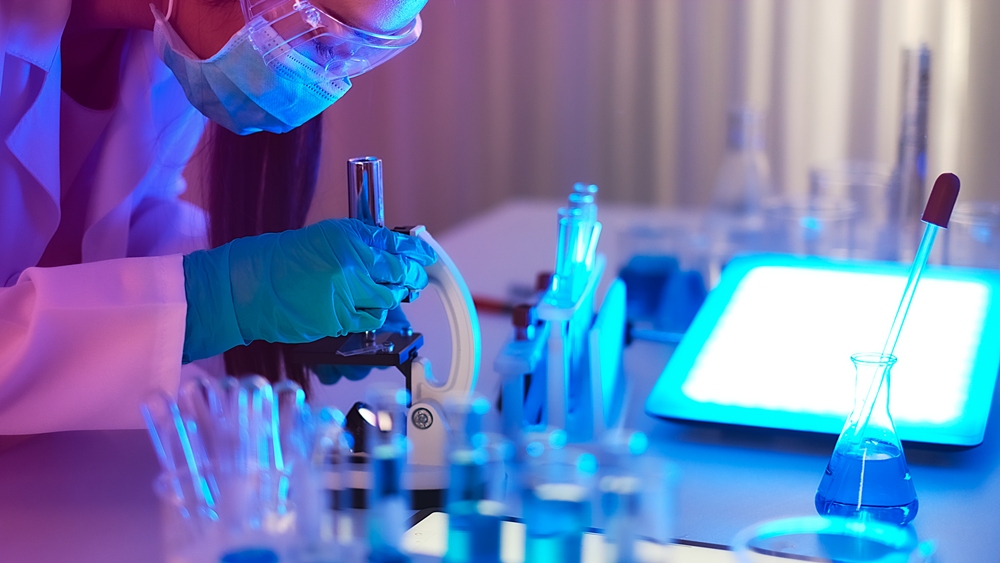
The USC Clinical Trial Recruitment Lab will fund four projects testing how AI can strengthen recruitment for Alzheimer’s trials.
The initiative, dedicated to accelerating and improving Alzheimer’s clinical trials, selected the projects from more than 30 applicants to explore digital approaches.
Alzheimer’s clinical trials are more complex, costlier and take longer than those in other therapeutic areas, despite the pressing need for new treatments.
The lab evaluates innovative recruitment strategies to improve access and representation in trials, with the goal of identifying scalable evidence-based recruitment practices.
The USC Clinical Trial Recruitment Lab is a collaboration between the USC Schaeffer Center for Health Policy and Economics and the USC Epstein Family Alzheimer’s Therapeutic Research Institute.
The four projects will explore the following strategies.
- Miriam Ashford at University of California, San Francisco will develop and test a generative AI voice agent to support remote informed consent and assess patient capacity for Alzheimer’s clinical trials.
- Erika Cottrell at OCHIN, a national network of community health centres, and Vijaya Kolachalama at Cognimark will integrate an AI-enabled diagnostic platform into primary care electronic health record workflows to support earlier identification and referral of patients.
- Andrew Kiselica at University of Georgia will establish a digitally enabled, trial-ready cohort of rural older adults to improve recruitment, participant selection and engagement.
- Raeanne Moore at University of California, San Diego will leverage electronic health record portals and digital cognitive assessments to accelerate prescreening and better match potential participants.
An estimated 5.6 million Americans are living with Alzheimer’s and related dementias, a number expected to increase dramatically in the coming decades as the population ages.
An extensive therapeutic development pipeline and new early-detection approaches, such as diagnostic blood tests and advanced digital tools, have the potential to reduce the burden of the disease.
However, fewer than one per cent of eligible individuals participate in Alzheimer’s therapeutic trials due to barriers that include limited patient awareness, health system resource constraints and lack of access to diagnostics, according to research from USC Schaeffer.
Certain populations at higher risk for the disease, including Black and Hispanic patients, remain underrepresented.
“We can only innovate as quickly as we can test new therapies,” said Dana Goldman, founding director of the USC Schaeffer Institute.
“That’s why it’s crucial we keep expanding the toolkit of evidence-based recruitment strategies for running faster, better trials.”
The lab previously funded six pilots, some of which have already yielded insights.
For example, one found remote blood collection could help identify potential participants, while another showed that offering a small gift card significantly increased enrolment in an online memory concerns registry.
“Faster and more effective recruitment is essential, and we’re excited to incorporate these solutions in an integrated way as part of our clinical trials,” said Paul Aisen, founding director of the USC Epstein Family Alzheimer’s Therapeutic Research Institute.
“As studies move earlier into pre-symptomatic disease, this opens the door to new recruitment paradigms, and continuing to push forward the science of recruitment will be critical to what comes next in Alzheimer’s research.”


BioAge expands drug into diabetic macular oedema

USC funds AI projects for Alzheimer’s trials

Insilico in US$66m deal for Parkinson’s drug

Nanoparticles target disease proteins in dementia

Exciva raises US$59.4m for Alzheimer’s therapy

FDA clears automated brain fluid device

Agetech World’s latest innovation & investment round-up

Insilico signs US$888m oncology deal with Servier

Food preservatives linked to increased diabetes and cancer risk, study finds

Captioning glasses win AARP pitch at CES
 News3 weeks ago
FDA clears automated brain fluid device
- News3 weeks ago
Agetech World’s latest innovation & investment round-up
- Technology3 weeks ago
Insilico signs US$888m oncology deal with Servier
- News2 weeks ago
Food preservatives linked to increased diabetes and cancer risk, study finds
- Mobility2 weeks ago
Captioning glasses win AARP pitch at CES
- News3 weeks ago
UK bans junk food ads before 9pm to protect child health
- News1 week ago
Interview: GlycanAge launch first hospital-based tests
- Markets & Industry3 weeks ago
Global longevity initiative launches North American chapter