Connect with us

Markets & Industry

Eye care startup raises €3.5m

Published

on

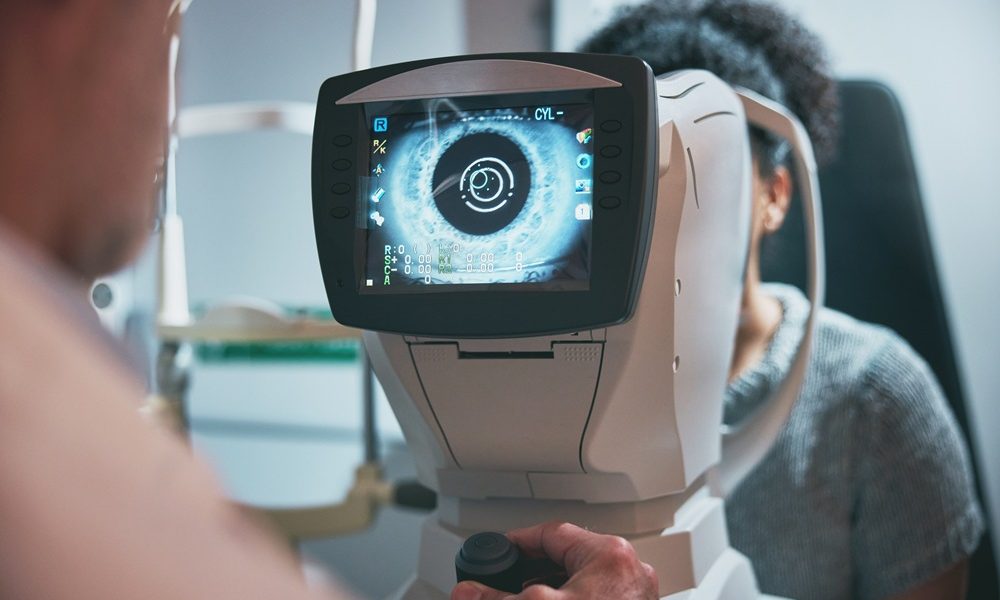
Eye care startup Custom Surgical has raised €3.5m to modernise ophthalmology by turning analogue slit lamps and microscopes into digital data hubs.

Munich-based Custom Surgical was founded in 2018 by mechatronics engineer Federico Acosta and Fernando Benito. It specialises in digitalising slit lamps and surgical microscopes used in everyday eye care. Slit lamps are standard devices eye doctors use to examine the front and back of the eye using a bright light and magnification.

Rather than replacing existing equipment, the company retrofits devices already in use. Its hardware-agnostic solutions allow clinics and hospitals to capture high-quality images and video without disrupting established workflows.

At the centre of the system is MicroREC Connect, a cloud-based platform that manages ophthalmic data across devices and manufacturers. It enables secure capture, storage and structured organisation of images and video, supporting long-term patient documentation and collaboration between clinical teams.

The company’s strategy follows a phased approach, starting with digitisation, then workflow standardisation, followed by AI-powered clinical support tools. Within the next 12 months, Custom Surgical plans to release its first AI-powered triage tool to help ease waiting times for eye care treatment.

The funding round was a pre-series A and brings the company’s total funding to date to €6m. Custom Surgical said it generated more sales than it raised during this financing round and has reinvested revenue into advancing its product portfolio.

Federico Acosta, chief executive of Custom Surgical, said: “Global demand for eye care is growing at a pace that current clinical processes can no longer sustain. Scalable digital workflows are essential to enable fast, accurate screening for a growing and ageing worldwide population. This financing validates our long-term vision: build the data foundation first, then unlock AI-driven clinical and economic value. We are proud to partner with Ventech, ZEISS, and our investors as we scale globally.”

The round was led by Ventech, with participation from ZEISS and a mix of new and existing investors.

Nicolas Barthalon, principal at Ventech, said: “By uniting hardware, software, data and AI, Custom Surgical is seizing a generational opportunity to reshape clinical eye care workflows at global scale. The team has built a truly unique data asset, achieved global adoption with remarkable capital efficiency, and is addressing a structural inefficiency in a rapidly growing market. We are glad to join forces with industry leaders like Zeiss to fuel Custom Surgical’s ambition to become the data standard in ophthalmology.”

Custom Surgical employs 16 people from nine countries and plans to expand its commercial and engineering teams as it grows across Europe and the US.

Continue Reading
Click to comment

Leave a Reply

Your email address will not be published. Required fields are marked *

News

Vision implant firm raises US$230m

Published

on

A vision implant firm has raised US$230m as it seeks approval in Europe and the US for a device that restored sight in a small clinical trial.

The Alameda, California-based startup said the funding would support commercialisation of its Prima device.

It said an upcoming launch is planned in Europe and that it would become the first brain computer interface company to have a vision restoration device on the market.

A clinical trial in Europe found the small implant could work as artificial photoreceptors in the retina to restore functional central vision.

The implant is placed under the retina to replace the function of light-sensitive cells lost to disease. A special pair of glasses with an embedded camera and infrared projector sends light signals to the implant.

The study assessed the system in people with advanced dry age-related macular degeneration.

Of the 38 patients who received an implant, 32 were assessed at 12 months. Results showed the device led to a clinically meaningful improvement in visual acuity in 26 people.

The patients were able to read letters, numbers and words, according to the company.

Science Corporation said it has submitted a CE mark application to the European Union and applied to the US Food and Drug Administration for regulatory approval.

Darius Shahida, chief strategy officer, said: “Our imperative is to become the first BCI company to scale and achieve profitability.”

Founded in 2021, the company has now raised about US$490m in total. It said it is expanding its clinical trial programme to include other retinal diseases, such as Stargardt disease and retinitis pigmentosa.

The Series C round included existing investors Khosla Ventures, Lightspeed Venture Partners, Y Combinator, IQT and Quiet Capital.

Science Corporation said demand for the round exceeded its capital needs, with funds also earmarked for expanding research, manufacturing infrastructure and operations.

Continue Reading

News

Nyra health raises €20m for digital neurotherapy

Published

on

Nyra health has raised €20m to scale its digital neurotherapy platform for neurological rehabilitation, targeting conditions such as stroke and dementia.

The Series A funding will be used to expand the company’s technology across the DACH region, accelerate its expansion into the US and support a more data-driven approach to neurorehabilitation.

Founded in 2021, Vienna-based nyra health has developed a certified medical device called myReha. Patients use the platform to train speech, cognition, fine motor skills and everyday abilities, supported by AI-driven real-time feedback.

The system analyses pathological speech, meaning speech affected by neurological damage, by assessing pronunciation, word retrieval, sentence structure and meaning. It also tracks reaction times, error patterns and training progress, adapting therapy automatically to a patient’s performance level and fatigue.

The company says neurological conditions including stroke, dementia and traumatic brain injury cost €65bn a year in Germany alone, largely because care often declines after patients are discharged from hospital.

Nyra health says myReha is used in more than 100 rehabilitation clinics and is reimbursed by 28 statutory and private health insurers, giving over 40m insured people access to structured, AI-based home therapy. According to the company, a randomised controlled study found that adding myReha to standard therapy led to greater improvements in language and cognitive function than standard therapy alone.

A companion tool, nyra insights, allows therapists to monitor language development, therapy intensity and progress in real time, adjust programmes and generate documentation automatically. An AI-supported Content Studio creates personalised therapy exercises based on individual performance data.

The funding round was led by Armira Growth, with existing investors Wellington Partners, Crane Venture Partners and EVER Pharma also participating. It follows a €4.5m seed round raised in 2023.

Moritz Schöllauf, chief executive and co-founder of nyra health, said:
“From the outset, our goal was to make our services widely available to those affected. Everyone who needs therapy after a stroke or other neurological disease should have access to effective, individualised care, regardless of where they live or how well their own healthcare system is set up. With this round of financing, we are taking another step in this direction.”

Christian Figge, managing partner at Armira Growth, said:
“Neurological rehabilitation can be made significantly more effective through digital solutions, especially in the area of speech ability. nyra health is considered a category creator with a proprietary AI-based solution that connects inpatient therapy, outpatient aftercare and home use.”

The company is also investing in multimodal AI models for therapeutic interaction and diagnostics as part of a €4.2m funded research project being developed with research universities in the US.

Continue Reading

Markets & Industry

Astellas and Vir strike prostate cancer deal

Published

on

Astellas has agreed a US$1.7bn global prostate cancer deal with Vir Biotechnology to develop a masked T-cell engager designed to harness the immune system against the disease.

The collaboration centres on VIR-5500, a PSMAxCD3 bispecific drug known as a T-cell engager, or TCE. TCEs activate immune cells called T cells and direct them to attack cancer cells.

Unlike radioligand therapies, which deliver radioactive material to tumours, TCEs aim to recruit the body’s own defences.

VIR-5500 targets PSMA, a protein found on prostate cancer cells, and uses what Vir calls PRO-XTEN dual-masking technology.

This is designed to keep the drug inactive until it is unmasked within the tumour, which the company says may limit side effects elsewhere in the body.

Vir says only about 30 per cent of patients with metastatic castration-resistant prostate cancer, an advanced form of the disease that no longer responds to hormone-blocking treatment, survive for five years after diagnosis.

Marianne De Backer, chief executive of Vir, said: “The field is moving very, very fast.

“And we believe that we could accelerate the programme by working together with someone who has a really strong track record in the space.”

Updated phase 1 data presented at the 2026 ASCO Genitourinary Cancers Symposium showed that 82 per cent of heavily pretreated patients receiving the highest evaluated doses achieved a 50 per cent or greater reduction in PSA levels, a marker of disease activity. Among patients with measurable tumours, 45 per cent recorded an objective response.

Cytokine release syndrome, an immune overreaction commonly associated with TCEs, was observed in 50 per cent of the 58 patients treated and was described by Vir as generally restricted to mild events.

The company said preventative steroids were not required and no drugs were used to manage severe CRS.

Under the agreement, Astellas will provide US$335m in upfront and near-term payments, including US$240m in cash, US$75m through an equity investment and a US$20m near-term milestone.

Vir is eligible for up to US$1.37bn in additional development, regulatory and sales milestones, along with tiered double-digit royalties on sales outside the US.

Development costs will be shared 60–40, with Vir holding an option to co-promote the drug in the US, while Astellas will be responsible for commercialisation elsewhere.

For Astellas, the deal may strengthen its position in prostate cancer as Xtandi, its partnered drug with Pfizer, begins to lose patent protection in several territories this year.

Vir licensed the underlying technology from Sanofi in 2024, meaning some proceeds from the agreement will be shared with the French pharmaceutical company.

Competition in the field remains strong. Novartis already markets its radioligand therapy Pluvicto, while Janux Therapeutics has a masked TCE that is currently ahead of VIR-5500 in development.

Amgen and Johnson & Johnson are also developing TCE candidates for prostate cancer.

Vir plans to move VIR-5500 into phase 3 trials in 2027 and to begin testing the drug in earlier-stage disease in the second quarter of 2026.

Johann de Bono, the phase 1 trial’s principal investigator and a prostate cancer expert at the Institute of Cancer Research in the UK, said: “It is remarkable to see these early signs of profound anti-tumour activity in heavily pretreated mCRPC patients, and the favourable tolerability with minimal CRS to date means VIR-5500 could play a role in treating earlier disease.”

Anthony Jarkowski, primary focus lead of immuno-oncology at Astellas, added: “What really stood out to us is how they’re balanced, efficacy and toxicity.”

Continue Reading

Trending

Agetech World