Engaging with arts and culture may slow biological ageing, study suggests
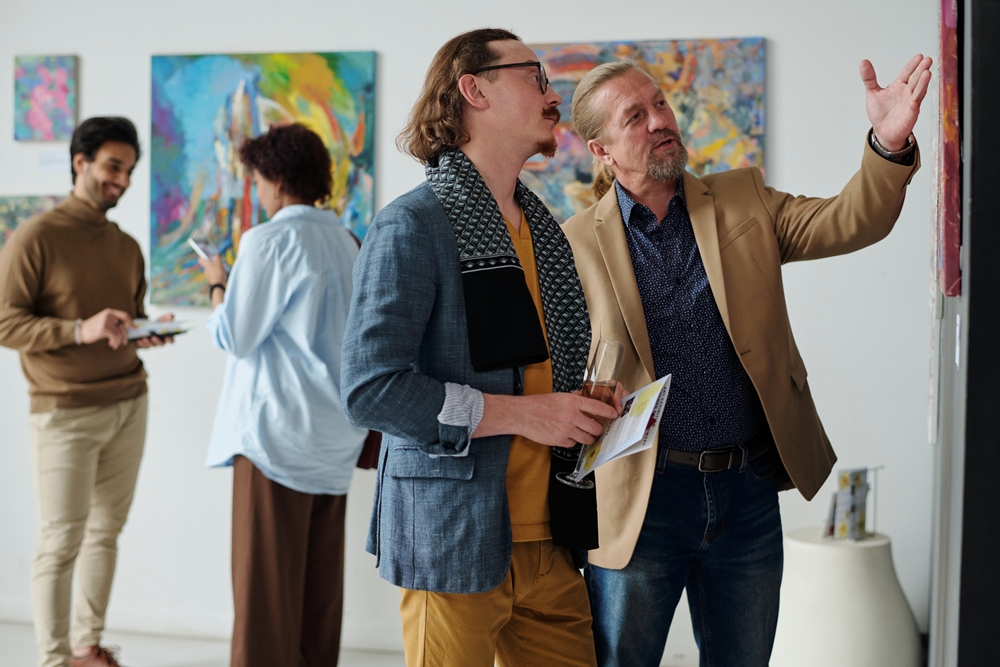
Singing, painting and gallery or museum visits may help slow ageing, with arts engagement linked to a younger biological profile, new research suggests.
The findings are the first to show that both taking part in arts activities and attending cultural events may be linked to slower biological ageing.
Researchers said the work adds to evidence that creative and cultural activity could support health in later life, although it does not prove people will live longer.
Prof Daisy Fancourt is lead author of the research and head of the social biobehavioural research group at University College London.
She said: “These results demonstrate the health impact of the arts at a biological level.
“They provide evidence for arts and cultural engagement to be recognised as a health-promoting behaviour in a similar way to exercise.”
However, slower biological ageing does not necessarily mean someone will live longer.
The study used “epigenetic clocks”, tests that estimate biological ageing by looking at chemical changes to DNA. These clocks can be linked to future illness and mortality risk, but cannot by themselves show that an activity causes longer life.
Those who took part in artistic activities most often appeared to have the slowest pace of biological ageing.
Under one assessment method, weekly arts engagement was linked to a 4 per cent slower ageing process, while monthly engagement was linked to a 3 per cent slower pace.
Another test suggested that people who took part in an arts activity at least once a week were, on average, biologically one year younger than those who rarely did so.
By comparison, people who exercised once a week were six months younger by the same measure.
The researchers said the difference linked to arts engagement was comparable to the gap between smokers and people who had quit smoking.
Dr Feifei Bu, senior author and a UCL academic, said the study built on existing evidence about the health impact of the arts.
“Our study provides the first evidence that arts and cultural engagement is linked to a slower pace of biological ageing,” she said.
“This builds on a growing body of evidence about the health impact of the arts, with arts activities being shown to reduce stress, lower inflammation and improve cardiovascular disease risk, just as exercise is known to do.”
The results, published in Innovation in Aging, were based on blood test and survey data from 3,556 adults taking part in the UK Household Longitudinal Study.
The researchers used blood samples to estimate biological age and the pace at which people were ageing.
Participants were asked how often they had taken part in singing, dancing, painting, photography or crafting over the previous year.
They were also asked whether they had attended an art exhibition or event, visited a heritage site such as a monument, historic building or park, or been to a museum, library or archive.
“Many of us know instinctively that taking part in creative and cultural activities is vital for a happy, flourishing life,” said Hollie Smith-Charles, director of creative health and change programmes at Arts Council England.
“These impressive new findings are further evidence that arts, museums and libraries help us live well for longer, and demonstrate how vital it is that everyone, everywhere has access to excellent and affordable culture on their doorstep.”
Evidence is emerging that the arts can improve both mental and physical health.
In 2019 the World Health Organization published a report by Fancourt and Saoirse Finn which highlighted initiatives such as playing music to patients before surgery and using the arts with people with dementia.
The findings suggested that middle-aged and older adults aged 40 and above saw the largest association between arts participation and a slower pace of ageing.
Mark Ball, artistic director of the Southbank Centre in London, said the findings supported what many in the arts sector had long argued.
“Across the arts sector we have known for a long time that getting creative yields extraordinary benefits for our health, and this latest research adds a vital new piece to the puzzle, proving that arts and culture can even slow down the biological clock,” he said.
The Southbank complex was created in 1941 out of the Festival of Britain.
Ball said its description as “a tonic for the nation” reflected a belief that culture could help recovery after the second world war.
“It was an explicit recognition that, after the destruction and gloom of the second world war, the country needed to be convened through the arts to find a sense of optimism and healing.
“That sentiment is enduring and is needed now, more than ever.”