


News
Could supermarket trolleys help cut the risk of stroke?


With grocery prices sitting at a 45-year high thanks to the UK’s rampant inflation, consumers could be forgiven for thinking they’re about to suffer a stroke when they reach the supermarket checkout.
But help could soon be at hand for shoppers whose blood pressure is being pushed to the limit – and it comes in the shape of the humble supermarket trolley.
The bane of many a shopper’s life with their cumbersome shape and wobbly wheels that make them difficult to steer, researchers in the UK say supermarket trolleys could be used to save lives by helping to identify people at risk of a stroke.
Researchers in Liverpool have come up with a novel way of helping to diagnose atrial fibrillation (AF), which causes an abnormal heart rhythm, and can increase the risk of suffering a disabling or fatal stroke.
They have installed electrocardiogram (ECG) sensors in the handles of supermarket trolleys that can screen people for abnormal heart rhythms as they shop.
A trial carried out at Sainsbury’s supermarkets in the UK over two months involving 2,155 adults, led to an atrial fibrillation diagnosis for 39 people who were unaware they had the condition. They were referred to a specialist for advice.
Lead researcher Professor Ian Jones of Liverpool John Moores University, said: “This study shows the potential of taking health checks to the masses without disrupting daily routines. Over the course of two months, we identified 39 patients who were unaware that they had atrial fibrillation. That’s 39 people at greater risk of stroke who received a cardiologist appointment.
“Nearly two-thirds of the shoppers we approached were happy to use a trolley, and the vast majority of those who declined were in a rush rather than wary of being monitored. This shows that the concept is acceptable to most people and worth testing in a larger study.”
The study – which received funding from Bristol Myers Squibb, which makes treatments for atrial fibrillation – has been presented at ACNAP 2023, a scientific congress of the European Society of Cardiology (ESC), held in Edinburgh, Scotland.

Sensors on supermarket trolleys could help detect people at risk of stroke. Image: Liverpool John Moores University
More than 40 million people around the world have atrial fibrillation, the most common heart rhythm disorder.
Atrial fibrillation increases the risk of stroke by five-fold. These strokes are often fatal or disabling. Anticoagulation substantially lowers the risk, but many people only discover they have atrial fibrillation after they have a stroke.
Screening programmes are therefore needed to identify people with the condition so they can receive preventive medication.
The SHOPS-AF study investigated whether embedding ECG sensors into the handles of supermarket trolleys could effectively identify shoppers with atrial fibrillation. Ten trolleys had a sensor placed in the handle and were used across four Sainsbury’s supermarkets with pharmacies in Liverpool during the study period.
Shoppers were asked to use a modified trolley and hold the handlebar for at least 60 seconds. If the sensor did not detect an irregular heartbeat, it lit up green.
These participants had a manual pulse check by a researcher to confirm there was no atrial fibrillation.
If an irregular heartbeat was found, the sensor lit up red. The in-store pharmacist then did a manual pulse check and another sensor reading using a standalone bar not attached to a trolley with the participant standing still.
The study cardiologist reviewed the ECG recordings of participants with a red light and/or irregular pulse.
Participants were informed of the results, which were either no atrial fibrillation; unclear ECG and an invitation to repeat the measurement; or atrial fibrillation confirmed and a cardiologist appointment within two weeks.
ECG data were available for 220 participants who either had a red light on the sensor and/or an irregular pulse, suggesting atrial fibrillation.

Professor Ian Jones of Liverpool John Moores University
After ECG review by the study cardiologist, there was no evidence of atrial fibrillation in 115 participants, 46 recordings were unclear, and AF was diagnosed in 59 participants.
The average age of the 59 participants with atrial fibrillation was 74 and 43% were women. Of those, 20 already knew they had atrial fibrillation and 39 were previously undiagnosed.
To assess the accuracy of screening using this method, the researchers conducted three analyses.
These excluded all 46 unclear ECGs; assumed all unclear ECGs were atrial fibrillation; and finally supposed all unclear ECGs were not atrial fibrillation.
This showed that the sensor’s sensitivity ranged from 0.70 to 0.93 and specificity ranged from 0.15 to 0.97.
This resulted in a positive predictive value of 0.24 to 0.56, meaning that only one-quarter to one-half of those found to have atrial fibrillation according to the sensor and/or manual pulse check actually had the condition.
The negative predictive value was 0.55 to 1, meaning that around half of actual atrial fibrillation cases would be missed using this method (false negatives).
Professor Jones said: “Before we conduct SHOPS-AF II, some adjustments are needed to make the system more accurate. For example, having a designated position on the bar to hold onto, as hand movement interfered with the readings.
“In addition, ESC Guidelines require just a 30 second ECG to diagnose atrial fibrillation, so we aim to find a sensor that will halve the time shoppers need to continuously hold the bar.”
He concluded: “Checking for atrial fibrillation while people do their regular shopping holds promise for preventing strokes and saving lives. A crucial aspect is providing immediate access to a health professional who can explain the findings and refer patients on for confirmatory tests and medication if needed.








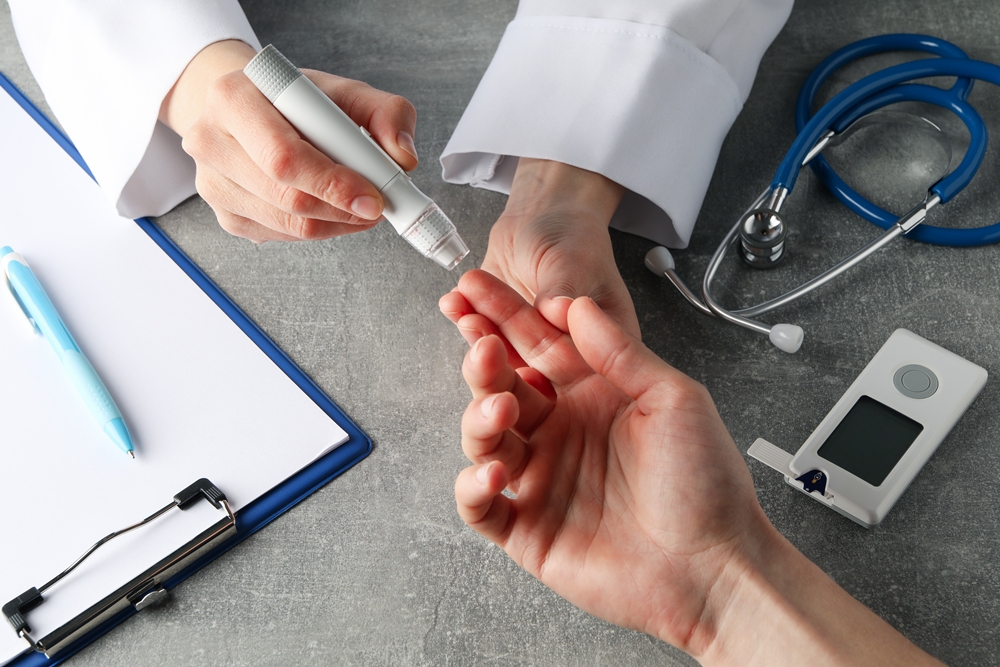
The longer someone has type 2 diabetes, the higher their cardiovascular disease risk, and changes in red blood cells may help explain it, new research suggests.
The study found red blood cells from patients with long-term diabetes harmed blood vessel function, while no such effect was seen in those newly diagnosed.
After seven years of follow-up, the blood cells of people initially diagnosed had developed the same harmful properties.
Zhichao Zhou, associate professor at Karolinska Institutet and lead author, said: “What really stands out in our study is that it is not only the presence of type 2 diabetes that matters, but how long you have had the disease.
“It is only after several years that red blood cells develop a harmful effect on blood vessels.”
Researchers at Karolinska Institutet in Sweden studied animals and patients with type 2 diabetes.
They identified microRNA-210, a small RNA that helps regulate gene activity, as a possible early biomarker of cardiovascular risk.
When its levels were restored in red blood cells, blood vessel function improved.
Eftychia Kontidou, doctoral student and first author, said: “If we can identify which patients are at greatest risk before vascular damage has already occurred, we can also become better at preventing complications.”
The researchers are now investigating whether the biomarker can be used in larger population studies.

Routine vaccines for adults may reduce dementia risk, a review of more than 100 million people suggests.
The research found both flu and shingles vaccines were associated with a lower risk in adults aged 50 and over.
The shingles (herpes zoster) jab was linked to a 24 per cent lower risk of any dementia and a 47 per cent lower risk of Alzheimer’s disease.
A joint Italian-Canadian neuroscience review points to a pattern that public health experts say is hard to ignore, suggesting vaccines against common infections may offer long-term protection against the UK’s leading cause of death.
With an ageing population, about two million people are projected to be living with dementia in the UK by 2050.
Prof Sir Andrew Pollard is director of the Oxford Vaccine Group and former chair of the Joint Committee on Vaccination and Immunisation.
He said: “Vaccines for pneumonia, shingles, and influenza in older adults have been shown to reduce the risk of serious infections and hospitalisation caused by these diseases.
“But studies in the past few years have raised the intriguing possibility that vaccination could also provide a welcome reduction in the risk of dementia, a disease which places a huge burden on society and the NHS.”
A separate large-scale randomised trial in Wales compared shingles vaccines Zostavax and Shingrix to address the “healthy user effect”, where people who get vaccinated tend to be more health-conscious. As both groups were vaccinated, this helped control for that bias.
The results showed those receiving the newer Shingrix vaccine had a substantially lower risk of developing dementia over subsequent years.
Dr Maxime Taquet, clinical lecturer in psychiatry at Oxford, who led that study, said: “The size and nature of this study makes these findings convincing, and should motivate further research.”


Finding could help identify diabetes patients at risk of vascular damage

Routine vaccines may protect against dementia, research finds

Food preservatives linked to increased diabetes and cancer risk, study finds

Weaker body clock linked to increased dementia risk

Agetech World’s latest innovation & investment round-up

Dark chocolate may slow down ageing

Study links body image issues in adolescence to adult depression

Commonly-prescribed drugs liked to 50% increased risk of dementia

Vaccine raises hope for million living with knee osteoarthritis

Study reveals habits that could lower brain age by eight years
 News4 weeks ago
Dark chocolate may slow down ageing
- Insights4 weeks ago
Study links body image issues in adolescence to adult depression
- News4 weeks ago
Commonly-prescribed drugs liked to 50% increased risk of dementia
- News4 weeks ago
Vaccine raises hope for million living with knee osteoarthritis
- Wellness3 weeks ago
Study reveals habits that could lower brain age by eight years
- News4 weeks ago
Exercise or risk ’10 years of ageing,’ weight loss jab users warned
- News3 weeks ago
Concurrent frailty and depression likely boost dementia risk in older people, study finds
- News3 weeks ago
Loss of confidence in midlife linked to dementia


