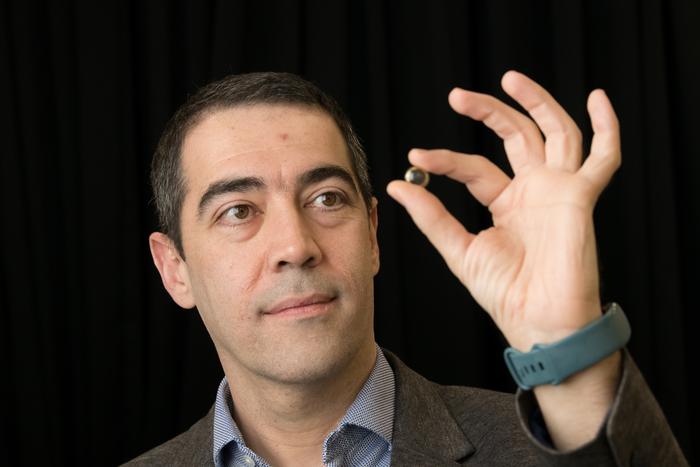
Researchers in the UK and Turkey have developed a contact lens which can detect changes in eye pressure which signal possible glaucoma.
The condition occurs when the optic nerve becomes damaged, usually by a build-up of fluid in the front part of the eye which increases pressure inside the eye – known as intra-ocular pressure (IOP).
The new contact lenses contain micro-sensors that monitor changes in IOP over a period of several hours, sending the data collected wirelessly so it can be analysed by an ophthalmologist and a diagnosis given.
The research was carried out by Professor Hamdi Torun, of Northumbria University; and Professors Günhan Dündar and Arda D. Yalcinkaya, of Boğaziçi University, in Istanbul.
Professor Torun said: “Intra-ocular pressure, or IOP, can vary greatly over a 24-hour period, so it is important to monitor the patient either at intervals or ideally continuously for a whole day to get the best insight into the health of their eyes.
“The benefit of the contact lenses we have developed is that once placed in the eye, the patient can then go about their day as normal while their IOP measurements are recorded and sent to a doctor for analysis once the 24-hour period of testing is complete.”
The new system was tested with six healthy volunteers, during which time they were asked to drink 1.5 litres of water and lie flat to intentionally increase their IOP levels.
While this is not the first time contact lenses have been developed to measure IOP, previous products have used an electrically-active silicon chip, which results in a thicker, less comfortable lens.
The chip also makes the lenses less flexible and can restrict vision, making it more difficult to carry out daily activities.
The GlakoLens contact lenses use an electrically passive sensor embedded in a disposable soft contact lens, and a wearable electronic readout system to collect, store and process the data.
This makes the lens more comfortable and allowing the patient to go about their day as normal.
As well as diagnosing glaucoma, there is also potential for the lens to be used to detect other health conditions by measuring glucose, lactic acid and other molecules present in eye.
Having determined that the technology works successfully, the researchers now plan to carry out a further study with a larger group of participants, which will take place over the next year.
The technology will then be made commercially available through their spin-off company, GlakoLens.
Professor Torun added: “We believe this technology has huge potential and could not only save the sight of patients in the early stages of glaucoma but also provide early diagnosis of other diseases in future.”
Image: Simon Veit-Wilson/Northumbria University