


Researchers in the US have moved one step closer to restoring partial vision in individuals who have lost their sight.
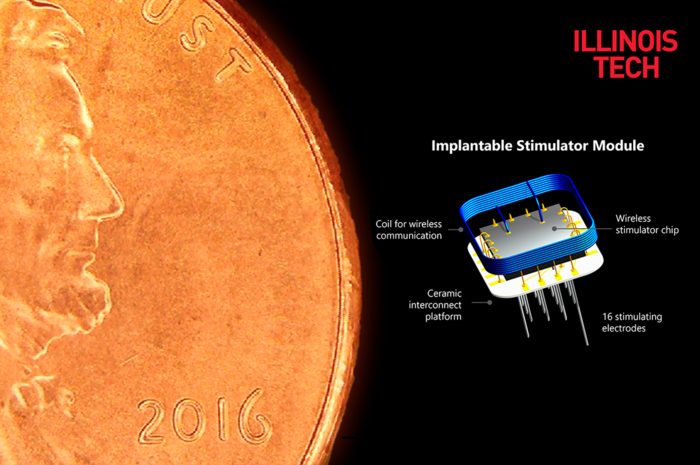
The scientists successfully implanted Intracortical Visual Prosthesis (ICVP), which bypasses the retina and optic nerves to connect to the brain’s visual cortex.
Many people with total blindness do not have intact retina or optic nerves but retain the visual cortex which enables people to see.
The researchers hope that their implant will partially restore communication between the brain and the eyes.
Study lead Philip R. Troyk—executive director of the Pritzker Institute of Biomedical Science and Engineering at Illinois Institute of Technology, professor of biomedical engineering, said:
“This is an incredibly exciting moment, not just for the field of biomedical engineering, but more importantly for people with blindness and their loved ones around the world.”
The surgery is part of a Phase I Feasibility Study of an Intracortical Visual Prosthesis for People With Blindness.
The milestone is the culmination of more than 30 years of work by researchers at Illinois Institute of Technology.
Neurosurgeons at Rush University Medical Center implanted 25 stimulators with a total of 400 electrodes in an individual with blindness.
The clinical phase will test whether the prosthesis will improve participants’ ability to perform basic, visually-guided tasks, with testing due to commence within four to six weeks.
Janet P. Szlyk, President and CEO of The Chicago Lighthouse, said:
“For people who are completely blind, gaining even a little bit of light perception can make a huge difference.
“The findings from this research will help pave the way for other groundbreaking advancements in blindness research and vision restoration.”
Image: Illinois Institute of Technology