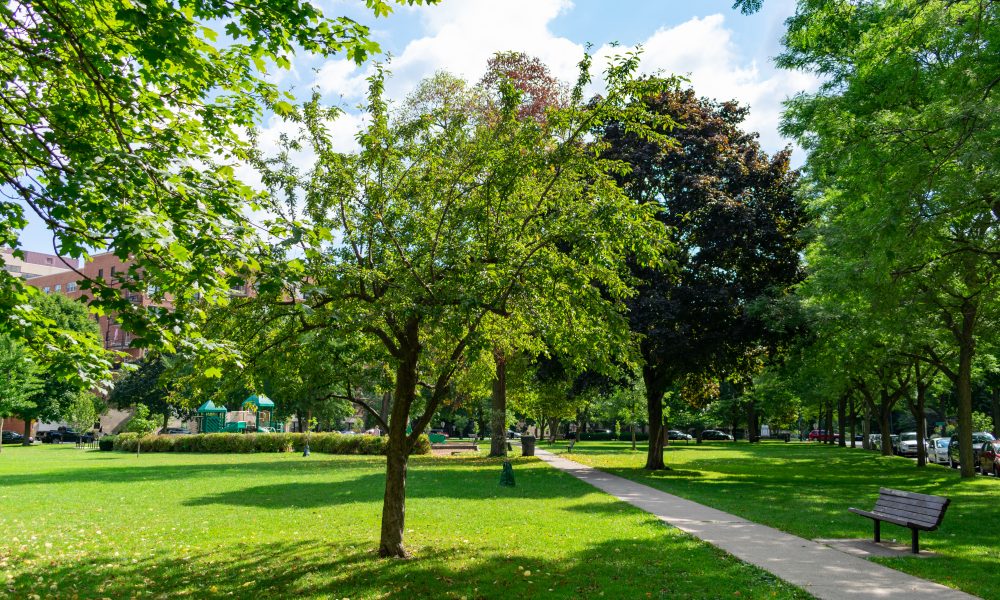
Even small differences in the availability of urban green and blue spaces may be associated with better mental and physical health in older adults, a Washington State University study has revealed.
The study’s findings showed that having just 10 per cent more forest space in a person’s residential ZIP code was associated with reduced serious psychological distress, which covers mental health problems that require treatment and interfere with people’s social lives, work or school.
Similarly, a 10 per cent increase in green space, tree cover, water bodies or trail length lowered the chance that older people reported their general health as poor or fair.
First study author Adithya Vegaraju is a medical student in the WSU Elson S. Floyd College of Medicine.
The researcher said: “Our findings suggest that loss of our urban green and blue spaces due to rapid urbanisation may not just have an environmental impact but could have a public health impact as well.”
Published in the journal Health & Place, the study is based on health survey data from more than 42,000 adults aged 65 and older who lived in urban areas of Washington state between 2011 and 2019.
In thee analysis, the researchers related survey respondents’ general and mental health outcomes to different measures that quantified access to green and blue spaces, such as forests, parks, lakes and rivers, within their residential ZIP codes.
Close to 2 per cent of respondents showed signs of serious psychological distress and 19 per cent reported having fair or poor general health.
These findings looked only at the relationship between serious psychological distress and distance to the closest green and blue space.
In the final published version of their study, the researchers looked at several additional measures, including the percentage of green space, tree canopy, forest area and open space within ZIP codes as well as the length of trails.
The team also expanded their analyses to examine how these measures related to self-rated general health and to account for differences in survey respondents’ demographics, such as race and education level.
Though other studies have looked at how proximity to nature might impact health, Vegaraju said this study is one of the first to look at this relationship in older adults in the US.
Older people are particularly vulnerable to mental health issues such as depression, which has been shown to increase the risk of cognitive decline and dementia.
This group is also less likely to receive treatment to manage their mental health conditions.
Vegaraju said: “Older adults with depression, anxiety or mental health issues are known to be more resistant to medical interventions or talk therapy, which are the go-to treatments for these conditions.
“If exposure to green or blue spaces could help prevent, delay or even treat poor mental health in older adults, we need to look at that more closely as a way to improve mental health outcomes in this population.”
The researcher said that one potential solution could involve nature prescriptions, a growing trend that involves healthcare providers giving patients written recommendations to spend time outdoors.
Senior study author Solmaz Amiri is now looking to study the possible link between nature exposure and cognitive decline, which can be an early sign of Alzheimer’s disease or dementia.
Amiri is a research assistant professor in the WSU College of Medicine and a researcher in the Institute for Research and Education to Advance Community Health (IREACH).
She said: “It is thought that exposure to green and blue spaces could help slow cognitive decline.
“What we would like to know is if green and blue space exposure can influence dementia directly or whether it can do so by reducing mental health issues that may lead to cognitive decline.”
Ultimately, the researcher hopes this research will help resolve health inequities among older adults from lower socioeconomic backgrounds, which may be tied to unequal access to green and blue spaces in the urban areas where they live.