


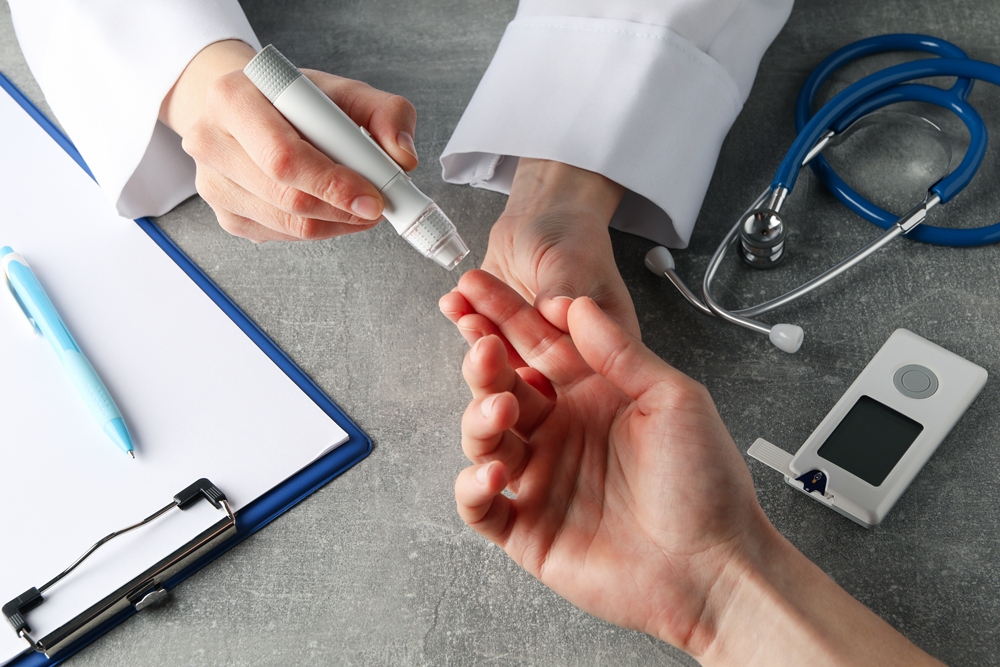
An at-home test could spot Alzheimer’s risk early by combining an online brain assessment with a finger-prick blood test, a study suggests.
The test looks for blood markers linked to the disease and includes online checks of abilities linked to memory, attention and decision making.
Researchers said the approach could help identify people who may need further assessment, although larger and more diverse studies are still needed.
Prof Anne Corbett, from the University of Exeter Medical School, said the work built on previous research showing the effectiveness of a finger-prick test.
She said the biomarkers and brain tests together provide “a potential way to predict risk of dementia”.
Prof Corbett said the approach had the potential to effectively screen people without the need for a clinic visit or complex tests.
“It would ensure the people at highest risk could be prioritised for monitoring and diagnosis, unlocking the best support and treatment for those that need it most,” she added.
In this study, the blood test looked for p-tau217 and GFAP, which are linked to Alzheimer’s and brain decline.
More than 170 people were involved in the study.
They submitted a blood test and also completed online brain tests.
Prof Clive Ballard, who was also involved in the study, said almost one million people in the UK are estimated to have dementia, yet only a small proportion of those with the earliest signs of brain decline receive specialist evaluation.
“Almost a million people in the UK are estimated to have dementia, yet at the moment, only one in 1,000 people with the earliest signs of brain decline receives a specialist evaluation,” he said.
He said the combination test could offer a cost-effective and straightforward way to identify large numbers of people at risk of Alzheimer’s.
Prof Ballard also urged over-40s to join the online Protect study, which involves more than 30,000 adults taking regular tests for abilities linked to memory, attention and decision making.
Dr Sheona Scales, research director at Alzheimer’s Research UK, said the test showed great potential and that larger and more diverse studies were now needed.
“Finger-prick blood tests could revolutionise dementia diagnosis – they offer a low-cost, scalable way to identify people who may be at higher risk of Alzheimer’s disease and who should be offered further checks,” she said.
“The results suggest the test can detect changes in a blood biomarker linked to Alzheimer’s disease and cognitive difficulties, with a high level of sensitivity.
“As an early step in the diagnostic pathway, this kind of self-administered test could give reassurance to some people, while helping others move more quickly towards follow-up tests and support.”
 Garlic could help preserve muscle strength in old age - study


