


AI-powered blood test identifies four dementia-linked brain diseases with 92.3% accuracy
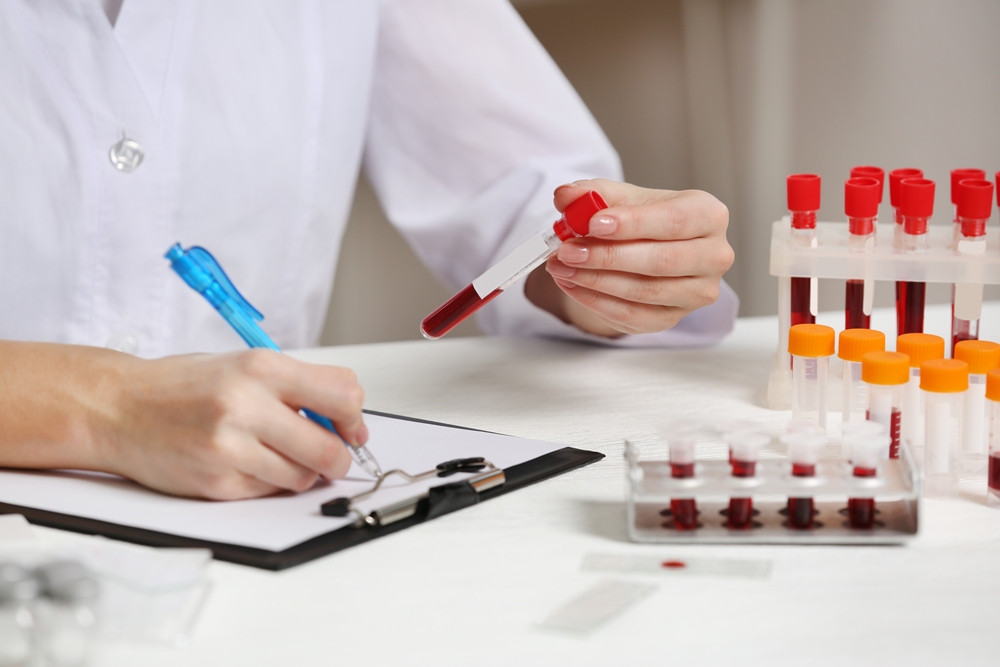
An AI blood test may help identify four dementia-linked brain diseases with 92.3 per cent accuracy, researchers say.
Many people living with dementia never receive an accurate diagnosis, partly because Alzheimer’s disease, Parkinson’s disease and related conditions can be hard to tell apart and often occur together.
The tool is designed to distinguish Alzheimer’s disease, Parkinson’s disease, frontotemporal dementia and dementia with Lewy bodies from each other and from healthy brain ageing.
It may also detect when more than one disease process is happening at the same time, a common problem that can complicate treatment.
Carlos Cruchaga, the Barbara Burton and Reuben M Morriss III professor in the department of psychiatry at WashU Medicine and senior author of the paper, said: “Right now, many patients get labelled with a single diagnosis of, say, Alzheimer’s or Parkinson’s, but in reality their brains often show a mixture of disease injuries. Current tools simply weren’t designed to capture that.”
“Our goal was to build a test that doesn’t just say ‘yes’ or ‘no’ to one disease but instead gives an indication of all the major neurodegenerative diseases happening in that person.
“That’s what you really need for precision diagnosis and, ultimately, precision treatment.”
Researchers at Washington University School of Medicine in St Louis developed the AI-based classifier using blood proteins that reflect disease-related changes in the brain.
The test looks at 15 proteins in the blood. These include markers associated with Alzheimer’s disease, as well as proteins linked to synapse and nerve damage and inflammation. Synapses are the connections that allow brain cells to communicate.
The classifier was trained and tested using blood protein data from more than 3,200 people, including those with clinical diagnoses of Alzheimer’s disease, Parkinson’s disease, frontotemporal dementia, dementia with Lewy bodies and cognitively normal controls.
Its performance was then checked in a separate group of 225 people who had cognitive assessments during life and whose brains were examined after death.
The classifier’s outputs closely matched the pathological burden found in brain tissue and the clinical presentation of dementia during life.
The tool achieved overall diagnostic accuracy of 92.3 per cent in identifying cases where a person had been diagnosed with a single neurodegenerative disease.
It also showed promise in cases where the diagnosis had been uncertain or evolving.
In people with mild cognitive impairment, and in those with other or ambiguous neurological diagnoses, the model’s Alzheimer’s prediction closely matched the burden of amyloid plaques found in brain tissue after death.
Amyloid plaques are clumps of protein in the brain that play a role in cognitive decline.
The model also identified Alzheimer-like biological changes in people who had been diagnosed with Parkinson’s disease during life but later developed dementia, suggesting it may help detect mixed disease processes that standard clinical assessment can miss.
The test is not yet ready for clinical use.
Researchers said it needs further validation in larger and more diverse populations, while studies tracking patients over time will be needed to assess how well it predicts disease progression and guides treatment.
In research, the approach could help identify the right patients for clinical trials targeting specific disease pathways and support large-scale population studies without relying on costly brain scans or spinal taps.
In clinical settings, it could help doctors decide which patients need further follow-up, which specialists they should see and which treatments or preventive strategies may be most effective.
 Two Alzheimer's breakthroughs could diagnose condition years earlier, experts say


