Markets & Industry
FDA ruling brings boom for global hearing aids market
The global hearing aid market is predicted to grow to USD$13billion by 2028.


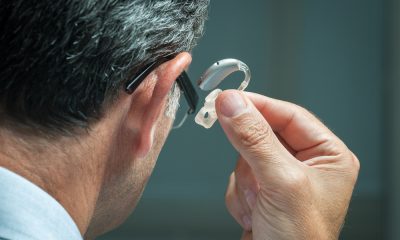
The global hearing aid market is predicted to grow to USD$13billion by 2028, according to market experts, following an FDA green light for over-the-counter devices.
A new report published by Vantage Market Research predicts significant growth for the global hearing aids market.
It comes following a new ruling from the US Food and Drugs Association in August to establish a new category of over-the-counter (OTC) hearing aids, allowing consumers with mild to moderate hearing loss to purchase hearing devices directly from stores and online retailers.
Since the ruling a number of companies have entered the market.
According to Vantage, recent analyses value at USD$9.9billion in 2021, set to rocket up to USD 13.0 Billion by 2028, at a CAGR of 4.7% during the forecast period from 2022 to 2028.
The research methodology includes primary and secondary studies as well as expert panel reviews. Secondary research sources include press releases, annual reports, and academic articles.
The impact of hearing loss
It is estimated that those affected with hearing loss begin to notice signs in their early 50s yet very few receive treatment. Studies show hearing loss has an impact on other health comorbidities, including risk of falls and an increased sense of social isolation.
Birdsong, a provider of hearing benefits, is focused on working with health plans and hearing care providers to help the more than half (51%) of all adults who reported having hearing problems, as surveyed in the American Speech Hearing Association (ASHA) poll.
This week it announced its partnership with Convey, a specialised healthcare technology and services company, with the aim of increasing consumers’ access to quality hearing care professionals, services, and devices.
Through this partnership Birdsong will deliver hearing benefit services including a nationwide credentialed provider network, preventive analysis and outreach for health plan members, a contact centre, claims operation, and care management. Birdsong and Convey also provide OTC hearing devices.
Sharon Fletcher, Birdsong’s president and CEO, shared, “Hearing care is essential, contributing to a quality lifestyle. Birdsong Hearing Benefits is pleased to be partnering with Convey Health, the leading OTC service provider. In this relationship, Birdsong will provide quality hearing service to Convey payers who desire to receive hearing benefits for their members.”
Jonathan Starr, senior vice president at Convey, added: “Delivering innovative solutions to support access to improved hearing solutions aligns to Convey’s strategy in expanding our supplemental benefits program.
“This new ruling will allow individuals greater options when it comes to improving their hearing. The Birdsong team and their leading experts in hearing benefits and hearing aid devices are at the forefront of effectively addressing this new ruling and are best suited to guide our clients and their members to the appropriate hearing solution.”
.




A French biotech has raised €12m to test whether GLP-1 drugs can modify osteoarthritis progression.
The funding will advance 4Moving Biotech’s lead programme, 4P004, toward a phase 2a proof-of-concept readout in knee osteoarthritis, a joint disease that causes pain and stiffness.
Despite affecting more than 600 million people worldwide, no therapy approved in Europe or the US has yet been shown to slow or modify disease progression in osteoarthritis.
4Moving Biotech is testing whether GLP-1 receptor agonists, drugs best known for diabetes and obesity, can succeed where others have fallen short.
“With this closing in place, we are well equipped to reach the next value-creation milestone by delivering robust phase 2a data and reaching a proof-of-concept inflection point,” said Luc Boblet, chief executive of 4Moving Biotech.
Rather than systemic administration, the company is testing whether GLP-1 biology can be made relevant to osteoarthritis by acting directly in the joint, targeting local inflammation and tissue responses that systemic approaches have repeatedly failed to address.
“By acting directly in the joint, 4P004 tackles pain, inflammation and tissue damage through GLP-1-mediated pathways,” said professor Francis Berenbaum, the company’s chief medical officer.
The study is designed to assess “dual efficacy: symptom relief and synovial health improvement via contrast-enhanced MRI,” which images the joint lining, with topline results expected in the second half of 2026.
The round was secured from private investors and family offices investing directly into 4Moving Biotech, a subsidiary of 4P-Pharma, and combines equity with loans, a structure the company says is aligned with long-term value creation.
It follows a €7.6m France 2030 i-Démo grant awarded last year and coincides with the transatlantic expansion of the INFLAM-MOTION phase 2a study to the US.
Founded in 2020 as a spin-off from 4P-Pharma, 4Moving Biotech has now raised around €30m in total, combining private capital with non-dilutive public funding.
The broader landscape for disease-modifying osteoarthritis drugs offers little room for overconfidence.
A 2025 review of phase two and three osteoarthritis trials found that while “many DMOADs have progressed to clinical trials, very few have made a significant impact and none have been approved for clinical use.
Reviewing eleven candidates tested between 2010 and 2024, including small molecules, biologics and cell or gene-based therapies, authors conclude that failure has been driven less by any single mechanism than by the difficulty of demonstrating truly disease-modifying benefit.
Several programmes reported statistically significant effects on either pain or joint structure, but rarely both.
The review notes that “the clinical relevance of a marginal increase in one without the other remains unclear,” warning that structural effects without symptom relief may be clinically meaningless, while pain relief without structural protection could even accelerate disease progression.
Over the past decade, major programmes at Pfizer, Eli Lilly, AbbVie, GlaxoSmithKline and Sanofi have been discontinued or deprioritised after failing to deliver regulator-acceptable evidence of disease modification.
In 2020, Unity Biotechnology reported phase two data showing that its senolytic candidate UBX0101, developed as a disease-modifying therapy for knee osteoarthritis, failed to deliver clinically meaningful improvements in pain or joint structure.
Unity subsequently discontinued its osteoarthritis programme, exited the field entirely and ceased operations in 2025.
The phase 2a readout will be the point at which the GLP-1 approach in osteoarthritis either earns its next chapter or joins a long list of programmes that fell short.


French biotech raises €12m for osteoarthritis trial

Test predicts dementia risk years earlier

Harbor Health acquires dementia care startup Rippl

Scottish Medicines Consortium rejects Alzheimer’s therapy

Two teas or coffees a day could lower dementia risk, experts say

Interview: GlycanAge launch first hospital-based tests

Shingles vaccine may slow biological ageing in older adults

Older male athletes may face increased risk of serious heart problems during exercise

Thousands of men in England to be offered life-extending prostate cancer drug

Nanoparticles target disease proteins in dementia
 News4 weeks ago
Interview: GlycanAge launch first hospital-based tests
- News3 weeks ago
Shingles vaccine may slow biological ageing in older adults
- News4 weeks ago
Older male athletes may face increased risk of serious heart problems during exercise
- Wellness3 weeks ago
Thousands of men in England to be offered life-extending prostate cancer drug
- News3 weeks ago
Nanoparticles target disease proteins in dementia
- News3 weeks ago
L-Nutra raises US$36.5m in series D funding
- News4 weeks ago
Blood sugar spike after meals may increase Alzheimer’s risk
- Insights4 weeks ago
Study reveals why memory declines with age