Insights
Dentordu: Digital dentistry for healthier ageing


As people live longer, the conversation around ageing is shifting.
It’s no longer just about adding years, but about staying healthy, functional and independent for as long as possible.
In that context, oral health is gaining long-overdue attention.
Growing evidence links dental health to heart disease, cognitive decline and chronic inflammation, placing dentistry firmly within the wider picture of healthy ageing.
Dentordu Oral and Dental Health Polyclinic in Izmir, Turkey, is part of this shift.
By combining advanced digital dentistry with a preventative mindset, the clinic focuses on helping patients maintain strong, functional oral health well into later life, rather than simply reacting to problems as they arise.
The mouth–body connection
Conditions such as gum disease are now associated with increased risks of cardiovascular disease, diabetes complications and even dementia.
Persistent oral inflammation doesn’t stay confined to the mouth – it can affect the entire body.
For patients interested in preserving their healthspan, dental care becomes just as important as nutrition, movement and sleep.
Dentordu’s approach reflects this reality.
Treatments are designed not only to restore appearance, but to protect function, reduce inflammation and support long-term wellbeing through careful prevention and high-quality restorative work.
Planning ahead: The UK pre-diagnosis office
Preventative care works best when it starts early.
To make that easier for British patients, Dentordu has opened a pre-diagnosis office in the UK.
This allows patients to begin their treatment journey locally, with in-person consultations and clear planning before travelling to Turkey.
Patients can discuss their dental history, future goals and treatment options in detail, without pressure.
By the time they arrive in Izmir, they already have a clear plan and a strong understanding of how their dental care fits into their broader health priorities.
A leader in tech innovation
Technology plays a central role at Dentordu, but it’s used with a clear goal: precision, comfort, and durability.
3Shape intraoral scanners replace traditional impressions with fast, highly accurate digital scans, improving comfort and reducing the risk of poor-fitting restorations.
CAD/CAM systems and an in-house digital lab allow crowns and restorations to be designed and produced on-site, often on the same day.
AI-supported patient management systems help ensure continuity of care, from first contact through follow-ups years later.
Ivoclar zirconia materials are chosen for their strength, aesthetics, and biocompatibility – an important consideration as sensitivity and inflammatory responses become more common with age.
The result is dental work designed to last, both functionally and biologically.
Same-day treatment, less disruption
Time matters, especially for patients who are intentional about how they manage their health and travel.
Dentordu’s same-day dentistry reduces the need for repeated appointments and temporary solutions.
Premium zirconia restorations can often be completed within hours rather than weeks.
For international patients, this efficiency means fewer clinic visits and more time to focus on recovery, daily routines, or other health priorities.
Transparency for long-term trust
Dentordu places a strong emphasis on transparency, from treatment options and materials to timelines and outcomes.
This openness helps patients make informed decisions and builds trust well before treatment begins.
That trust is essential for long-term oral health maintenance, especially as needs evolve over time.
Dentistry as part of whole-person care
At its core, Dentordu’s philosophy is simple: dental care should support the whole person.
Function affects nutrition. Aesthetics influence confidence and mental wellbeing. Chronic oral inflammation can impact systemic health.
By combining advanced tools with a human-centred approach, the clinic positions dentistry as a meaningful part of lifelong health – not a stand-alone service.
Discover more and explore real patient experiences by following Dentordu on:


Ageing should be central to Parkinson’s research, experts argue, saying it has been sidelined as studies focused on genetics and single disease mechanisms.
Parkinson’s is a progressive neurological condition that affects movement and can cause tremors, stiffness and balance problems.
It affects about one million people in the US and more than ten million worldwide, with numbers rising as populations age, particularly in developed countries.
Only around 10 per cent of cases are directly linked to family history.
Most are thought to arise from a mix of advancing age, genetic vulnerability, environmental exposures and lifestyle factors.
A team led by Dr Julie Andersen, a professor at the Buck Institute for Research on Aging in the US and senior author of the study, says many age-related brain changes resemble those seen early in Parkinson’s.
These include mitochondrial dysfunction, where the cell’s energy-producing structures stop working properly; impaired autophagy, the process cells use to clear damaged components; increased inflammation; and cellular senescence, where cells stop dividing and release harmful substances.
“Many age-related changes in the brain mirror those seen in the early stages of Parkinson’s,” she said.
“The research community needs to approach this disease holistically and ageing is the place to start.”
“When we reviewed studies that include ageing, we concluded that the influence of ageing on Parkinson’s is subtle, emerges gradually and likely interacts synergistically with other contributing factors,” Andersen added.
The researchers suggest this gradual, cumulative effect may help explain why Parkinson’s usually develops later in life and why it varies so widely between individuals.
Andersen and colleagues have also produced a research road map, including guidance on mouse models for experiments where ageing is treated as a central part of how Parkinson’s develops.
The plan also aims to standardise methods, encourage collaboration between laboratories and make better use of limited research resources.
“As a group we recognise that the complexity and diversity of Parkinson’s models, combined with the lengthy nature of ageing studies, present challenges that require substantial resources and innovative approaches,” Andersen said.
“Our work is aimed at making it easier for researchers to include ageing as a critical element of their efforts to tackle this disease.”

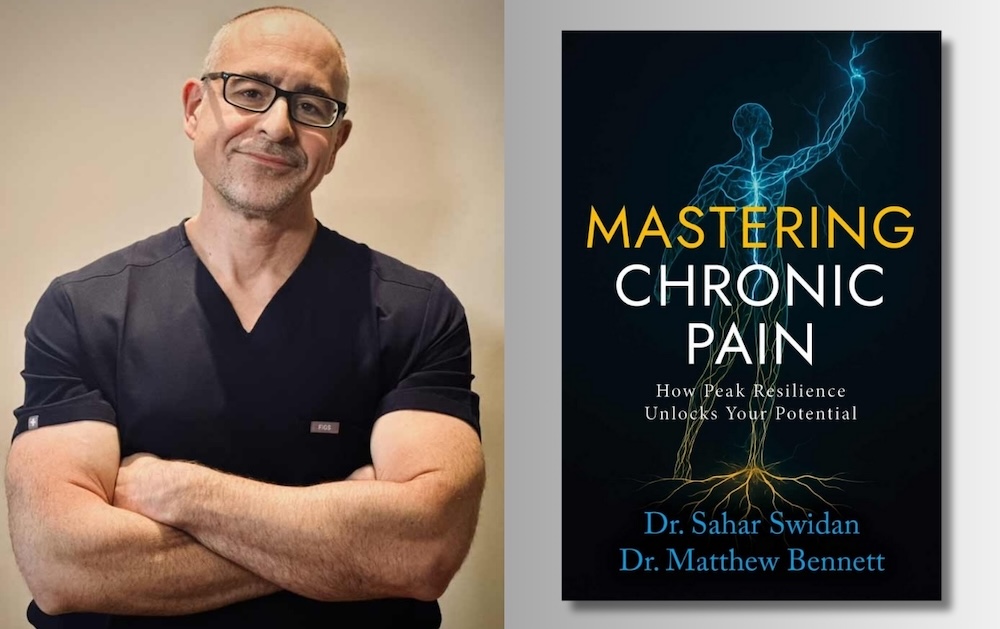
Harnessing the multi-dimensional capabilities of the human body is key to overcoming chronic pain and boosting longevity, say the authors of a new book.
While the primary focus of established health care systems is to target pain points through medication or surgery a more holistic approach is emerging, as US chronic pain doctor Matthew Bennett explains.
Published late last year by Dr Bennett and colleague Dr Sahar Swidan’s book, Mastering Chronic Pain: How Peak Resilience Unlocks Your Potential offers grounded insights into pain resolution.
Speaking to Agetech World from his New York base he said: “I’ve been treating patients in chronic pain for over 20 years.
“And, it becomes obvious that while some pain is very responsive to simple interventions, like a nerve block or a surgery, there’s a large number of people which that does not move the needle for.
“We used to look at it like, ‘Hey, the MRI shows this one spot that’s pushing on this one nerve. If we can take that spot off that nerve, everything’s going to be better’.
“And, that just doesn’t always play out that way. It’s become apparent that there are a lot of situations where the problem is more systemic.
“It’s really more of a metabolic problem, and pain is the expression of these system failures.”
‘Fight or flight’
The upstream drivers of acute pain can be numerous as Dr Bennett explains: “You can take as much pressure as you want off of nerves, but if your inflammatory system isn’t fixed, if the neurological system isn’t fixed, if your autonomic nervous system – meaning your fight-or-flight versus your rest-and-relaxation – isn’t balanced, if your gut biome is off, if your sleep is off – a lot of these problems aren’t going to improve.”
Key elements in developing a longevity-focused healthpsan – devoid of chronic pain and opioids – are simple, every day measures, focused on movement, sleep and breathing.
This includes developing the right muscles to create a ‘good deep core musculature’.
He continued: “An even bigger one is the way people breathe – the way they use their diaphragm.
“The diaphragm is a great big muscle that controls the deep core part of the spine. When the diaphragm’s not working correctly, the whole core musculature isn’t working right.
“You can’t get that stability in the lower spine, so other muscles jump in and try to do the work for you. That causes downstream problems.
“You need someone getting to that root cause,.. (and) we teach people how to do that, and they’ll have big breakthroughs.”
He continued: “Sleep is a big problem in people with chronic pain. There’s a lot of healing that occurs with deep sleep.
“Unfortunately, in a lot of pain states, sleep gets disrupted, and people can’t get into deep sleep, so the brain can’t clear itself of the byproducts of metabolism; that glymphatic system doesn’t work.
“Poor sleep also interferes with endocrine connectors; growth or sex hormones can be depleted. Obstructive sleep apnea can play a huge role. There’s just a big correlation between sleep disorders and chronic pain.”
Seeking calm
These key elements of Dr Bennett’s work – which has been described as ‘biopsychosocial’ – come concomitant with a keen focus on nervous systems, chronic inflammation and neuroplasticity.
Dr Bennett, co-founder of NoceViva, continued: “When we think about neurologics, one of the things that’s very far upstream of a lot of health is the balance between the fight-or-flight system and the rest-and-relaxation system – that autonomic nervous system.
“All of these things are ‘two-way streets’ with pain; meaning the pain can cause the dysfunction, and the dysfunction can cause the pain; it becomes this feedback cycle where things get entrenched in a bad loop.
“So, balancing that autonomic nervous system is a really helpful upstream fix to make. Simple things like breathwork. Some people do well with meditation.
“Some people do well with making sure they’re involved in hobbies. These are things that can help just calm that fight-or-flight system down.”
Nerves & neuroplasticity
Allowing ourselves to adjust to emerging health challenges is achievable in the right settings and with the right approach.
He continued: “The body’s nervous system has the ability to change. And it can change based on various inputs.
“The nervous system can become increasingly sensitised, or it can become de-sensitised. And so that’s one of the bigger things that we see in the chronic pain state, is this sensitisation that comes along with it.
“This neuroplasticity can make the nerves in the extremities more sensitive.
“It can also make the nerves in the central nervous system more sensitive – so nerves in the spinal cord, or even nerves in the brain can become hyper-sensitised – so they’re triggering more of a pain response in the person.
“But the same thing that can cause the system to go in what we would consider a bad direction, where it gets more sensitive, the neuroplasticity can actually become undone, and you can make the nerves less sensitive.”
AI to boost lifespan?
Looking ahead Dr Bennett foresees a future where a deeper understanding of the functional pathways of pain, combined with AI, stem cell therapies and regenerative biologics will all speak to a future of greater longevity for mankind.
“I think the more attentive we are to the root cause, the more attentive we are to functional pathways – when we start thinking about how the system really works? And we get out of just an algorithmic approach to things.
“We still have quite a ways to go. I think we are making progress. There was a time where we would not be thinking about any of this.
“I think everyone’s excited about what AI will bring. And are we going to be able to make some big steps? I think we’re able to intervene on a genetic level at this point.
“Will we be able to do it well enough to change lifespan? I would guess, yes, but by how much? I don’t know!”


PrimeC shows survival benefit in ALS trial

Study aims to improve recovery after cancer treatment in older people

Korsana raises US$175m for Alzheimer’s therapy

Agetech World innovation & investment round-up

GSK partners on Alzheimer’s stem cell models

Nanoparticles target disease proteins in dementia

L-Nutra raises US$36.5m in series D funding

Interview: Dr Annu Navani on biotechnology and ‘the power to recode life itself’

Gap partners with Spear Bio on Bio-Hermes-002

Dentordu: Digital dentistry for healthier ageing
 News4 weeks ago
Nanoparticles target disease proteins in dementia
- News4 weeks ago
L-Nutra raises US$36.5m in series D funding
- Insights3 weeks ago
Interview: Dr Annu Navani on biotechnology and ‘the power to recode life itself’
- Technology4 weeks ago
Gap partners with Spear Bio on Bio-Hermes-002
- News4 weeks ago
BioAge expands drug into diabetic macular oedema
- News3 weeks ago
Study shows clear link between CTE and dementia risk
- News4 weeks ago
USC funds AI projects for Alzheimer’s trials
- Wellness3 weeks ago
ATW’s research round-up: new Alzheimer trigger identified, UK university targets longevity. fibre not protein?…and more