


Healthtech company Quibim has secured US$50m financing that will support the acceleration of the company’s AI-driven imaging solutions and its product pipeline.
Quibim aims to provide a complete, non-invasive view of every tissue point in the human body by developing foundational AI models for medical imaging.
The company applies these models to MRI, CT, and PET scans to extract data that characterises phenotypes and predicts outcomes in fields such as oncology, immunology, neurology, and metabolic disorders.
The company says that this approach is a step towards creating human digital twins – digital replicas that monitor health, improve patient groupings, enhance drug development success rates, and allow treatment testing prior to clinical application.
Currently, Quibim is developing digital twins at the organ and lesion level, with FDA-cleared solutions including QP-Brain, QP-Prostate, and QP-Liver.
As the volume of whole-body scans grows, the company plans to extend its models to analyse the entire body, integrating imaging technologies, computing, and AI in the process.
Having experienced a large growth in the number of patients analysed by its products over the past year, patient analysis has surged by 168 per cent quarter-on-quarter.
To date, the company has over 170 installations worldwide, including institutions such as Mass General Brigham and Stanford, and regulatory clearances across the US, EU, UK, and other regions.
The new financing will also drive Quibim’s expansion into the US strong, building on its success in Europe, through strategic collaborations with hospitals and pharmaceutical companies.
AgeTech World speaks to Quibim CEO and co-founder, Dr. Ángel Alberich-Bayarri, to find out more.
How will Quibim’s US$50m Series A financing round accelerate the company’s mission, particularly in expanding its AI-driven imaging solutions and global reach?
The $50 million Series A funding will enable us to expand our AI-driven imaging solutions by advancing our foundational AI models and increasing our product pipeline. This offers us the opportunity to grow internationally at a faster pace.
This includes many markets, but we are seeing particular traction in the US, where we are establishing a strong presence through strategic collaborations with hospitals and pharmaceutical companies. The funding will also help us expand our US-based team and invest in computing infrastructure to support our growing AI capabilities.
It will also allow us to scale our AI-powered biomarkers, enhancing precision medicine in oncology, neurology, and metabolic disorders. In the medium to long term, this will facilitate the development of a human digital twin, which has the potential to transform healthcare by enabling more precise disease characterisation, patient stratification, and treatment optimisation.
Quibim’s AI-driven imaging technology leverages MRI, CT, and PET scans to extract actionable insights. Can you explain how your AI models work, what makes them unique, and how they contribute to the development of human digital twins for disease prediction and treatment optimisation?
Quibim’s AI models analyse imaging data from MRI, CT, and PET scans to identify and quantify disease-related biomarkers. These models integrate radiomics (the extraction of high-dimensional imaging features) with deep learning algorithms to detect patterns and predict clinical outcomes.
What makes Quibim’s approach unique is its ability to generate high-fidelity imaging biomarkers that go beyond traditional imaging interpretation, offering insights into disease progression and treatment response. We’re also proud to say the models are trained on real-life scans, which contributes to their accuracy.
Our vision of human digital twins involves creating dynamic, AI-powered models of organs and lesions. These digital twins will help monitor health in real-time, improve patient stratification in clinical trials, and optimise treatment planning by predicting outcomes before actual interventions.
With the rise of digital twins and AI-driven diagnostics, how do you envision these technologies shaping the future of elderly care, including personalised treatment plans and preventative healthcare?
Digital twins and AI-driven diagnostics have the potential to transform elderly care by enabling real-time monitoring, predictive analytics, and personalised treatment plans. Using AI-powered imaging, healthcare providers can detect early signs of age-related diseases such as neurodegenerative conditions, metabolic disorders, and cancer.
This approach allows for timely interventions and more precise adjustments, reducing hospitalisation and improving quality of life. Furthermore, AI-driven diagnostics can support preventative healthcare by identifying at-risk individuals before symptoms manifest, guiding lifestyle modifications and targeted therapies to slow disease progression. This can give health- and social care systems that are currently overloaded and worried about the growing number of elderly people in the coming decades a much-welcomed respite.
Many age-related diseases, such as neurodegenerative conditions and metabolic disorders, require early intervention. How is Quibim’s AI-driven imaging advancing early diagnosis and improving long-term patient outcomes?
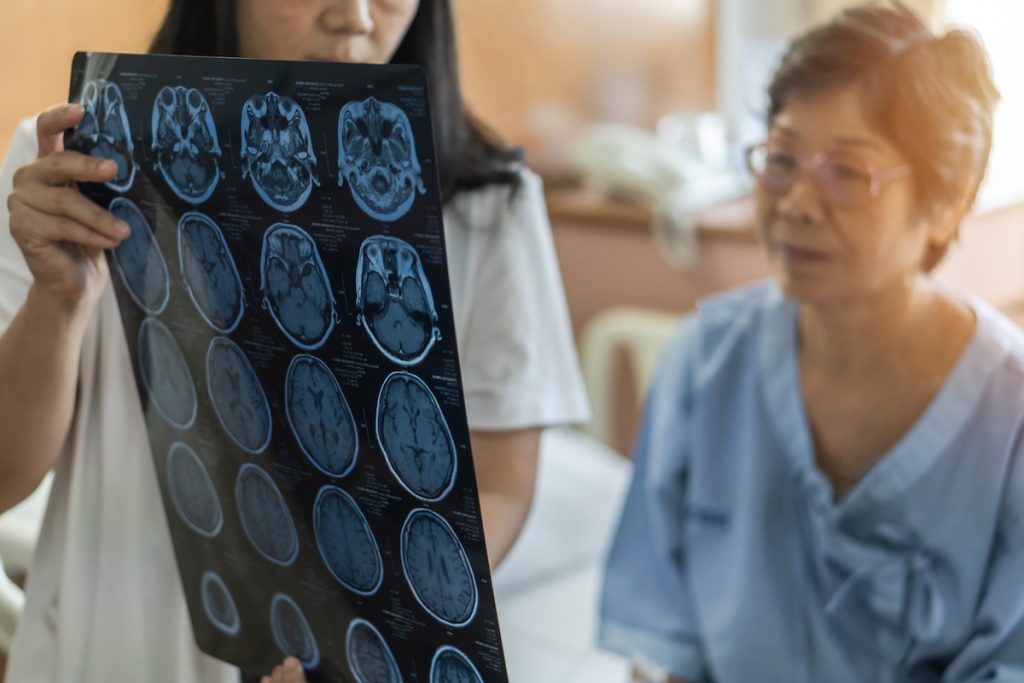
Our AI-driven imaging solutions enable the early detection of diseases by identifying subtle changes in tissue composition and structure that may not be visible to the human eye. For example, QP-Prostate accurately segments the prostate gland and seminal vesicles efficiently identifying prostate cancer lesions.
Similarly, QP-Brain quantifies early-stage neurological disease markers, such as brain atrophy and lesion formation, facilitating early intervention in conditions like Alzheimer’s disease. By providing clinicians with highly accurate imaging biomarkers, Quibim enhances the ability to diagnose diseases earlier, allowing for timely treatment decisions that can improve long-term patient outcomes.
Looking ahead, what role do you think AI-powered imaging will play in redefining ageing and longevity, and how is Quibim positioning itself at the forefront of this transformation?
AI-powered imaging is already playing a critical role in redefining ageing and longevity by enabling early detection, continuous health monitoring, and personalised therapeutic strategies. As these technologies become more advanced, AI will provide deeper insights into biological ageing, allowing for interventions that extend healthspan and delay age-related diseases.
Quibim is at the forefront of this transformation by developing AI models that can analyse entire-body scans, moving closer to the realisation of full-body digital twins. Through its partnerships with leading healthcare providers and pharmaceutical companies, Quibim is driving innovation in imaging biomarkers, paving the way for a future where AI-driven diagnostics support healthier ageing and improved longevity.