Independence
Newly approved Alzheimer’s drugs extend independent living


Two Alzheimer’s drugs that have been approved in the last two years by the US Food and Drug Administration (FDA) have been shown to extend independent living by months.
The drugs – lecanemab and donanemab – have been shown to slow the progression of Alzheimer’s disease in clinical studies. However, according to physicians who care for people with Alzheimer’s, many patients found it difficult to understand what the clinical trials results – presented as “percent decrease in the rate of cognitive decline” – meant for their own lives.
Now, researchers have devised a way to communicate the effects of taking the new Alzheimer’s medications in language that is accessible and understandable to patients and their families.
Using data on the natural history of the disease and the magnitude of the drugs’ effects as measured in clinical trials, the researchers calculated how many months of independent living an Alzheimer’s patient could expect to gain by undergoing treatment.
The benefits depended on the drug and the severity of the patient’s symptoms at the time treatment began. As a representative example, a typical patient who started treatment with very mild symptoms could expect to live independently for an additional 10 months if treated with lecanemab, or eight months with donanemab.
The study, carried out by Washington University School of Medicine in St. Louis, provides crucial information that can help patients and caregivers weigh the benefits against the costs and risks of treatment.
“What we were trying to do was figure out how to give people a piece of information that would be meaningful to them and help them make decisions about their care,” said senior author Sarah Hartz, a professor of psychiatry at WashU Medicine.
“What people want to know is how long they will be able to live independently, not something abstract like the percent change in decline.”
Alzheimer’s patients and their families are faced with the tough question of whether to undergo a treatment that will not make them better. It won’t even stop them from getting worse.
At best, treatment with lecanemab or donanemab could slow the inevitable cognitive decline that characterizes Alzheimer’s.
Add to this the facts that treatment is expensive, requires biweekly or monthly infusions, and carries risks such as brain bleeds and brain swelling that are usually mild and go away on their own but can, in rare cases, be life-threatening.
But just because the benefits are limited doesn’t mean they are not valuable to patients and their families.
“My patients want to know, ‘How long can I drive? How long will I be able to take care of my own personal hygiene? How much time would this treatment give me?’” said co-author Suzanne Schindler, an associate professor of neurology and a WashU Medicine physician.
“The question of whether or not these drugs would be helpful for any particular person is complicated and has to do with not only medical factors, but the patient’s priorities, preferences and risk tolerance.”
Living independently with Alzheimer’s disease
There are two critical inflection points on the continuum between independence and dependency. The first is the point where a person can no longer live independently because of an impaired ability to manage everyday tasks such as preparing meals, driving, paying bills and remembering appointments. The second point comes when a person can no longer care for his or her own body, and requires assistance with bathing, dressing and toileting.
To calculate the effects of treatment, Hartz and her colleagues first estimated when people could expect to lose each of the two kinds of independence if left untreated.
They analysed the experiences of 282 people who participated in research studies at WashU Medicine’s Charles F. and Joanne Knight Alzheimer Disease Research Center.
All participants met the criteria for treatment with the two new drugs, but hadn’t received them previously. The researchers also calculated how quickly symptoms progressed without treatment.
Using these data on independence and progression, combined with the reported effects of the two drugs, the researchers calculated the amount of time a person at each stage of the disease could be expected to live or care for themselves independently without treatment, and how this progression would compare to those who received treatment.
A typical person with very mild symptoms could expect to live independently for another 29 months without treatment, 39 months with lecanemab, and 37 months with donanemab.
Most people with mild symptoms as opposed to very mild symptoms were already unable to live independently at baseline, so for them the more relevant measure was how much longer they would be able to care for themselves.
The researchers calculated that a typical person at this stage of the disease could expect to manage self-care independently for an additional 26 months if treated with lecanemab, 19 months with donanemab.
This way of understanding the effects of the drugs could help patients and their families make decisions about their care, the authors said.
“The purpose of this study is not to advocate for or against these medications,” Hartz said.
“The purpose of the paper is to put the impact of these medications into context in ways that can help people make the decisions that are best for themselves and their family members.”



Eye-screening firm Forus Health has received a 21 per cent investment to scale its AI diagnostics across India and abroad.
Forus Health develops ophthalmic diagnostics — tools that detect eye disease — and “oculomics”, which uses eye images to flag wider risks such as diabetes or hypertension. Its devices have screened over 22 million people in more than 75 countries, and its AI-integrated platform has delivered comprehensive eye assessments to over five million patients.
The deal is a secondary transaction intended to support the scale-up of Forus Health’s AI eye-screening platforms and international deployment.
Inviga Healthcare Fund has acquired the 21 per cent stake, its second major investment after Mynvax in 2024, signalling support for India-built AI diagnostics in global markets.
Dr B. S. Ajaikumar, founder of Inviga Healthcare Fund and chair of HCG, said: “Forus Health embodies the Inviga ethos: clinically strong, technologically deep, socially impactful, growth oriented, profitable. This investment is a testament to our confidence in India’s ability to produce world-class healthcare innovations for domestic and international markets. We are delighted to partner with visionary founders like Chandrasekhar (KC) who combine deep insight with execution to make preventive, equitable healthcare a reality.”
K. Chandrasekhar, founder and chief executive of Forus Health, said: “We are thrilled to welcome Inviga as we enter the next phase of our growth. Their expertise in healthcare, operational experience, and insights from a clinician’s perspective are incredibly valuable. Together, we aim to enhance our AI and platform capabilities, utilise our proven ability to innovate in medical devices, and expand our reach both in India and globally. Our mission remains focused on eradicating preventable blindness.”
Rakshith Rangarajan, fund manager at Inviga Healthcare Fund, said: “Our collaboration with Forus is a strategic step intended to facilitate the expansion of a reputed med-tech franchise that is serving a significant market demand through a sustainable and economically sound business model. It reflects our commitment to advancing accessible solutions that address large, unsolved health challenges. The Make in India, Make for India and Make for the World ethos of Forus resonates deeply with our Fund. We’re confident this partnership will drive sustained growth and long-term value creation.”
The burden underscores the need for scalable tools: an estimated 270 million people in India live with visual impairment, much of it preventable; globally, 2.2bn people live with vision impairment or blindness, with over 1bn cases considered preventable or treatable. Forus Health’s 3nethra screening devices and wearable 3nethra specto — a smartphone-operated digital refractor for remote and tele-optometry — target earlier detection and easier access to care.


By Professor Ama Johal, clinical lead and dental sleep expert at Aerox Health
During menopause, it’s very common for women to notice significant changes to their sleep patterns and experience things like restless nights, loud snoring, or simply waking up feeling exhausted.
What most don’t realise, however, is that these symptoms can signal something far more serious – obstructive sleep apnoea (OSA), one of the most impactful and consequential sleep-related breathing disorders.
Women across the world are unknowingly fighting an uphill battle. Around 90 per cent of females with moderate to severe sleep apnoea remain undiagnosed.
This collective lack of awareness is due to a plethora of factors including archaic taboos around the subject and lack of education or omission of menopause in sexual education.
Ultimately, this combination leaves women underprepared and vulnerable to the biological, social and medical realities associated with the menopause.
Now more than ever, we must confront this silence head-on and recognise the hidden sleep crisis affecting so many women globally and the opportunity to address it.
The hidden sleep crisis
Snoring that develops or worsens during menopause can progress into OSA due to a decline in estrogen and progesterone which reduces muscle tone in the throat and in turn makes the obstruction or collapse of the airways more likely during sleep.
Yet this link between menopause and sleep disorders remains largely overlooked, leaving millions of women undiagnosed, untreated, and unaware that their sleep struggles are more than just “part of getting older”.
In my practice, I see the consequences of this misunderstanding far too often.
I hear from many female patients who have been suffering in silence, without the knowledge that they could seek help. In fact, I often encounter the common misconception that snoring is a man’s issue.
This preconceived notion perpetuates a persistent gender bias in sleep-related health research.
As ENT consultant and sleep surgeon at University College London hospitals, Ryan Chin Taw Cheong recently highlighted, the development of snoring is reason enough to consult your doctor. It’s time for this pervasive issue to emerge from the dark.
So why don’t women seek help?
When considering why many women do not seek help for their symptoms, there are two overarching reasons.
Firstly, the information and knowledge is not widely available for sufferers to realise that snoring can be a medical issue which can be assessed and subsequently readily treated.
Secondly, there is a potent stigma surrounding both the menopause and snoring which is an inhibiting factor amongst sufferers, discouraging open discussion.
Perhaps unsurprisingly, menopause is not included in traditional sex education in schools. Being unaware of what is ‘normal’ and what could require medical attention is widespread amongst my patients with sleep disorders, yet this information is not freely disseminated outside of clinics.
Unfortunately, cognitive fog and irritability – symptoms of snoring and obstructive sleep apnoea – are too often written off as stress, anxiety or ‘just the menopause’.
Avoiding sharing symptoms with medical providers, combined with online misinformation, often results in individuals suffering in silence or worse, turning to unregulated miracle menopause cures that exacerbate the risks of undiagnosed OSA.
These so-called ‘cures’ reinforce the harmful notion that the menopause is a defect which needs to be fixed rather than a natural life stage.
The health costs of ignoring snoring
A breadth of research links untreated OSA to cardiovascular disease, hypertension and cognitive decline.
However, aside from the medical risks, snoring and sleep apnoea can have profound social and emotional consequences.
For women, the shame in snoring, a symptom often mischaracterised as a ‘male issue’, can significantly affect self esteem and mental health.
Partners may also suffer if the snoring is disruptive to their sleep, in some instances causing rifts in relationships and a phenomena known as ‘sleep divorces’ (sleeping in separate beds or rooms).
In fact, according to a recent study commissioned by 32Co, 47% of recently divorced Brits cite interrupted sleep linked to snoring or sleep disorders as contributing to their relationship breakdowns, with 85 per cent believing ‘sleep divorces’ contributed to ultimate separation.
Sleep specialists seek to manage and monitor the symptoms of sleep disorders and OSA to minimise disruption to an individual’s personal and public life.
Screening menopausal women for OSA is a preventative measure which leads to informed patients. It is not simply about getting better sleep but about the long-term health outcomes.
Breaking the silence: what needs to change
Drawing on the stories of those I meet in my clinic, I would like to outline five steps that we can take to address this silent epidemic.
First, the menopause and associated symptoms should be included in a comprehensive sex and health education.
This could be provided both in schools’ curricula and made readily available at health services catering to adults.
Second, throughout the course of history women’s issues have been chronically underserved.
More resources can be funnelled into conducting research to help us better understand the impact of the menopause on women’s physical and mental health.
Future research would also help to neutralise the gender bias of previous studies.
Third, launching public health campaigns and workplace initiatives to encourage employers to recognise sleep disorders as a significant element of menopause will help build awareness and reduce the impact of stigmas.
Fourth, myth-busting, shattering taboos, and normalising discussion about the menopause will be key.
We must view snoring as a gender neutral issue rather than a male stereotype and denounce harmful rhetoric and jokes that perpetuate stigma.
Fifth, we must better equip more localised healthcare providers up and down the country to both diagnose and treat OSA effectively.
Sleep disorders are not niche issues but a major public health concern with potentially severe consequences.
Quality of life amongst my patients is inextricably linked with sleep quality.
Recognising the relationship between snoring and OSA and the menopause is not simply about pathologising a natural stage of life, but providing women with the information, respect and medical care they deserve.
Only through more transparency and collaboration amongst researchers, educators and clinicians can we hope to close the gender gap in sleep medicine and bring this hidden crisis to light.

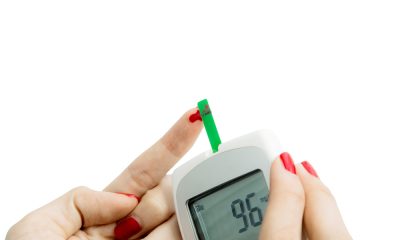
A platform that uses music to help people better understand diabetes and other healthcare concepts has been launched ahead of World Diabetes Day.
Developed by Dr Stephen Lawrence, associate clinical professor in diabetes at the University of Warwick, Prescribed Notes is the world’s first platform to use music as an immersive, memorable tool for learning complex health concepts.
Combining face-to-face and online lessons, each session is tailored, interactive and brought to life through live music and storytelling.
The platform combines live piano music with evidence-based diabetes and healthcare education to engage, inspire and empower diverse audiences.
As a practising physician, academic and accomplished improvising pianist, Dr Lawrence noticed that traditional medical education often struggles to make a lasting impact on healthcare professionals.
In response, he created Prescribed Notes, drawing on research and his own experience showing that medical information is more easily understood and retained when delivered through music and rhythmic patterns.
Dr Lawrence said: “Music has an incredible ability to make complex ideas stick in the mind.
“With Prescribed Notes, we are creating a space where medical knowledge and melody come together, helping people understand and remember healthcare concepts in a way that is both engaging and inspiring.”
“By combining storytelling, live performance and evidence-based education, we aim to transform the way people experience learning about diabetes and other health conditions, making it memorable, meaningful and, above all, enjoyable.”
Dr Lawrence brings extensive expertise to this platform, having previously served as the diabetes lead for the Royal College of General Practitioner (RCGP) and as the primary care lead for Diabetes UK.
His experience in these roles has given him insights into the challenges faced by both people living with diabetes and healthcare providers.
World Diabetes Day is an annual global awareness campaign held on 14 November to highlight the importance of diabetes awareness and management.
It marks the birthday of Sir Frederick Banting – co-discoverer of insulin.
The day serves as a platform to raise awareness about diabetes and to promote the importance of coordinated action to confront the disease as a critical global health issue.

Agetech investment & innovation round-up

Bryan Johnson launches US$1m longevity programme

Cognition and Cera expand Alzheimer’s clinical trials access

First blood test for Alzheimer’s in primary care

Space station partnership for bioprinting research

Shingles vaccine may slow biological ageing in older adults

Thousands of men in England to be offered life-extending prostate cancer drug

Nanoparticles target disease proteins in dementia

L-Nutra raises US$36.5m in series D funding

Blood sugar spike after meals may increase Alzheimer’s risk
 News4 weeks ago
Shingles vaccine may slow biological ageing in older adults
- Wellness4 weeks ago
Thousands of men in England to be offered life-extending prostate cancer drug
- News3 weeks ago
Nanoparticles target disease proteins in dementia
- News3 weeks ago
L-Nutra raises US$36.5m in series D funding
- News4 weeks ago
Blood sugar spike after meals may increase Alzheimer’s risk
- Insights2 weeks ago
Dentordu: Digital dentistry for healthier ageing
- Insights2 weeks ago
Interview: Dr Annu Navani on biotechnology and ‘the power to recode life itself’
- News3 weeks ago
Gap partners with Spear Bio on Bio-Hermes-002