Research

Stroke patients with irregular heart rhythm could benefit from starting blood-thinning treatment within four days, rather than waiting as current UK guidelines often advise. Researchers found that early use of direct oral anticoagulants (DOACs) – drugs that help prevent blood clots – reduced the risk of a second stroke due to bleeding or artery blockage [...]
Caffeine may slow the ageing process at a cellular level by activating a key energy-sensing system in cells, researchers have found. The stimulant works by triggering AMPK, a cellular fuel gauge that helps cells respond when energy levels drop. This pathway is evolutionarily conserved in both humans and simpler organisms and plays a role in [...]
Older people in northern England are more likely to be poorer, less healthy, physically inactive, lonely and live in poor housing than those in the south, according to a new report. The research highlights deepening regional inequalities, including a higher rate of economic inactivity among 50- to 64-year-olds in the North, where more than 900,000 [...]
An experimental drug taken just once a month has shown promising results for weight loss and blood sugar control in people with obesity and type 2 diabetes. The medication, known as maridebart cafraglutide or MariTide, acts on molecular pathways involved in appetite and insulin regulation – the hormone responsible for controlling blood sugar levels. It [...]
A daily low dose of aspirin is as effective as higher doses in reducing cancer risk for people with Lynch syndrome, according to new research. Lynch syndrome is an inherited condition caused by a faulty gene, which significantly increases the risk of cancers such as bowel and womb cancer. In the study, 1,879 people with [...]
The anti-ageing drug Rapamycin has been found to extend lifespan as effectively as reducing calorie intake, according to new research into longevity treatments. Rapamycin, originally developed to suppress the immune system after organ transplants, appears to offer comparable life-extending benefits to dietary restriction across eight vertebrate species – although not including humans. While reducing calorie [...]
Variability in heart rhythm during sleep may help detect early signs of stroke, depression or cognitive dysfunction – even in people who appear to sleep normally, new research suggests. The research centres on heart rate variability (HRV) – the natural variation in time between heartbeats – which reflects how the body’s automatic systems respond to [...]
A routine blood test may help identify which patients with early signs of Alzheimer’s are likely to deteriorate more rapidly, new research suggests. The test uses the triglyceride-glucose (TyG) index – a measure based on levels of fat and sugar in the blood – to detect insulin resistance, a condition where the body responds less [...]
An anti-ageing drug originally used to suppress the immune system could extend lifespan almost as consistently as calorie restriction, new research suggests. Rapamycin, first developed to prevent organ transplant rejection, appears to offer comparable life-extending benefits to dietary restriction across eight vertebrate species – although not including humans. Methods like intermittent fasting or reducing calorie [...]
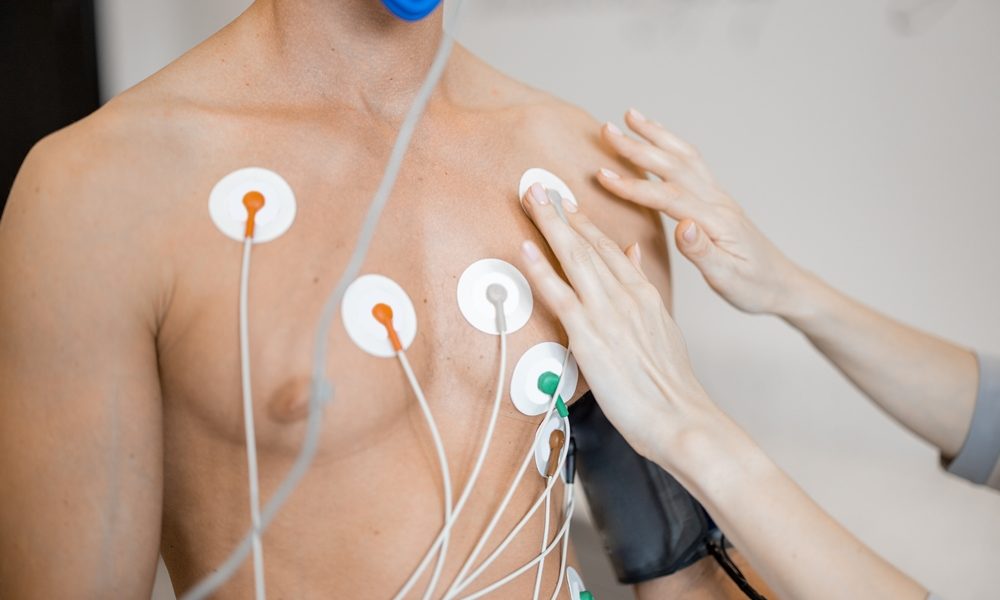
Artificial intelligence may help identify hidden heart disease in people without symptoms, using a 10-minute test that records the heart’s electrical activity in three dimensions. The system uses five electrodes – four on the chest and one on the back – to gather signals, which are processed by AI to generate a colour-coded risk score: [...]